Request a Demo
On September 15, 2023, the Australian Government unveiled proposed changes to the Industrial Chemicals (General) Rules 2019 (the General Rules) and the Industrial Chemicals Categorization Guidelines (the Guidelines), aiming to simplify and improve the chemical introduction categorization, reporting and record-keeping obligations under the Australian Industrial Chemicals Introduction Scheme (AICIS). The public consultation period for these proposed changes will run until November 9, 2023.
The proposals include: 1
Proposals to help introducers (manufacturers or importers) meet their obligations, covering written undertakings, INCI names, flavor/fragrance blend chemicals, manufactured soaps, chemical with controlled use, etc.
Proposals that strengthen the categorization criteria and reporting requirements to protect human health and the environment, e.g., to prevent persistent organic pollutants (POPs) from being categorized as exempted or reported introductions.
Minor proposals to clarify information and requirements for introducers.
Key Proposed Changes Relating to the Cosmetic Sector
1. More Practicable Record-keeping Requirements 2, 3
In Australia, chemical introductions are categorized into the following five types, each with different obligations. The proposed changes to the record-keeping requirements primarily focus on “Listed introductions”, “Exempted introductions”, and “Reported introductions”, aiming to streamline compliance.
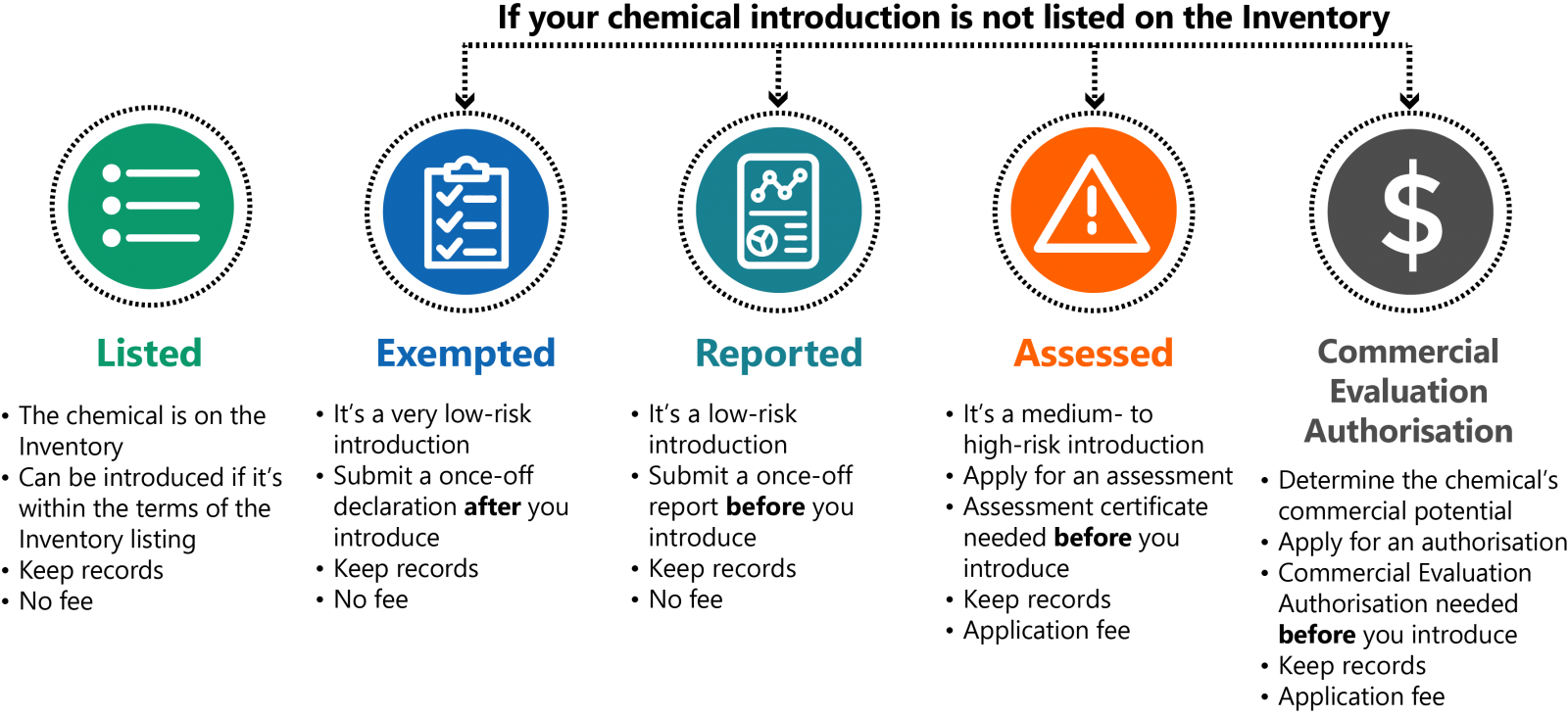 AICIS WebsiteUnder the current regulations, if an introducer is unable to obtain the Chemical Abstracts Service (CAS) name of the chemical being introduced, they must obtain a written undertaking from the chemical identity holder. The content of this undertaking can vary depending on the introduction category and the information possessed held the holder, which may include details related to chemical identity, chemical properties, or hazard characteristics. However, introducers often encounter difficulties in acquiring such written undertakings from their manufacturers or suppliers who possess the chemical identity information.
To address this issue, the proposed changes offer alternative options for introducers to fulfill their record-keeping obligations. Instead of written undertakings, introducers can maintain a more practical set of records when they are unable to obtain the chemical identity information. Acceptable record-keeping options include the chemical's CAS number, CAS name, International Union of Pure and Applied Chemistry (IUPAC) name, eligible INCI plant extract name, or AICIS approved chemical name (AACN).
It is important to note that the extent of the proposed changes and requirements may vary depending on the type of introduction and/or the level of exposure to humans and the environment. Details about the proposed more practical requirements can be accessed below:
Listed introductions: more practicable record-keeping requirements
Exempted and reported introductions: more practicable requirements
2. Greater Acceptance of INCI Names 3
The proposed amendments seek to strengthen the acceptance of INCI names for reporting and record-keeping purposes. Introducers will have the option to use INCI names alongside other naming conventions, such as IUPAC names and CAS numbers, to replace the term “proper name” for a chemical. This provides clarity on the type of chemical names that must be provided to AICIS in reported and exempted introductions.
Notably, the INCI names will primarily be accepted for certain lower exposure introductions. In case where INCI names may not be applicable, the concept of "eligible INCI plant extract names" is introduced for other types of introductions to ensure sufficient chemical identity information. These names are considered a defined subset of INCI names and subject to the following criteria:
The industrial chemical is a plant extract that has not intentionally undergone any chemical processes or treatments to change its chemical structure; and
The INCI name is based on a botanical name for the relevant plant.
3. Reduced Regulatory Obligations for Soap Makers 4
The proposed changes also focus on providing a more appropriate regulatory framework for small-scale and domestically based businesses in Australia that produce and sell limited quantities of soap at local markets and/or shops. The following types of very low-risk soap introductions will benefit from the revised regulations:
Soaps made by using lye (sodium hydroxide or potassium hydroxide) and 100 kg or less of oil or fat within an AICIS registration year: their introductions will be considered very low risk and fall under the “exempted” category. As a result, soap makers will have simplified reporting and record-keeping requirements.
Soaps made by using lye and 10 kg or less of oil or fat listed on the Australian Inventory of Industrial Chemicals within an AICIS registration year: soap makers undertaking these introductions would no longer be required to register with AICIS or categorize their introduction.
It is important to emphasize that these proposed regulatory updates do not affect the existing regulatory arrangements for imported soap introducers. By implementing these changes, AICIS aims to alleviate the regulatory burden for Australia's small-scale soap makers, allowing itself to focus its compliance monitoring efforts on higher-risk introductions.
4. Expanded Eligibility Criteria for Flavor and Fragrance Blends 5
In addition, the proposed amendments also intend to expand the criteria for chemicals in flavor or fragrance blends to be reported introductions, based on chemicals being on the International Fragrance Association (IFRA) Transparency List and being used in accordance with IFRA standards. These changes will allow more introductions of these chemicals to be categorized as reported introductions at step 3 of the categorization process.
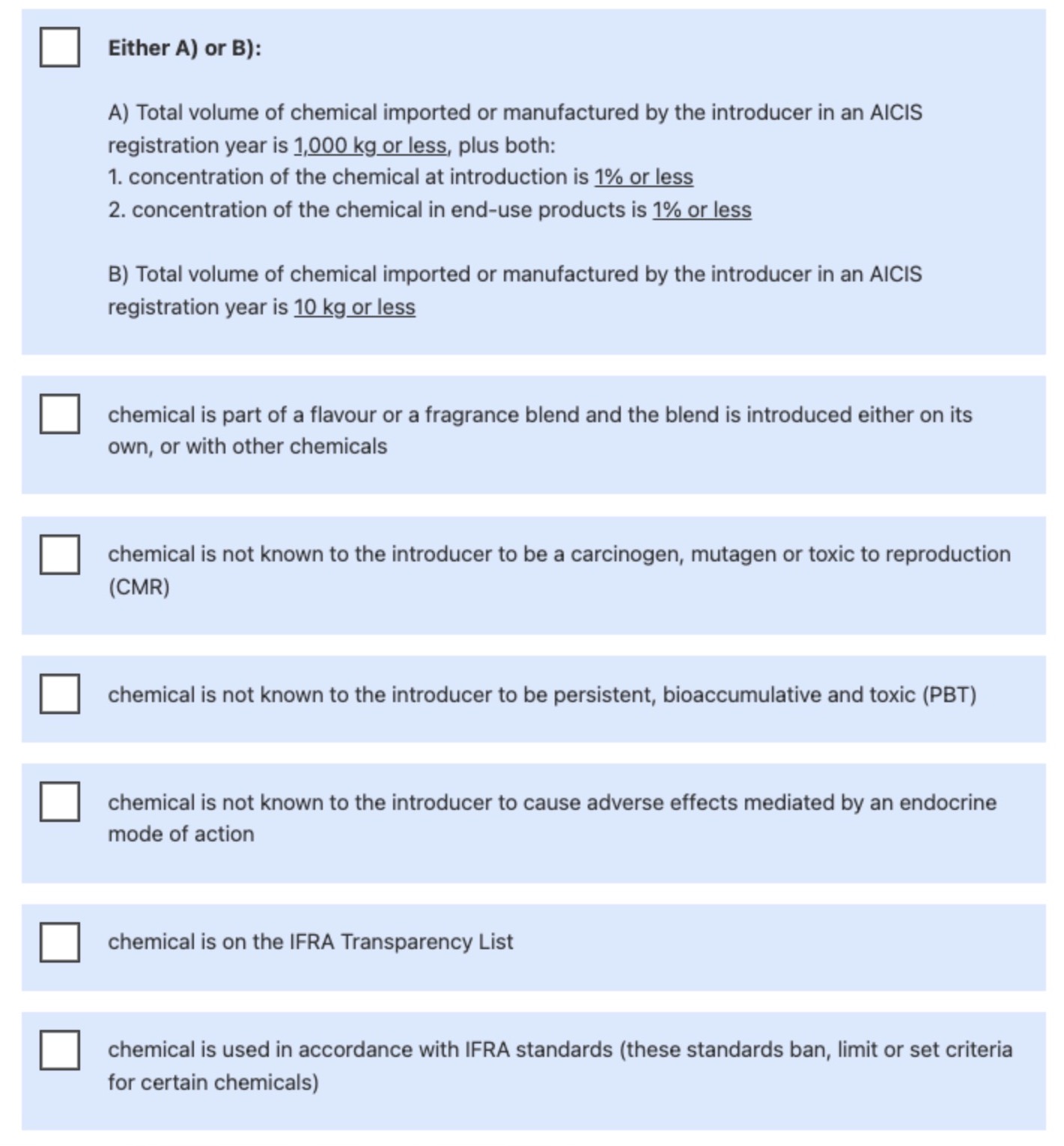 Proposed Eligibility CriteriaIntroducers will be subject to minimal reporting and record-keeping requirements and can submit a single pre-introduction report (PIR) for all chemicals that meet the criteria for low-risk flavor or fragrance blend introductions.
 We provide full-scale global cosmetic market entry services (including cosmetic registering & filing, regulatory consultation, customized training, market research, branding strategy). Please contact us to discuss how we can help you by