Request a Demo
Editor's notes: This article was originally published on July 17, 2023, and was updated on January 24, 2024, as per the latest developments.
For the purpose of effective market surveillance, the European Commission has developed the rapid alert system Safety Gate (formerly known as RAPEX) to ensure cooperation among all economic operators, online marketplace providers, and market surveillance authorities. This system enables national authorities in 30 countries (EU countries plus Iceland, Liechtenstein and Norway) to quickly exchange information and measures taken against dangerous non-food products, and thus makes member countries possible to screen their markets and take appropriate action should the same product be found in their territory.
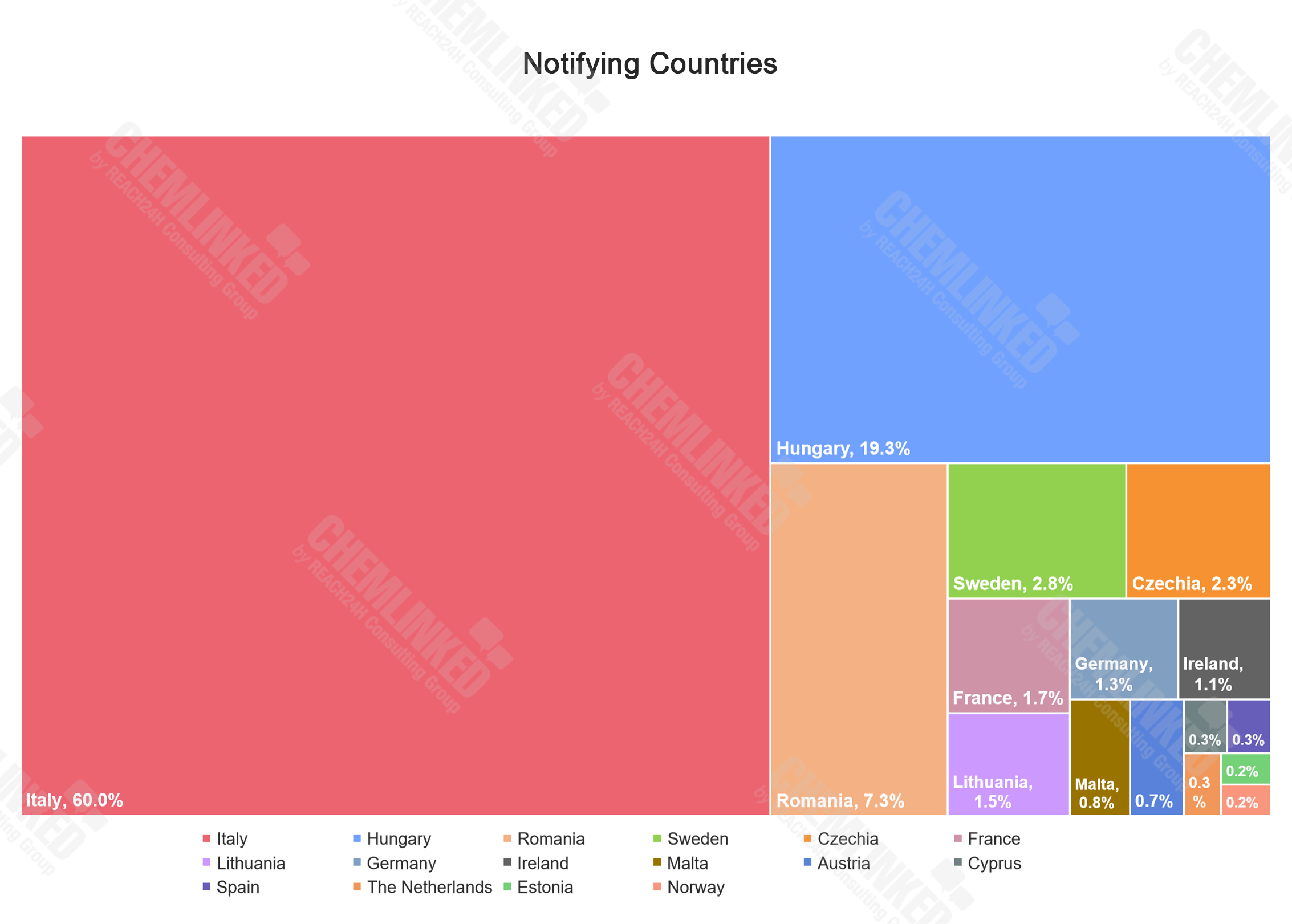
In 2023, EU Safety Gate circulated 1,089 alerts on non-compliant cosmetics. These cosmetics were notified by 16 countries, among which Italy ranked Top 1 with an inundatory 60%, followed by Hungary and Romania.
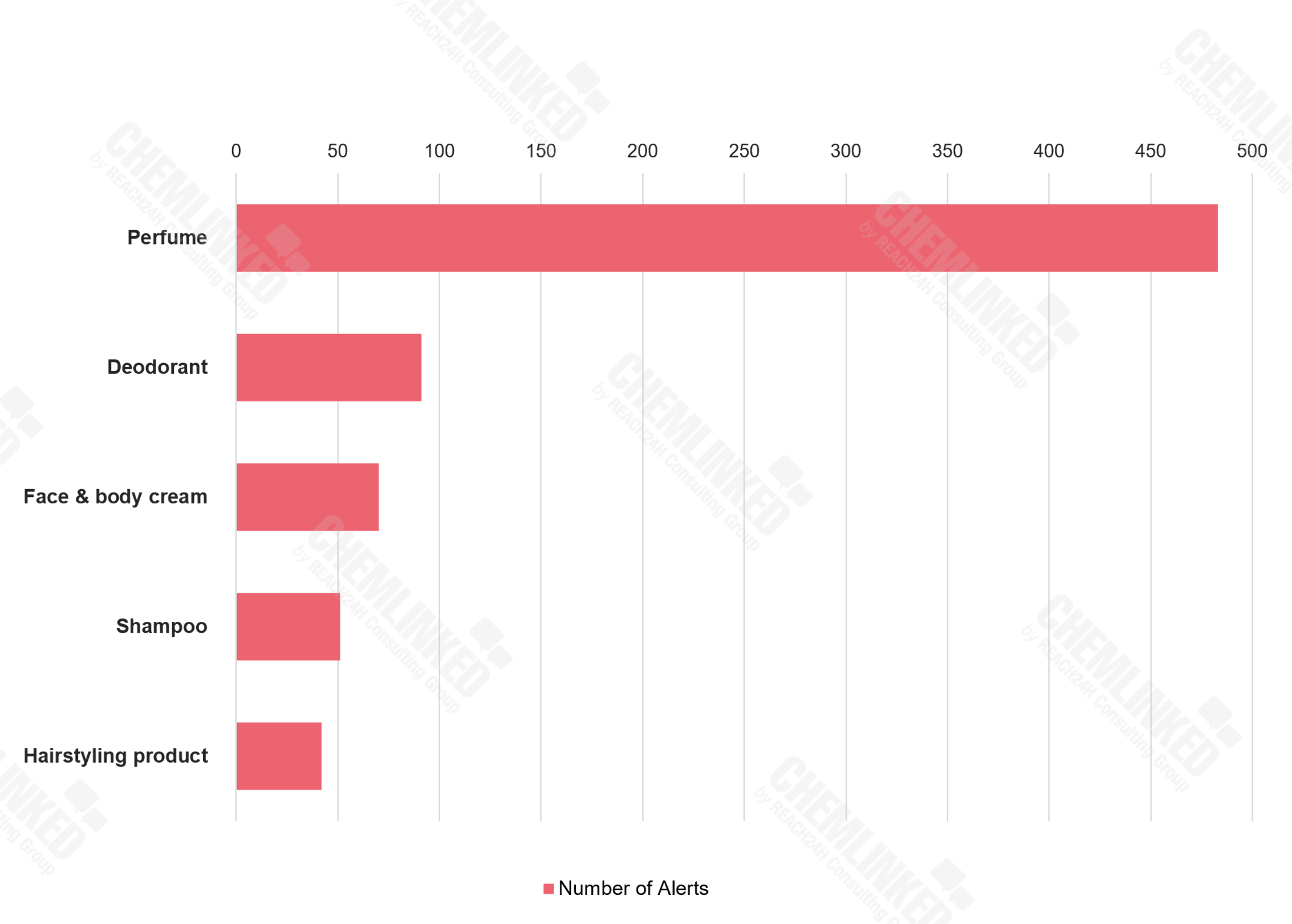
In terms of product category, perfume (44.4%) tops the list of non-compliant cosmetics, followed by deodorant (8.4%), face and body cream (6.4%), shampoo (4.7%), and hairstyling product (3.9%).
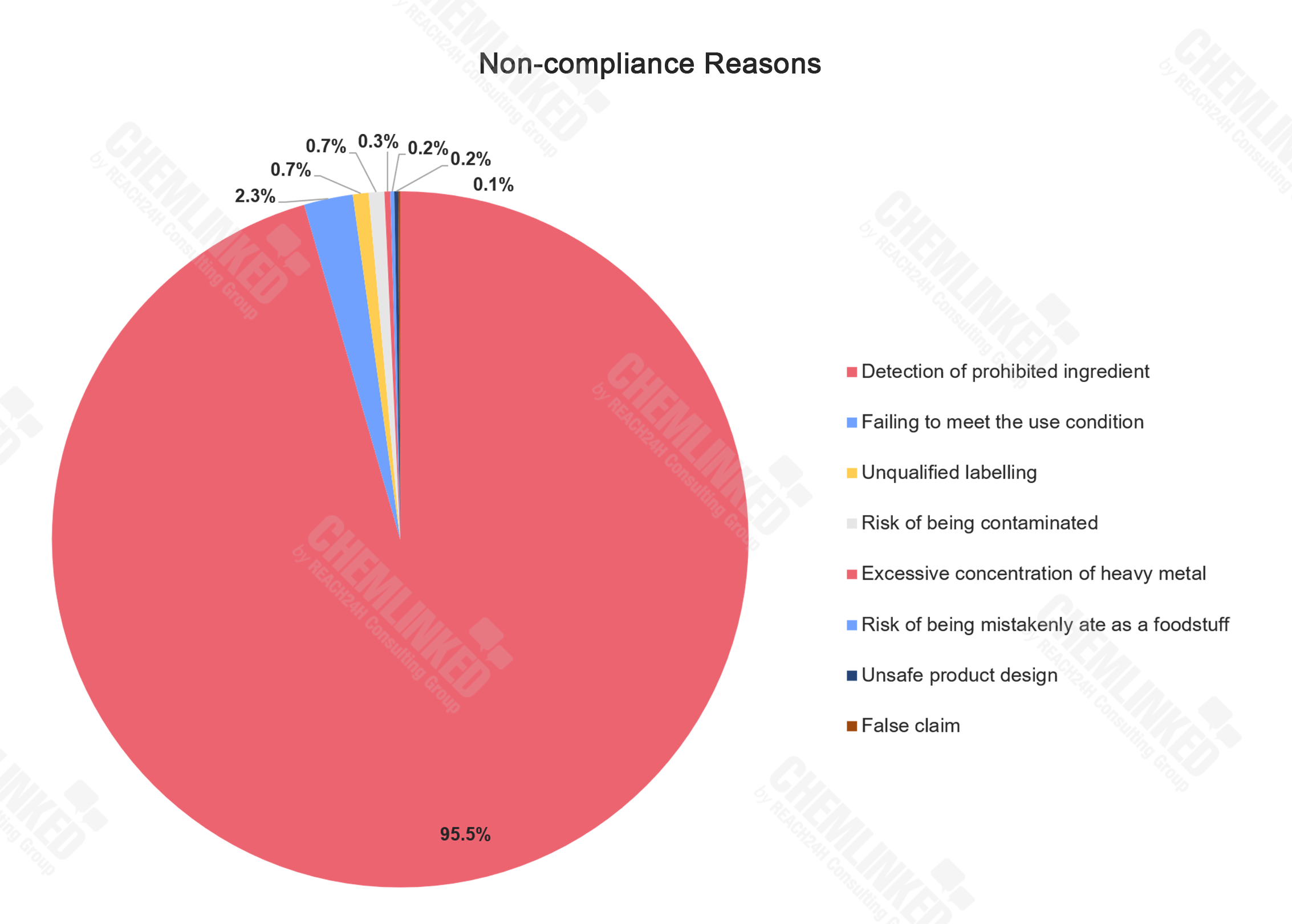
 Among the notified cosmetics, the primary reason for non-compliance is the detection of prohibited ingredient (95.5%). Other reasons mainly include failing to meet the use condition (2.3%), unqualified labelling (0.7%), risk of being contaminated (0.7%), and excessive concentration of heavy metal (0.3%).
Noteworthy Compliance Requirements for the Above-mentioned Notified Cosmetics
1. Ingredient
In 2023, 95.5% non-compliant cosmetics were found containing prohibited ingredients. The ingredients detected in these alerts include:
No. | Detected Prohibited Ingredient | CAS No. | Risk |
1 | 2-(4-tert-butylbenzyl) propionaldehyde / Butylphenyl Methylpropional (BMHCA) | 80-54-6 | BMHCA may harm the reproductive system and the health of unborn child. It may also cause skin sensitization. |
2 | Barium Peroxide | 1304-29-6 | Barium Peroxide releases Barium, which can be easily absorbed and has toxic effects on the body, impairing muscle as well as heart and kidney activity, and leading to arrythmia, paralysis or gastrointestinal alterations. |
3 | Cloprostenol Isopropyl Ester | 157283-66-4 | Cloprostenol Isopropyl Ester can cause eye and ophthalmic defects, and should not be used by pregnant or breastfeeding women, as it may affect the child. It should be used under the supervision of ophthalmologist. |
4 | Formaldehyde | 50-00-0 | Formaldehyde is a skin sensitiser that can trigger allergic reactions and may cause cancer. |
5 | Glucocorticoids / Corticosteroids | / | Exposure to Corticosteroids could cause skin irritation, and may lead to endocrine problems. Their application should be limited to cases where they are medically prescribed. |
6 | Hydroxyisohexyl 3-cyclohexene carboxaldehyde (HICC or Lyral) | 51414-25-6 / 31906-04-4 | HICC is a skin sensitiser that triggers allergic reactions or contact dermatitis. |
7 | Hydroquinone | 123-31-9 | Hydroquinone can cause skin irritation and dermatitis.
|
8 | Isobutylparaben | 4247-02-3 | Isobutylparaben might be toxic for reproductive development, especially for the male reproductive system. |
9 | Mercury | 7439-97-6 | Mercury can cause damage to the kidneys, brain and nervous system as it accumulates in the body. Additionally, it may affect the reproduction, and the development of unborn child. |
10 | N-Methyl-2-pyrrolidone / 1-methyl-2-pyrrolidone / N-Methylpyrrolidone | 872-50-4 | Exposure to N-Methylpyrrolidone can cause acute health effects such as headache, stomach pain, and vomiting. Prolonged or repeated contact with this substance can lead to a skin rash, blisters, dryness, and redness. |
11 | Octamethylcyclotetrasiloxane (D4) | 556-67-2 | D4 is highly persistent and bioaccumulative. It can pose risk to aquatic life and the environment, and is suspected of being toxic to reproduction. |
12 | Pigment Blue 15 / CI 74160 | 147-14-8 | Pigment Blue 15 has the potential to induce contact allergies, and may cause skin and eye irritations. It is banned for use in hair dye products. |
13 | Pigment Yellow 12 / CI 21090 | 6358-85-6 | Pigment Yellow 12 may cause eye irritation and inflammation. Prolonged or repeated contact with this substance may also lead to skin irritation. It is banned for use in hair dye products. |
14 | Pyrithione Zinc | 13463-41-7 | Pyrithione Zinc is toxic if swallowed, and causes damage to organs through prolonged or repeated exposure. |
15 | Sodium Perborate | 15120-21-5 | Sodium Perborate releases Boron, which is prohibited in cosmetic products. Ingestion or contact with an excessive quantity of Boron may harm the reproductive system or the development of unborn child. |
16 | Sodium Tetraboratxe | 1330-43-4 | Sodium Tetraborate is irritating to eyes, skin and respiratory tract. It may also be toxic for reproduction. |
2. Use condition
Among non-compliant cosmetics notified in 2023, 2.3% of them failed to meet the use conditions established in Regulation (EC) No 1223/2009 (Cosmetics Regulation). ChemLinked has sorted out the ingredients involved in these non-compliance cases, and detailed their corresponding use conditions in the table below:
No. | Ingredients | CAS No. | Use Conditions |
1 | 2,4-Diaminophenoxyethanol | 70643-19-5 | 2,4-Diaminophenoxyethanol can be used in products intended for colouring eyelashes, or as a hair dye substance in oxidative hair dye products. After mixed under oxidative conditions, its concentration applied to hair or eyelashes must not exceed 2% as hydrochloride. |
2 | Acid Black 1 / CI 20470 | 1064-48-8 | When Acid Black 1 is used as a hair dye substance in non-oxidative hair dye products, its maximum concentration applied to hair must not exceed 0.5%. |
3 | Hydrogen Peroxide | 7722-84-1 | The maximum concentration of Hydrogen Peroxide in cosmetics is: |
4 | Kojic Acid | 501-30-4 | When Kojic Acid is used as a skin lightening agent in cosmetics, its maximum concentration shall not exceed 1%. |
5 | m-Aminophenol | 591-27-5 | m-Aminophenol can be used in products intended for colouring eyelashes, or as a hair dye substance in oxidative hair dye products. After mixed under oxidative conditions, its concentration applied to hair or eyelashes must not exceed 1.2%. |
6 | Methylchloroisothiazolinone (MCI) and Methylisothiazolinone (MI) | 26172-55-4, 2682-20-4 | MCI and MI can be used only in rinse-off products. |
7 | Phenyl Methyl Pyrazolone | 89-25-8 | When Phenyl Methyl Pyrazolone is used as a hair dye substance in oxidative hair dye products, after mixed under oxidative conditions, its concentration applied to hair must not exceed 0.25%. |
8 | p-Phenylenediamine (PPD) | 106-50-3 | When p-Phenylenediamine is used as a hair dye substance in oxidative hair dye products, after mixed under oxidative conditions, its maximum concentration applied to hair must not exceed 2% calculated as free base. |
9 | Resorcinol | 108-46-3 | The maximum concentration of Kojic Acid in cosmetics is: |
10 | Salicylic Acid | 69-72-7 | The maximum concentration of Salicylic Acid in cosmetics is: |
3. Labelling
Fragrance substances are organic compounds widely used in perfumes and other perfumed cosmetics. For sensitive consumers, their presence may trigger allergy symptoms, even at a much lower concentration than the maximum permitted levels. In order to ensure cosmetic's safe use, the Cosmetics Regulation stipulates that, the presence of the fragrance allergen shall be indicated in the ingredients list when its concentrations exceed 0.01% in rinse-off products and 0.001% in leave-on products.
In 2023, nine fragrance allergens were detected in cosmetics that failed to comply with the above labelling requirement. These allergens are Amyl Cinnamal (CAS No. 122-40-7), Benzyl Alcohol (CAS No. 100-51-6), Benzyl Benzoate (CAS No. 120-51-4), Benzyl Salicylate (CAS No. 118-58-1), Citral (CAS No. 5392-40-5), Citronellol (CAS No. 106-22-9 / 26489-01-0), Coumarin (CAS No. 91-64-5), Linalool (CAS No. 78-70-6), Hexyl Cinnamal (CAS No. 101-86-0).

 We provide full-scale global cosmetic market entry services (including cosmetic registering & filing, regulatory consultation, customized training, market research, branding strategy). Please contact us to discuss how we can help you by