Request a Demo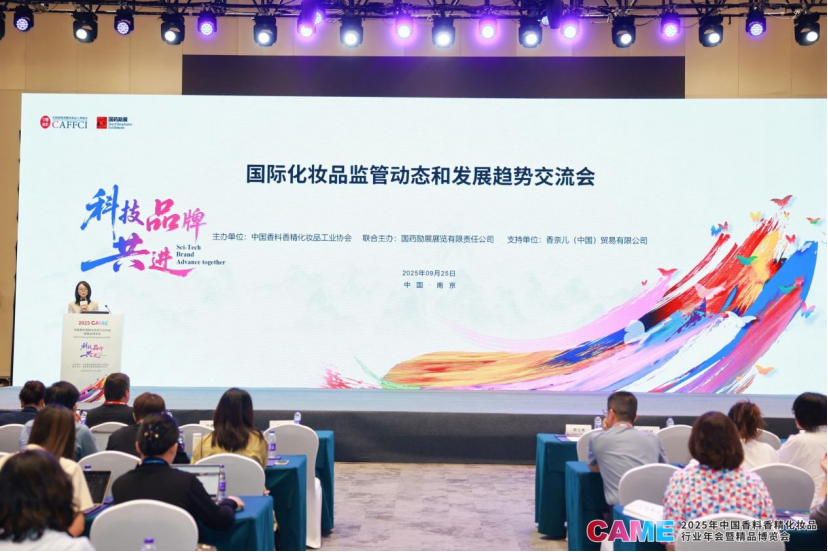
On September 25, 2025, the China Association of Fragrance Flavour and Cosmetic Industries (CAFFCI) held its Annual Conference & Expo (CAME) in Nanjing. As part of the event, an International Cosmetics Regulatory Dynamics and Development Trends Exchange Conference brought together representatives from cosmetics associations in Japan, South Korea, the European Union, and the United States, alongside regulatory experts and leading enterprises from both domestic and international markets.
The conference featured five keynote speeches, offering a comprehensive overview of regulatory developments and future trends across major global cosmetics markets.
1. EU Market and Cosmetic Products Regulation (CPR) Revision Outlook
Gerald Renner, Director of Technical Regulatory Affairs at Cosmetics Europe (CE), shared that the European cosmetics market grew by 6.3% from 2023 to 2024. He noted that the EU is shifting from its previous “Green Deal” focus to a new 2025–2030 legislative agenda of “Simplification,” aiming to ease administrative burdens and restore competitiveness. A full evaluation of the CPR began in early 2025, with major revisions expected between 2027 and 2029. In parallel, the European Commission is working on a “Simplification Omnibus” that would refine CMR derogation procedures, remove nanomaterial notification requirements, and streamline ingredient listings without altering the core principles of the CPR. Ingredient discussions also remain active around endocrine disruptors, CMR substances, and other high-profile ingredients such as salicylates, PFAS and microplastics.
2. U.S. MoCRA Implementation Progress
Natalie Obermann, Vice President of Global Strategy at the Personal Care Products Council (PCPC), provided an update on the implementation of the Modernization of Cosmetics Regulation Act of 2022 (MoCRA). She reported that mandatory facility registration, product listing, and safety substantiation are now in force. However, several subsequent rulemakings have faced delays. According to the latest U.S. Unified Agenda, the FDA is expected to issue rules on fragrance allergen labeling and standardized asbestos testing methods for talc-containing cosmetics by 2026, while the long-awaited Good Manufacturing Practice (GMP) regulations remain under development with no final timeline announced.
3. Japan’s New Ingredient Management System
Tanaka Satoru, a representative of the Japan Cosmetic Industry Association (JCIA), introduced Japan’s approach to managing new cosmetic ingredients. He explained that Japan follows a risk-based regulatory model in which only high-risk ingredient categories—such as preservatives, colorants, and UV filters—require government approval. All other ingredients may be used at the discretion of companies, provided they conduct their own safety assessments. Manufacturers are responsible for evaluating not only the raw materials but also their impurities, and must maintain standardized raw material specifications to ensure consistent quality across production and supply chains.
4. South Korean Cosmetics Regulation’s Latest Changes and Trends
Yeon Jaeho, Vice President of the Korea Cosmetics Association (KCA), outlined recent and upcoming regulatory developments in South Korea. From 2024 to 2026, the country is piloting an e-labeling system using QR codes, enabling digital access to ingredient and usage information while reducing the burden on physical packaging. In addition, private certifications such as vegan, natural, and organic claims are now accepted in advertising. A strengthened self-regulatory system includes an industry-led advertising review and monitoring committee. South Korea is also aligning its GMP standards with ISO 22716 and providing consulting assistance for small and medium-sized enterprises. Meanwhile, the customized cosmetics reporting process and raw material directory management are being streamlined. To enhance compliance accessibility, South Korea is also introducing an AI-based regulatory chatbot covering multiple countries’ cosmetic laws.
5. New Approach Methodologies
Erin Hill, President and CEO of the International Collaboration on Cosmetics Safety (ICCS), concluded the session with a presentation on advancing non-animal testing methods. She emphasized the importance of building confidence in New Approach Methodologies (NAMs) through international collaboration to promote broader acceptance of animal-free safety assessments in the cosmetics industry.
 We provide full-scale global cosmetic market entry services (including cosmetic registering & filing, regulatory consultation, customized training, market research, branding strategy). Please contact us to discuss how we can help you by