Request a Demo
South Korea introduced the world's first legislation of custom cosmetics. After issuing the regulations on registration, ingredient compliance, MFDS disclosed the draft of Requirements for Custom Cosmetics Sales Business [1] on May 28. The consultation period is set to end on June 17.
Present Regulations of Custom Cosmetics (enforcement date: March 14, 2020) Business Registration: Article 3-2 of Cosmetics Act [2] Compounding Managers Qualification: Article 3-4 of Cosmetics Act [2] Ingredient Requirements: Article 5 of Regulation on Safety Standards, etc. for Cosmetics [3] |
Custom cosmetics are blended or dispensed by a compounding manager at the business place, which is different from a traditional cosmetics product manufactured in factories. It is essential to reinforce the safety management on the manufacturing process at the stores. This draft specifies the requirements to which the custom cosmetics sales businesses must adhere.
The main contents are as following:
1. Prohibited Cosmetics Content
As per Article 2 (3)-2 of Cosmetics Act [2], the "custom cosmetic" means:
(a) A cosmetic made by mixing the contents of a cosmetic with the contents of any other cosmetic or a raw material prescribed;
(b) A cosmetic repackaged by dividing the contents of a cosmetic into smaller amounts.
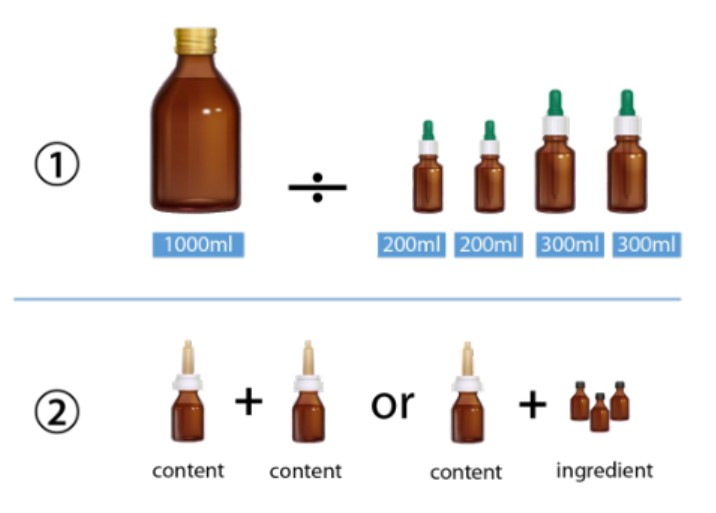
Not all cosmetics are proper for custom cosmetics. This draft outlined the cosmetics, the contents of which are not allowed to be mixed or divided in a custom cosmetic, as the following:
a. Manufactured or imported cosmetics for distribution or sale;
b. Manufactured or imported cosmetics used as promotional gifts or samples.
2. Operational Requirements
Before manufacture, the compounding manager shall decide which raw materials are to be used in custom cosmetics and ensure the quality and safety of the final products. The following information about the materials shall be checked:
a. | Whether the materials comply with the Regulation on Safety Standards, etc. for Cosmetics [3]; |
b. | Whether the shelf life of the materials is within the quality guarantee period. |
The expiration date of the final custom cosmetics shall be labeled no longer than that of the ingredients used. It is forbidden to blend or dispense custom cosmetics without assessing the customer's skin type or personal preference.
 We provide full-scale global cosmetic market entry services (including cosmetic registering & filing, regulatory consultation, customized training, market research, branding strategy). Please contact us to discuss how we can help you by