Request a Demo
In November 2024, the Thai Food and Drug Administration (Thai FDA) released the Guidelines for the Consideration of Notification of Cosmetics in Ampoule, Vial, or Syringe Forms (Revised Edition September 2024). This updated document outlines new provisions for cosmetics allowed to be notified in ampoule, vial, or syringe form, further details the physical characteristics of such containers, and makes a few minor adjustments to the dossiers needed for product notification. The revised Guidelines aims to enhance regulatory clarity and ensure that these cosmetic products remain distinct from medical devices or drugs.
Key Highlights of the Revised Guidelines
1. Definition
Ampoule, vial, or syringe cosmetics are defined as products packaged in such containers that are strictly for cosmetic use. They must not be classified as drugs or medical devices, nor be used with medical devices like mesotherapy or iontophoresis machines, or for post-medical procedures such as microneedle therapy system (mts) or laser treatments.
2. Acceptable Cosmetic Types
The revised Guidelines specifies that cosmetics in these packaging forms can be notified according to the types of cosmetics listed in the following table:
No. | Purpose of Use | Area of Application | Method of Use |
1 | Skin care | Facial skin | No need to rinse after use |
2 | Skin care | Body skin | No need to rinse after use |
3 | Skin care | Around the eyes | No need to rinse after use |
4 | Skin care | Hair and scalp | No need to rinse after use |
5 | Mixing with other cosmetics | Facial skin | No need to rinse after use |
6 | Scalp and hair nourishment | Hair and scalp | No need to rinse after use |
Notes: The notification of other types of cosmetics outside this list shall be reviewed on a case-by-case basis. | |||
3. Physical Characteristics of Containers
The revised Guidelines establishes strict requirements for the design and functionality of ampoules, vials, and syringes to ensure consumer safety and prevent misuse:
Ampoules: Ampoule refers to a glass or plastic tube containing cosmetics. If the ampoule can be stored for future use after opened, it must be packed with a cap in the packaging box that can seal the container.
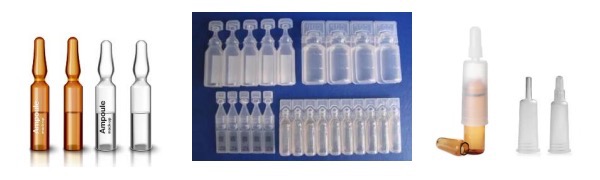 Sample Image of Ampoule and Pointed Cap (Source: September 2024 Guidelines)
Vials: Vials are glass or plastic bottles sealed with a rubber stopper and an aluminum ring (or equivalent material). The bottle must be easy to open and reseal by hand. A removable rubber stopper should be included for fitting a pointed cap, which must be neatly packed in the packaging box.
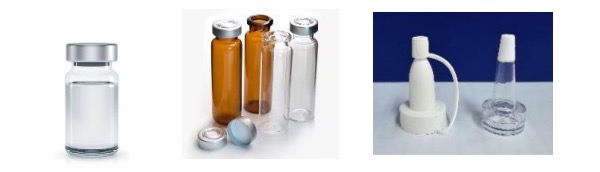 Sample Image of Vial and Pointed Cap (Source: September 2024 Guidelines)
Syringes: Syringe refers to a container that looks like a syringe. However, prefilled syringes (i.e., syringes filled with substances to be injected into the human body) or syringes with a tip suitable for connecting with injection needles, tools, or any equipment classified as medical devices (such as luer lock tip syringe or locking fit syringe) must not be used.
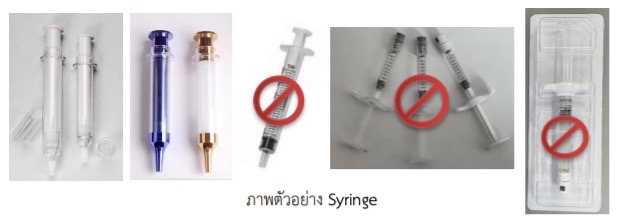 Sample Image of Syringe (Source: September 2024 Guidelines)
4. Documentation Requirements
Enterprises are required to provide the following supporting documents when submitting a notification:
A certification letter from the manufacturer, detailing the usage method and explicitly stating that the product is strictly for external application, but not for injection or use with medical devices.
Clear and visible pictures of the actual product/label/tube/box/bottle/insert. If the attached documents are in a language other than English, a Thai translation from a government-recognized language institution should be provided. Besides, there must be a warning on the label such as "Do not inject or use in conjunction with medical devices. For external application only", or similar statements on the outer box label and the product bottle, to ensure consumer’s awareness.
Product samples.
A statement outlining the measures undertaken by the company to prevent misuse from the manufacturer or importer.
Certificate of Free Sale (CFS) from the country of origin indicating that the product is a cosmetic.
Explanatory letter from the manufacturer indicating whether the product is sterile or not. If there is a sterilization process, further details must be provided on why the product needs to undergo this process, as the product is intended for external use only.
Additional supporting documents may be requested if the notification officers have doubts and require further clarification, such as: video demonstrations on how to use the product.
5. Additional Provisions
The guidelines also includes two additional provisions to prevent consumer confusion and ensure compliance:
Prohibition of Misleading Names: Products in ampoule, vial, or syringe forms with names identical to injectable products or those used with medical devices in foreign markets will not be accepted.
Consideration for Low-Risk Products: For other types of products that do not pose a risk when used with devices or injected into the body, it is not necessary to attach the above supporting documents for consideration. Instead, consideration should be based on the product name, composition formula, physical characteristics of the cosmetics, and product labels. Examples include teeth whitening products packaged in syringes or cosmetics with physical characteristics that prevent injection into the body. Officials should consider each case individually.
 We provide full-scale global cosmetic market entry services (including cosmetic registering & filing, regulatory consultation, customized training, market research, branding strategy). Please contact us to discuss how we can help you by