Request a Demo
Since China's new cosmetics regulations came into effect, new cosmetics ingredients (NCIs) have been a hot issue in the industry.
The current landscape of NCI applications is segmented into six distinct situations. While all NCI applications necessitate thorough dossier preparation, testing requirements vary among different situations, which significantly impacts enterprise’s compliance cycle. Consequently, NCIs having relatively fewer testing requirements, such as those with safe usage history exceeding three years in cosmetics marketed overseas (Situation 3 and Situation 4), NCIs with safe consumption history, edible NCIs (Situation 5), and polymer NCIs (Situation 6), emerge as the most preferred options for companies. This article delves into Situation 5, focusing on NCIs with safe consumption history.
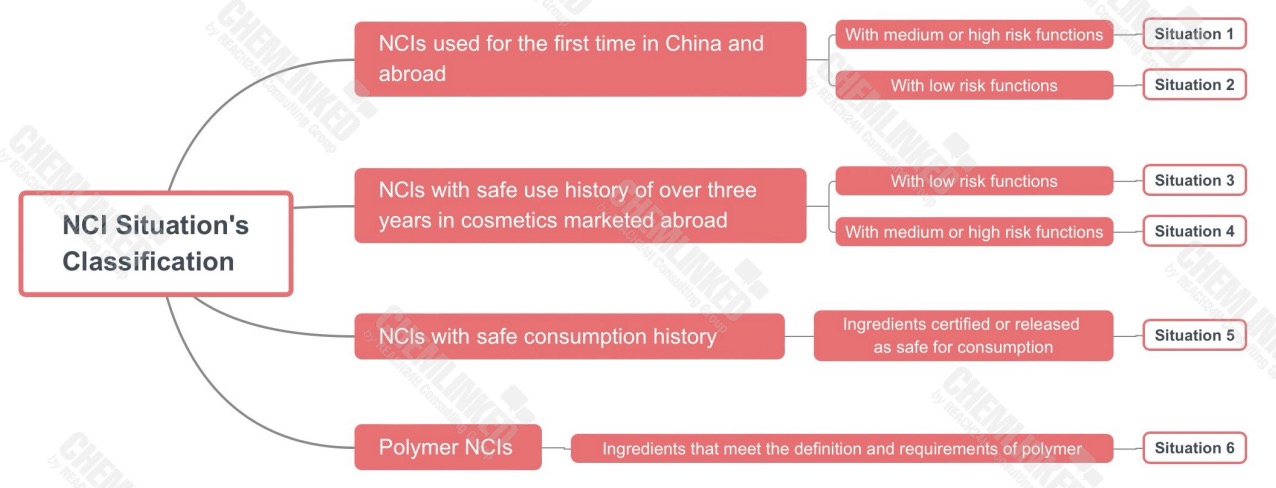 Figure 1: The Classification of NCI Situation
What are NCIs with safe consumption history?
NCIs falling under this category generally encompass ingredients with long-standing edible traditions and those officially recognized as safe for food use through assessments by authoritative organizations. These ingredients exhibit relatively low safety risks. According to the Provisions for Management of New Cosmetic Ingredient Registration and Notification Dossiers, only those meeting either of the following conditions qualify as NCIs with safe consumption history:
Food ingredients with food safety certification or equivalent qualification from relevant supervisory and administrative department in China.
Ingredients deemed safe for consumption by relevant supervisory and administrative departments, technical institutions, or authoritative institutions in China or abroad.
When registering or notifying such NCIs, certain tests of system toxicity endpoints can be waived, as illustrated below.
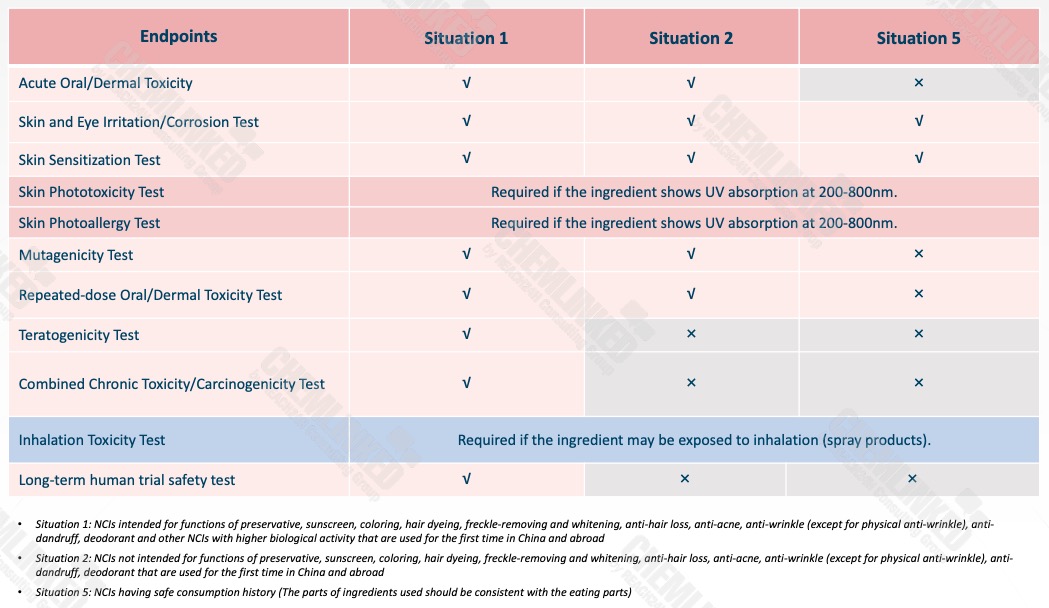 Figure 2: Toxicological Tests for NCIs in Situation 5Presently, based on public information from the NCI Notification Information System of the National Medical Products Administration (NMPA) (the System), several renowned Chinese food companies, including Dong-E-E-Jiao Co., Ltd., Yangshengtang, Yan Palace, and others, are venturing into the beauty industry. Each of these companies features one or more ingredients with NCI notification records and is currently in the safety monitoring period.
Hot Edible NCIs
1. β-Nicotinamide Mononucleotide (NMN) (CAS No. 1094-61-7)
Basic Information: NMN, a naturally occurring bioactive nucleotide, is the precursor of nicotinamide adenine dinucleotide (NAD+). Research indicates its potential anti-aging effects, earning NMN the moniker of "the elixir of aging" in the health care product sector.
Approval Status in the Food Field
a) In Japan, according to the assessment by Ministry of Health, Labor and Welfare (MHLW), NMN does not meet the criteria for drug identification. As NMN is also found in food, leading to the determination that "unless claiming medicinal effects, it is not classified as a drug, with no usage restrictions in the food sector."
b) In Canada, NMN is classified as a "Natural Health Product", requiring approval from Health Canada before the product is put on the market.
c) In the United States, SyncoZymes' registered NMN gained FDA approval for use in dietary supplements in May 2022. However, in November 2022, the FDA withdrew NMN's new dietary ingredient certification. In a response notice to another company, the FDA clarified that NMN had been studied as a new drug, thereby preventing its sale as a dietary supplement.
d) In China, the National Health Commission's notice on May 9, 2023 rejected the application for new food additive varieties for 21 ingredients, including NMN, and did not grant administrative licensing. As such, NMN currently lacks legal basis to be used in foods in China.
Given the above, it's essential to note NMN's absence among approved ingredients for use in drugs, health foods, and foods in China. If intending to notify NMN as an “NCI with safe consumption history”, the primary basis should rest on the recognition from overseas regulatory authorities.
NCI Notification Situation: The skincare industry also anticipates the use of NMN for its anti-aging function. On January 24, 2022, the first NMN notification information was disclosed. As of now, six companies have completed NCI notification for NMN seven times in total, establishing NMN as the NCI with the most notifications.
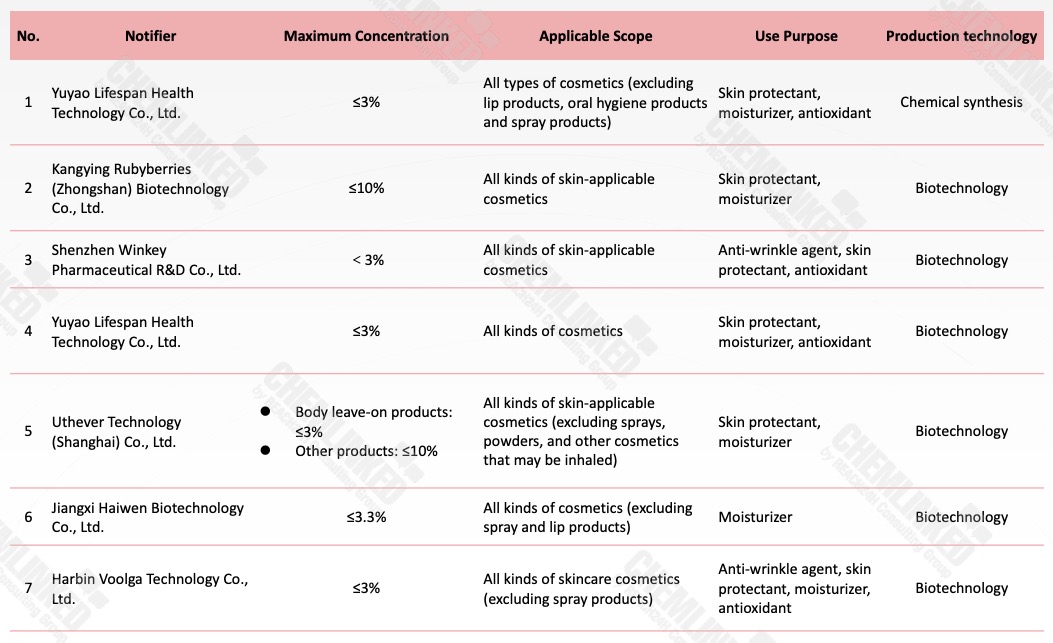 Figure 3: Notification Situation of NMN
2. Pyrroloquinoline Quinone Disodium (PQQ) Salt (CAS No. 122628-50-6)
Basic Information: PQQ salt is a prosthetic group of oxidoreductase. In the food field, it is considered to participate in the oxidation-reduction reactions in organisms. This participation effectively eliminates free radicals in the body, thereby contributing to the restoration of physical strength and the resistance to fatigue.
Approval Status in the Food Field
No. | Country / Region | Approval Status in the Food Field | Recommended Intake Amount |
1 | China |
| ≤20 mg/day |
2 | United States | Classified as "substance generally recognized as safe" (GRAS) | / |
3 | European Union | Authorized for use on the market as a food supplement | ≤20 mg/day |
4 | Canada | Classified as a "Natural Health Product", requiring approval from Health Canada before the product is put on the market | / |
NCI Notification Situation: PQQ salt's notification, by Hunan S'YOUNG Biotechnology Co., Ltd., was publicly disclosed on August 2, 2023. This NCI is chemically synthesized, intended for use as a skin protectant in all types of cosmetics (excluding spray products) at a maximum usage amount of 0.08%.
3. Gynura Procumbens Extract
Basic Information: Gynura Procumbens (Lour.) Merr is a climbing plant, commonly known as longevity grass and fairy grass. According to Chinese Herbs, possessing a sweet nature, it can activate collaterals, reduce inflammation, relieve cough, dissipate blood stasis, and reduce swelling while promoting blood circulation
Approval Status in the Food Field: In China, Gynura Procumbens is regulated as a general food under the Food Safety Law of the People's Republic of China and the Administrative Measures for New Resource Foods.
NCI Notification Situation: Gynura Procumbens Extract's notification, by Wenzhou Gumu Biotechnology Co., Ltd., was publicly disclosed on May 5, 2023. Derived from plants, it is designated for use as both a skin protectant and antioxidant in all types of cosmetics (excluding spray products), with a maximum permissible usage of 25%.
4. Euphausia Superba Oil
Basic Information: Euphausia Superba Oil, derived from Euphausia superba Dana, is enriched with phospholipid eicosapentaenoic acid, docosahexaenoic acid, and other omega-3 polyunsaturated fatty acids. This composition contributes to heart protection, brain health improvement, alleviation of arthritis-related inflammation, and reduction of blood lipids.
Approval Status in the Food Field: In China, Euphausia Superba Oil obtained approval as a new food ingredient in 2013, with a recommended maximum daily intake not exceeding 3 g.
NCI Notification Situation: Euphausia Superba Oil’s notification, by Zhongguan Biotechnology (Hunchun) Co., Ltd., was publicly disclosed on November 4, 2022. Sourced from animals, it is designated for use as a moisturizer in all kinds of cosmetics, with a maximum permissible usage of 18.5%.
5. Acetylneuraminic Acid (CAS No. 131-48-6)
Basic Information: Acetylneuraminic Acid, or N-acetylneuraminic Acid, is a key member of the Sialic Acid (SA) family and serves as the primary functional ingredient in the traditional nutritional food bird's nest.
Approval Status in the Food Field: In May 2017, the National Health and Family Planning Commission approved 10 substances, including Acetylneuraminic Acid (sialic acid), officially designating them as new food ingredients. Acetylneuraminic Acid has since gained widespread usage in the realm of functional nutritional foods.
NCI Notification Situation: Acetylneuraminic Acid holds the distinction of being the first ingredient with NCI notification completed and publicly disclosed under the new regulations. Presently, the system has three records of notification information disclosure for this ingredient.
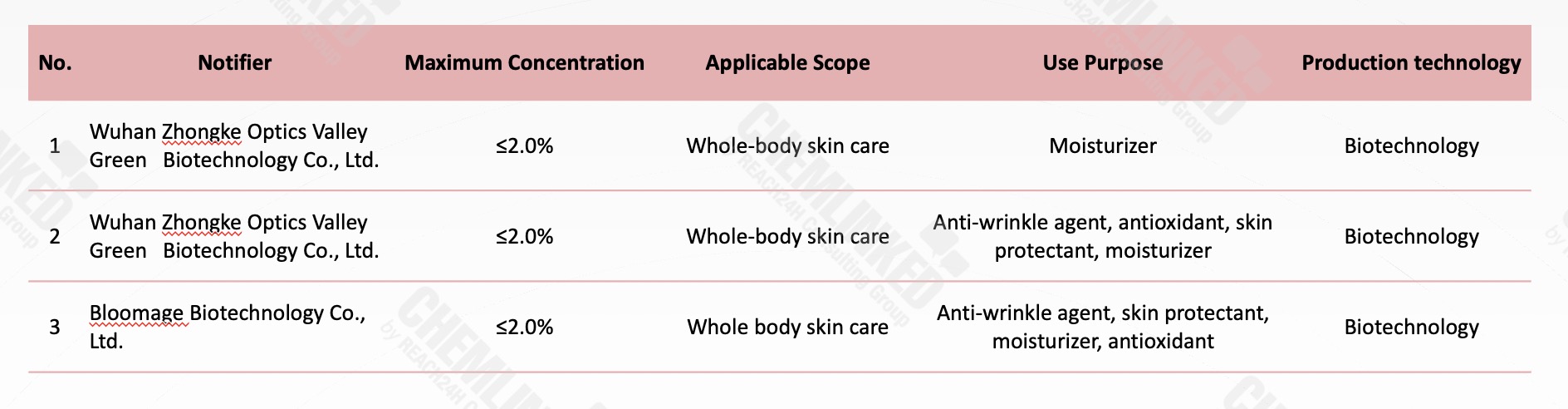 Figure 4: Notification Situation of Acetylneuraminic Acid
6. Galactomannan
Basic Information: Galactomannan, a low-polymerization polysaccharide, boasts excellent water solubility and stability. It is widely employed as a stabilizer and thickener in the food industry.
Approval Status in the Food Field:
a) In China, national food safety standards for Galactomannan (GB 1886.301-2018) were officially implemented on December 21, 2018. Its usage in food should align with production needs.
b) In Japan, Galactomannan (グァーガム分解物) is recognized as a designated health food with a specified health use of regulating the gastrointestinal tract. The standard daily intake is 5-12 g.
NCI Notification Situation: Galactomannan’s notification, by Beijing Guarrun Technology Co., Ltd., was publicly disclosed on July 10, 2023. This NCI is intended for use as a moisturizer in all kinds of cosmetics (excluding spray products), with a safe usage amount capped at 5%.
Additional Resource Recommendations
On December 14, 2023 (Thursday), ChemLinked will host a webinar entitled "Decoding Registration and Notification Requirements for Edible New Cosmetic Ingredients in China." This event aims to assist global stakeholders in navigating and comprehensively understanding the compliance landscape for edible NCIs in China. The key content of this webinar includes the regulatory framework, application requirements for edible NCIs, and alternative approaches to animal testing. Attendees will gain valuable insights to facilitate the successful introduction of edible NCIs to the Chinese market.
 We provide full-scale global cosmetic market entry services (including cosmetic registering & filing, regulatory consultation, customized training, market research, branding strategy). Please contact us to discuss how we can help you by