Request a Demo
Aerosol containers are commonly used in cosmetics, like hairsprays, shaving creams, deodorants, and perfumes. Compared to other containers, aerosols can prevent evaporation, resist spills, and have lower risk of bacteria and dust contamination during use. Given these attributes, cosmetic aerosols are subject to higher labelling requirements, aiming at providing consumers with guidance on the optimal handling, usage, and storage of aerosols.
This article introduces the labelling requirements for cosmetic aerosols in the UK before and after Brexit, along with the latest updates on these regulations.

Labelling Requirements Before Brexit
Labelling serves as a crucial component of cosmetics by presenting consumers necessary and reliable information about the product. As the core regulation for cosmetics, EU Regulation (EC) No 1223/2009 (EU Cosmetics Regulation) establishes rules for labelling cosmetics. According to it, cosmetic aerosols shall visibly and indelibly bear information such as the responsible person's name and address, contents, the date of minimum durability, special precautions, and a list of ingredients. For more details about these requirements, please refer to ChemLinked's article on EU Cosmetic Regulation.
In addition to EU Cosmetics Regulation, cosmetic aerosols with a volume of 50ml or greater shall comply with Council Directive 75/324/EEC on Aerosol Dispensers (ADD), which prescribes the criteria, testing procedures, and labelling requirements for aerosols with a volume of 50ml or greater. In terms of labelling, applicable aerosols put on the market is required to have the following on the product:
Name, and address/trademark of the marketing entity
Conformity marking "3" (inverted epsilon)
Batch number
Flammability-based warnings, and additional operating precautions
Net contents by weight and volume
Quantity of flammable material contained (if applicable)
The Aerosol Dispensers (EEC Requirements) Regulations 1977 and its successor The Aerosol Dispensers Regulations 2009, which were formulated to implement ADD within the UK, have enforced further guidelines. As per the two regulations, only the applicable aerosols satisfying the ADD can be marked with the inverted epsilon, in a visible, legible, and indelible manner. Besides, the information a, c, and d listed above shall be displayed in English, and the information e shall be expressed in metric units.

The inverted epsilon
Labelling Requirements After Brexit
1) Products in Great Britain's market
To begin with, cosmetic aerosols marketed in Great Britain (GB, including England, Scotland, and Wales) shall be in line with the labelling requirements in UK's retained Regulation (EC) No 1223/2009 (UK Cosmetics Regulation). Regarding the conformity marking, the UKCA marking replaces the inverted epsilon for aerosols targeting the GB market. To be eligible for having this marking, aerosols shall meet the requirements in Regulation 3 and Schedule 1A of The Aerosol Dispensers Regulations 2009, including those about safety testing. The UKCA marking has been in effect since January 1, 2021, with specified transitional periods for stakeholders as below:
Product Release Date for GB market | Accepted Markings |
From January 1, 2021, to December 31, 2024 | UKCA, or the inverted epsilon |
Since January 1, 2025 | UKCA (the marking is allowed to be placed on an affixed label or document) |
Since January 1, 2028 | UKCA (the marking shall be placed on the product itself or its packaging) |
As a general principle, only the manufacturer or the authorized representative can affix the UKCA marking. To apply this marking, the aerosol manufacturer is obligated to undertake a third-party conformity assessment, as well as prepare corresponding documentation and records in English. Such information shall generally be kept for ten years after the product is placed on the market, including the following:
the design and manufacture of the product;
the product's adherence to relevant standards;
addresses of the manufacturer and storage facilities.
Moreover, the manufacturer shall draw up the UK Declaration of Conformity for aerosols bearing the UKCA marking. It should be made available to market surveillance or enforcement authorities on request, which generally should include:
the manufacturer's name and address (or the authorized representative's, if applicable);
the product's serial number, model, or type identification;
a statement affirming the manufacturer's full responsibility for compliance;
details of the conformity assessment body;
the relevant legislation with which the product complies;
references to the relevant designated standards;
the name and signature of the person authorized to sign the declaration;
the declaration's issue date;
supplementary information (if applicable).
When applying the UKCA marking, the manufacturer shall ensure it is easily visible, legible, and indelible. If resizing the marking, the letters shall be maintained in proportion to the version set out below, with a minimum height of 5 mm.
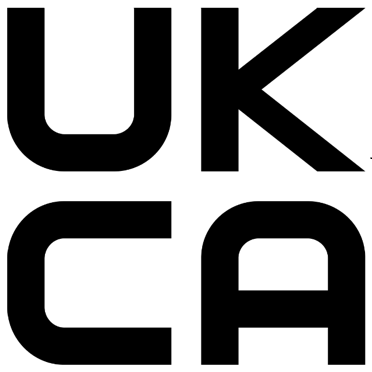
The UKCA marking
2) Products in Northern Ireland's market
UK formally adopted the Windsor Framework agreement on March 24, 2023. As per the agreement, Northern Ireland (NI) will align with relevant EU rules on marketing manufactured products, including aerosols. Accordingly, the inverted epsilon, the EU conformity marking for aerosols, can continue to be used in NI to demonstrate the product's compliance with EU rules after Brexit.
It should be noted that, if a UK-based assessment body is designated to conduct the mandatory third-party conformity assessment, then a UKNI marking shall be applied to the product under the same rules as UKCA marking along with the inverted epsilon.

The UKNI marking
3) Accepted markings in GB, NI and EU markets
The UKCA and UKNI markings are not recognized in the EU market. Therefore, for aerosols targeting both the EU and GB markets, they are allowed to have both the inverted epsilon and the UKCA marking, provided that relevant rules are adhered to, and neither marking obstructs the visibility of the other. However, if the aerosol for the NI market is also intended for the EU market, the inverted epsilon shall be used on its own, without the UKNI marking. In this case, the third-party conformity assessment shall be undertaken by an EU-based assessment body.
To maintain the integral place of NI in the UK's internal market, UK has committed to providing unfettered access for "qualifying Northern Ireland goods" to the rest UK market, without the need for additional approvals. "Qualifying Northern Ireland goods" are those in free circulation or processed in NI before their transfer to GB. This policy applies to aerosols with the inverted epsilon and the UKNI marking, allowing their placement on the GB market if they are "qualifying Northern Ireland goods".
Based on the information presented in the preceding paragraphs, the table below illustrates the recognized conformity marking for each market.
No. | Product Type | Accepted Markings |
1 | Aerosols being placed on the EU market only | The inverted epsilon |
2 | Aerosols being placed on the GB market only | UKCA, or the inverted epsilon |
3 | Aerosols being placed on the GB market under the unfettered access | The inverted epsilon, or the inverted epsilon and UKNI |
4 | Aerosols being placed on the NI market assessed by a UK-based conformity assessment body | The inverted epsilon and UKNI |
5 | Aerosols being placed on the NI market assessed by an EU-based conformity assessment body | The inverted epsilon |
Recent Updates on Labelling Cosmetic Aerosols
In January 2024, the Department for Business and Trade (DBT) of UK introduced updates regarding placing products on the GB market with UK or EU product markings.1 According to this document, the government intends to legislate in Spring 2024 to extend the recognition of EU requirements in GB, and introduce a range of other relevant measures.
1) Extended recognition of EU conformity markings
The UK government will indefinitely recognize current EU conformity markings beyond the 2024 deadline. In this case, businesses will gain the flexibility to use either the inverted epsilon or the UKCA marking to sell aerosols in GB. If businesses choose to place aerosols affixed with the inverted epsilon on the market, they will need to ensure the completion of all necessary conformity processes, and provide a Declaration of Conformity in English containing all relevant EU product regulations that have been met.
2) Fast-track UKCA provisions
The UK government is introducing a new fast-track process for businesses. Benefited from this process, if a manufacturer ensures that the EU technical requirements are met, and relevant EU conformity assessment procedures have been carried out, then the corresponding UKCA requirements are deemed satisfied. This also means that in cases where products fall within multiple regulations, UK and EU conformity assessment procedures can be used combinedly to demonstrate compliance with UK requirements.
If using this fast-track process, manufacturers will be required to affix the UKCA marking and draw up the UK Declaration of Conformity, in which the compliance with every relevant UK or EU legislation applicable to the product should be listed.
3) Optimized labelling methods
Following the feedback from businesses, the UK government also intends to bring forward an additional statutory instrument in Spring 2024 to provide permanent labelling flexibility. This will apply to the UKCA marking, as well as the labelling of manufacturer and importer contact details, allowing such information to be placed in any of the below manner:
directly on the product;
on a sticky label, accompanying document, or packaging;
voluntarily via digital labelling.
Upon the approval of legislation, businesses will also have the option to digitally present the Declaration of Conformity. More details on these measures will be disclosed in the coming months.
 We provide full-scale global cosmetic market entry services (including cosmetic registering & filing, regulatory consultation, customized training, market research, branding strategy). Please contact us to discuss how we can help you by