Request a Demo
On March 26, China National Institutes for Food and Drug Control (NIFDC) opened a public consultation, which outlawed the use of Cannabis Sativa Fruit, Cannabis Sativa Seed Oil, Cannabis Sativa Leaf Extract, and Cannabidiol (CBD) in cosmetics. Stakeholders with any comments can send back to the NIFDC by email at [email protected] before April 19, 2021. 1
Status Quo of Cannabis Cosmetics
In the past two years, cannabis cosmetics are undoubtedly one of the hottest products in China. There has also been a significant increase of international brands successfully filing imported cannabidiol skincare products at the NMPA in 2020 and 2021, with the total of 15 being filed. By comparison, 2019 had zero filings. 2 As for domestic products, the filing records have shot up to the thousands, covering almost all mainstream categories such as cleanser, lotion, essence, body care, etc.
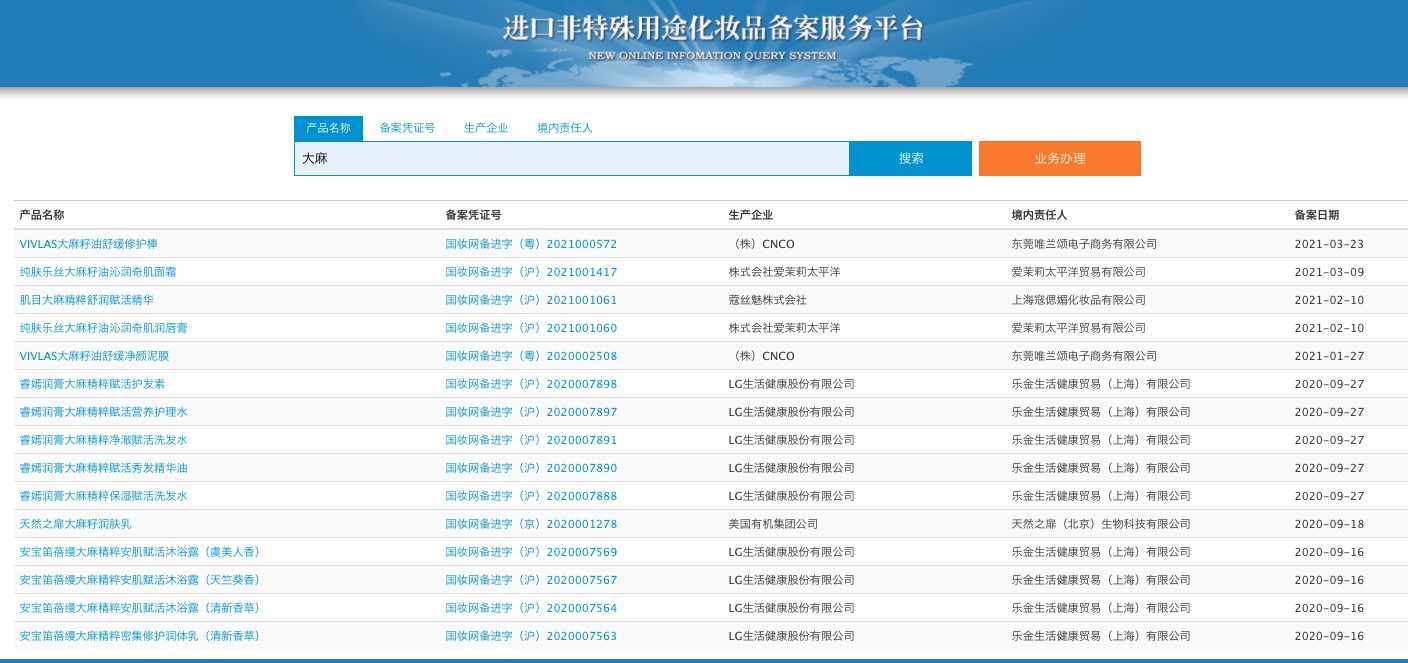
(The 15 filing records of imported cannabis cosmetics)
Cosmetic brands need to know that currently only three cannabis-related ingredients, including Cannabis Sativa Fruit, Cannabis Sativa Seed Oil, and Cannabis Sativa Leaf Extract, are allowed to be used as cosmetic ingredients. CBD is not included in the Inventory of Existing Cosmetic Ingredients in China 2015 (IECIC 2015), and the regulatory uncertainty is still a significant obstacle for CBD products in China. Brands who plan to use CBD in cosmetics have to conduct new cosmetic ingredient registration and obtain approval from the authority in advance.

Predictions of Future Trends
The proposal of NIFDC is a response to the national drug control policies and a clear sign that the Chinese government moves to tighten the regulations governing cosmetic ingredients. Once approved, it will have a tremendous impact on the industry. The rising prosperity in the cannabis cosmetic sector will come to a grinding halt. Enterprises will be strictly prohibited from the research, development, production, import, and sale of cannabis cosmetics.
In the short term, CBEC may be the only access for overseas brands to the Chinese market. However, the recent regulatory trend shows that China's top CBEC platforms, such as Tmall Global and JD.com, are raising their compliance standards and require merchants to meet certain cosmetic regulations such as the Safety and Technical Standards for Cosmetics 2015. Thus, the cannabis ban may also be a comprehensive ban, which not only apply to the general trade but also CBEC channel under the new cosmetic regulation regime.
Suggestions for Stakeholders
Given the short time for consultation, enterprises of cannabis cosmetics should submit their feedback to the authority as soon as possible and pay attention to the further updates of the ban to ensure compliance with national standards and laws.
For overseas companies with relevant export plans, they are suggested to sit on the fence and wait for the dust to settle before embracing the CBD revolution.
 We provide full-scale global cosmetic market entry services (including cosmetic registering & filing, regulatory consultation, customized training, market research, branding strategy). Please contact us to discuss how we can help you by