Request a Demo
In the past week, China National Development and Reform Commission released a Catalogue of Guidance on Industry Structure Adjustment (2019 Version). The guidance clearly states that daily use products containing microbeads will be subject to a manufacturing ban beginning Dec. 31, 2020. Sale of all products containing microbeads will be subject to a similar ban from Dec. 31, 2022 [1].
Uncertainty over the new ban
The new rule has generated widespread buzz among the industry. The R&D Director of Proya, (a Chinese cosmetic manufacturer) outlined the difficulties in predicting the impact the ban would have on the industry.
A lot is riding on the specifics of the regulatory measures introduced by the government. It is not yet clear how “plastic microbeads” will be defined, what categories of products will be subject to restrictions, how the ban will be implemented, and what punishments will be handed down to violators.
At present, the definition of microbeads varies in countries or regions, and no unified standard has been developed. For instance, in America, the term “plastic microbead” means any solid plastic particle that is less than five millimeters in size and is intended to be used to exfoliate or cleanse the human body. In Canada, “microbeads” are synthetic polymer particles manufactured in the range of 0.1 µm - 5 mm for a specific purpose and application.
If the definition of “microbeads” and the scope of the ban only extends to ingredients used as abrasives in toiletries products such as facial cleanser, scrub, shower gel, and toothpaste for exfoliating, smoothing and cleansing skin, then the ban will not have much impact on the industry. Numerous alternatives are available. However, if “microbeads” refers to any plastic particles less than 5 mm in diameter, it will have a tremendous impact on the industry, particularly for skincare and makeup categories.
Experts from China Association of Fragrance Flavor and Cosmetic Industries are now in talks with the National Development and Reform Commission in an attempt to lobby government and shape the direction of the microbead ban. After these talks conclude, the specifics of China's microbead ban will come into better focus.
Industry Impact
Additionally, according to some ingredients and manufacturing enterprises, microbeads are used primarily in rinse-off products and do not occupy a position of any significant economic importance in the cosmetic sector in China. Hence the ban on the use of microbeads is no big challenge for cosmetic enterprises.
At ChemLinked, we searched the term "scrubs” on NMPA’s online filing platform of non-special use cosmetics. We found that cosmetic products filed before 2017 tended to use more microbeads. Products filed after 2017 tend to not contain plastic microbeads. Instead, most products filed after 2017 have substituted microbeads with natural abrasives such as walnut shells, coconut shells, coffee grounds, sea salt or silica in anticipation of a ban. Large multinational cosmetic groups such as Estee Lauder and Johnson and Johnson, have led the way in this regard and phased out the use of microbeads across their global product portfolio.
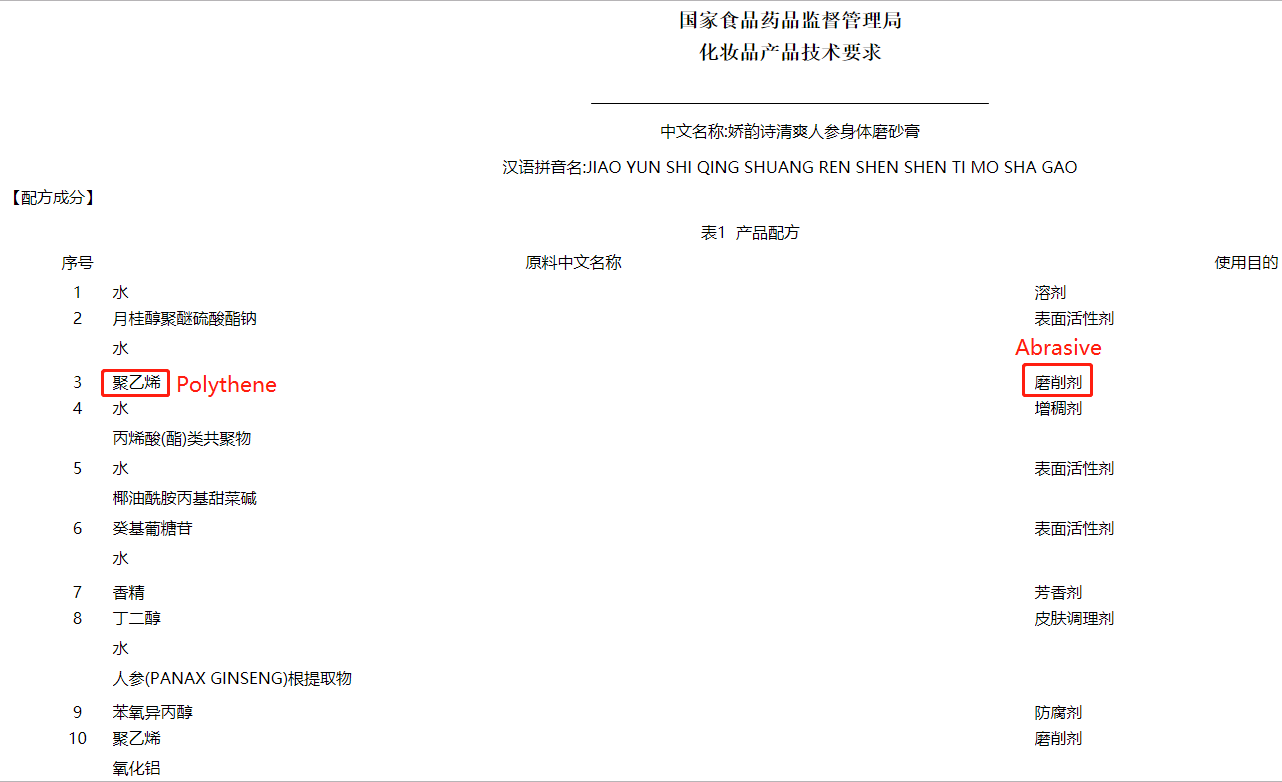
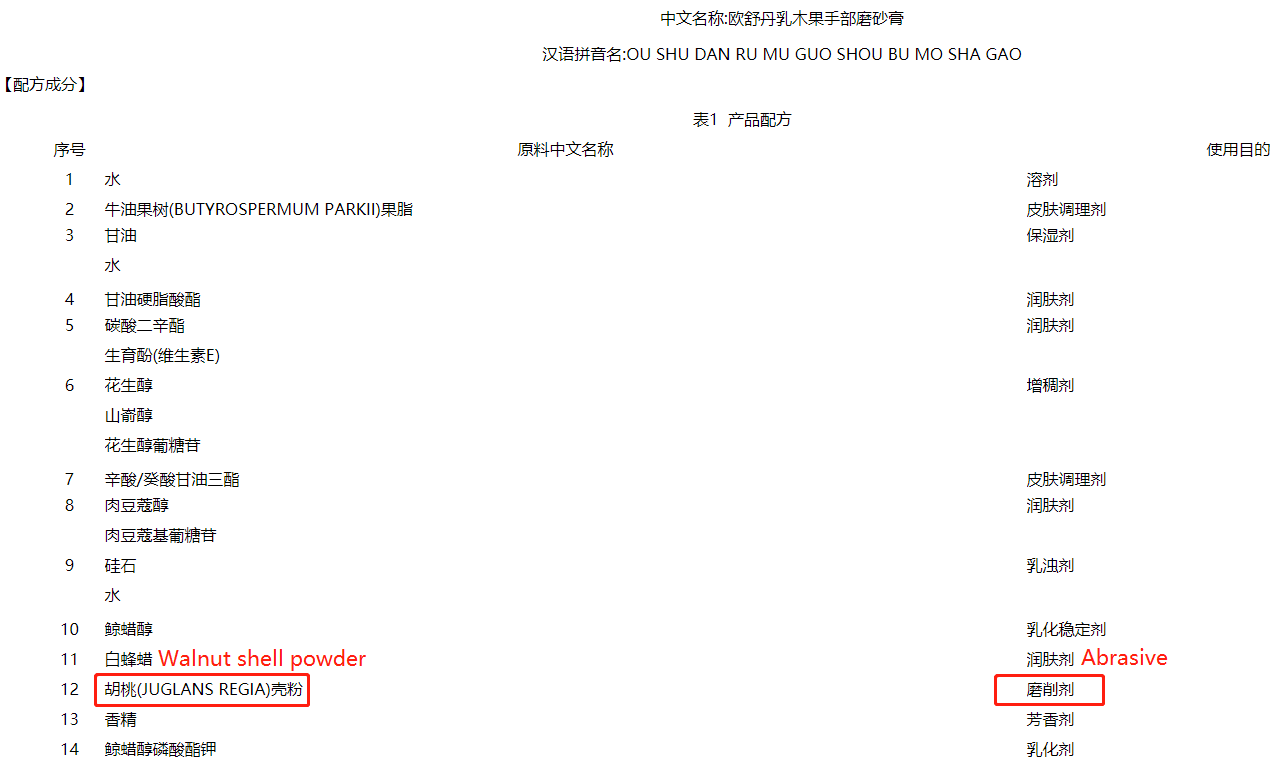
(Products filed in 2015) (Products filed in 2018)
Preparation for the implementation of microbeads ban
For cosmetic stakeholders who still use microbeads in cosmetics, suggestions are as follows:
Stop manufacturing and selling cosmetics containing microbeads within the prescribed deadline;
Take measures to adjust product formula. The possible substitutes for microbeads could be hydrated silica, walnut shells, coconut shells, oats, corns, almonds, sea salt, coffee grounds, or other natural ingredients.
Pay attention to the further updates of the microbeads ban to ensure compliance with national standards and laws.
 We provide full-scale global cosmetic market entry services (including cosmetic registering & filing, regulatory consultation, customized training, market research, branding strategy). Please contact us to discuss how we can help you by