Request a Demo
Takehome:
On Feb 22nd, 2017, Taiwan FDA officially issued the revised version of Standards for Examination and Registration of Medicated Cosmetics and Colorants replacing Instructions for Examination and Registration of Medicated Cosmetics and Colorants.
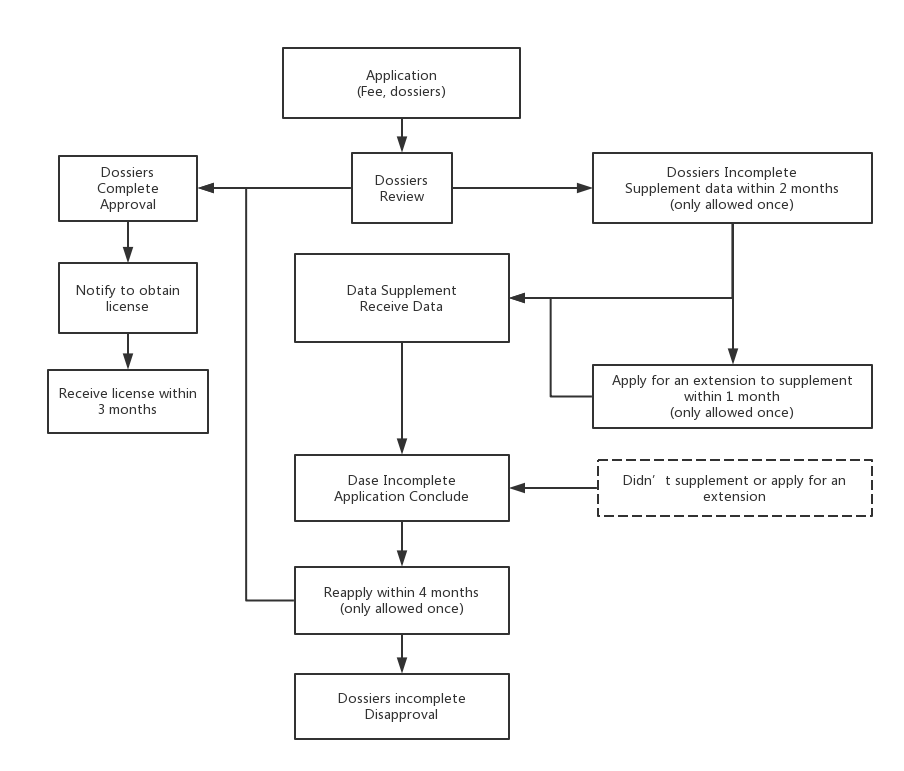
Compared to the former Instructions, the standards encompass notable amendments. New standards allow similar products from same company to share a single certificate; allow secondary manufacturer to register (which is uncovered in dossiers required), and allow medical and poisonous ingredients to follow the standards of EU, US and Japan. It also refines and specifies requirements for new ingredient registration, information modification and certificate renewal of medicated cosmetics and colorants registration. In addition, although the general application procedure will be broadly unchanged, the new standards limit the number of re-applications and resubmissions. Major amendments are outlined below
Same series products may apply for a single certificate:
Provided products share the same functions, same main ingredients (the concentrations are within Maximum Levels of Medical, Poisonous or Potent Drugs in Cosmetics) and same forms, and are manufactured/imported by same company, they can apply for a single registration certificate. Applicants are still required to submit each individual product label, prospectus, testing specification, method, and testing sheet, etc. For importers a free sale certificate from the country of origin should also be attached.
Secondary manufacturer can be registered:
For the previous registration, only a single manufacturer could be registered. The new standard now enables secondary manufacturers to apply for registration as well. This decision had been proposed in an internal conference, and exclusive news from the conference was released by Chemlinked (more details on: CL). This new stipulation has not been directly articulated within the new standard, but is detailed indirectly in the registration dossiers requirements.
A review sheet for examination and registration is also newly required. The testing specification, method and testing sheet only require one copy now (used to be two).
Medical and poisonous ingredients can follow EU, US, Japan standard
In the past, medical and poisonous ingredients listed on "Maximum Levels of Medical, Poisonous or Potent Drugs in Cosmetics" should not surpass the maximum limits specified in this list. The new standards stipulate that medical and poisonous ingredients listed in any country of EU, US and Japan's public standard can be used in cosmetics based on the specifications listed in the standards of the respective country. During the application, documentation detailing a country's standard should be submitted. Any ingredient which is not listed in an inventory in any country is regarded as a new ingredient.
Requirements for information modification are specified
The previous instruction didn't explain what types of information modification are allowed and the requirements for each modification. This standard lists conditions for information modification and dossier requirements.
Modifications listed in the standard:
|
No. |
Types of Modification |
|
1 |
Change products' English name |
|
2 |
Add new color types |
|
3 |
Add new items |
|
4 |
Change main ingredients and forms |
|
5 |
Change the prospectus, label and package |
|
6 |
Change products usage |
|
7 |
Change products' trade name |
|
8 |
Change manufacturer's name and address |
|
9 |
Add special name for export |
|
10 |
Transfer registration certificate to other manufacturer |
|
11 |
Reissue the certificate when losing or staining occur |
|
12 |
Cancel the certificate |
|
13 |
Amend contents in label, prospectus or package |
When the modification is a type 13 (see above), the company can change it automatically without application. Any other modifications require submission of required documents to TFDA (documents for each modification may differ). For the exact documents required for each modification, you can refer to a translation of the original copy of the Standard.
Explain how to renew the certificate
The new standard also provides an explicit explanation on the renewal of the certificate. The certificate is valid for 5 years. After that, manufacturer/importer should apply for renewal within 3 months and submit relevant documents. If it's beyond 3 months but within 6 months, manufacturer/importers should apply for a new registration certificate and submit relevant documents and fees.
Separately list requirements for new ingredients registration
In the previous instructions, documentation requirements for new ingredients were specified in the registration dossier requirements. In the new standard, requirements for new ingredient, with new usage and new limits in products are separately listed and explicitly specified. For new ingredients, new usage and new limits, the documents listed below are required:
- Two copies of safety test report
- Two copies of stability test report
- Two copies of relevant test report
Appendix: Registration Procedures for Medicated Cosmetics and Colorants
 We provide full-scale global cosmetic market entry services (including cosmetic registering & filing, regulatory consultation, customized training, market research, branding strategy). Please contact us to discuss how we can help you by