Request a Demo
As consumers’ understanding of health and beauty evolves, traditional skincare products are no longer meet the increasing demand for “inner beauty.” At the same time, factors like work stress, environmental pollution, poor diet, and lack of sleep have heightened concerns about internal health. In response, oral beauty products, which can improve skin quality, delay aging, and boost overall health, become one of the approaches to pursuing beauty and wellness. These products are valued for their ease of use and multiple benefits, satisfying the dual needs of maintaining health and enhancing beauty.
Definition & Categories
China has not yet established an official definition of oral beauty products. Generally, they refer to food products designed to achieve skin care and beauty-enhancing effects through oral consumption. Currently, the oral beauty market is becoming increasingly refined. Products can be broadly categorized through three dimensions: ingredients, forms, and efficacy.
Ingredients
Based on ingredients, oral beauty products can be categorized into collagen-based, hyaluronic acid-based, grape seed extract-based, and others. Among these, collagen and hyaluronic acid-based products have emerged as the top-selling categories, driven by the high demand for anti-aging solutions. Notably, collagen peptides, a subcategory of collagen, have consistently remained the “star ingredient” in the oral beauty sector.
Forms
Based on forms, oral beauty products come in various forms, including liquids, capsules, tablets, powders, and more. Among them, collagen-based products are commonly offered in liquid form. Beyond traditional forms, brands are working on innovative forms like soft candies and jellies to capture consumer attention. Examples include Blueberry Collagen Jelly of Youngsure and Hair, Skin & Nails Gummies of Nature’s Bounty, which appeal to younger consumers and expand consumption scenarios.
Efficacy
Based on intended benefits, oral beauty products can be classified into whitening, anti-aging, hydration, and anti-hair loss categories and others. Among them, whitening and anti-aging are the most prominent categories, leading the market development. However, as consumer demands are increasingly segmented, the anti-aging category has branched out into specialized niches such as anti-glycation and anti-oxidation, while the skin-whitening category has expanded to include sub-segments like yellowing removal, brightening, spot-lightening, and wrinkle reduction.
Market Condition
1. Development History in China
Introduction and Rise
In the 1990s, Taitai Oral Liquid, which claims to “remove freckles, nourish skin, and improve insomnia,” gained wild popularity, introducing the concept of oral beauty products to Chinese consumers. However, subsequent controversies over its efficacy, user complaints about false advertising, and the entry of other oral beauty products into the Chinese market eventually brought down this once-dominant product.
Later in the early 21st century, some international brands entered the Chinese market, such as FANCL, Shiseido, and DHC. Chinese domestic players like YOROYAL, Marubi, and BY-HEALTH also started to step up their layout, further popularizing the concept of oral beauty.
Setbacks and Challenges
The market faced setbacks. In 2013, China Consumer Reports exposed that many so-called collagen drinks contained no actual collagen. CCTV’s Focus Report also questioned the product efficacy and exposed the low production costs of oral beauty products. These revelations triggered a sales collapse and trust crisis, temporarily freezing the oral beauty market.
Revival and Diversification
Around 2015, with the rise of cross-border e-commerce, brands like Swiss and Blackmores entered China and were welcomed by Chinese consumers. Today, China’s oral beauty market has rebounded with a diverse landscape. Leading brands include Japanese beauty groups Shiseido, POLA, and FANCL; Australian health brands such as Swisse and Enervite; German brands such as Doppelherz, and Vikki; as well as Chinese health nutrition giants such as Five Doctors, By-Health, TongRenTang, and Renhe.
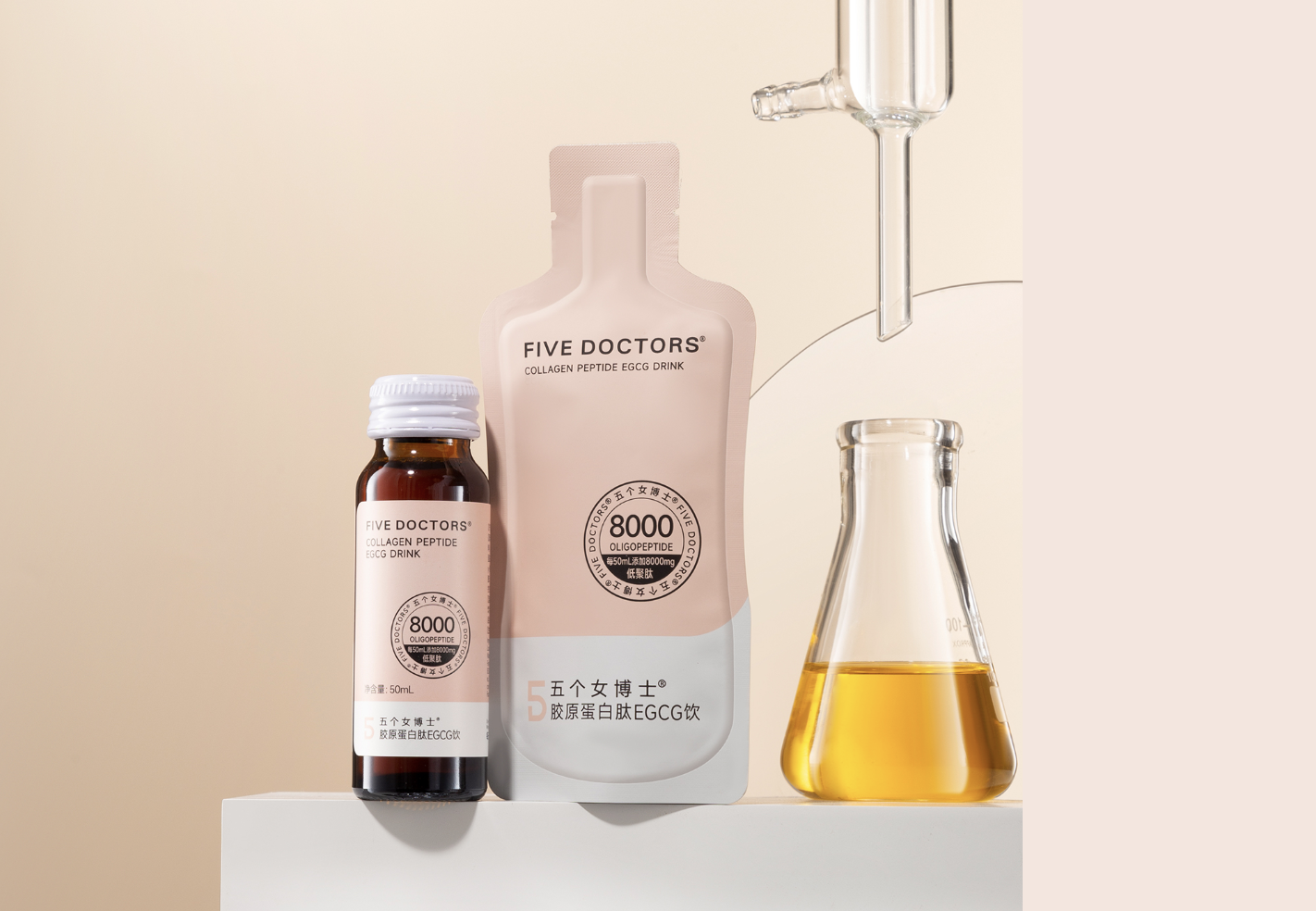
Five Doctors Collagen Peptide EGCG Drink
Image Source: The brand’s official website
Notably, around 2021, Chinese domestic beauty giants like Bloomage Biotech, Botanee, and Yatsenare started making their strategic moves in oral beauty products. For instance, in 2021, Bloomage Biotech launched the hyaluronic acid drinking water brand WHATER.
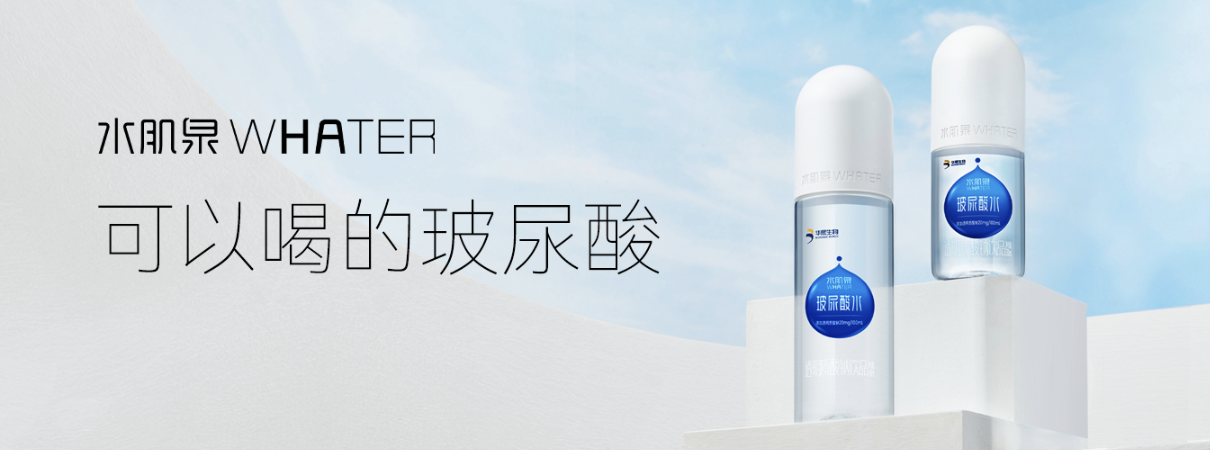 WHATER from Bloomage Biotech
Image Source: The Brand’s official websites
Overall, the current landscape sees a diverse range of players entering the market. Established leading brands such as Swisse, BY-HEALTH, and Five Female Doctors have been deeply entrenched in the market for years, making their positions difficult to challenge while new oral beauty brands launched by cosmetic companies have not yet made a significant impact.
2. Market Performance
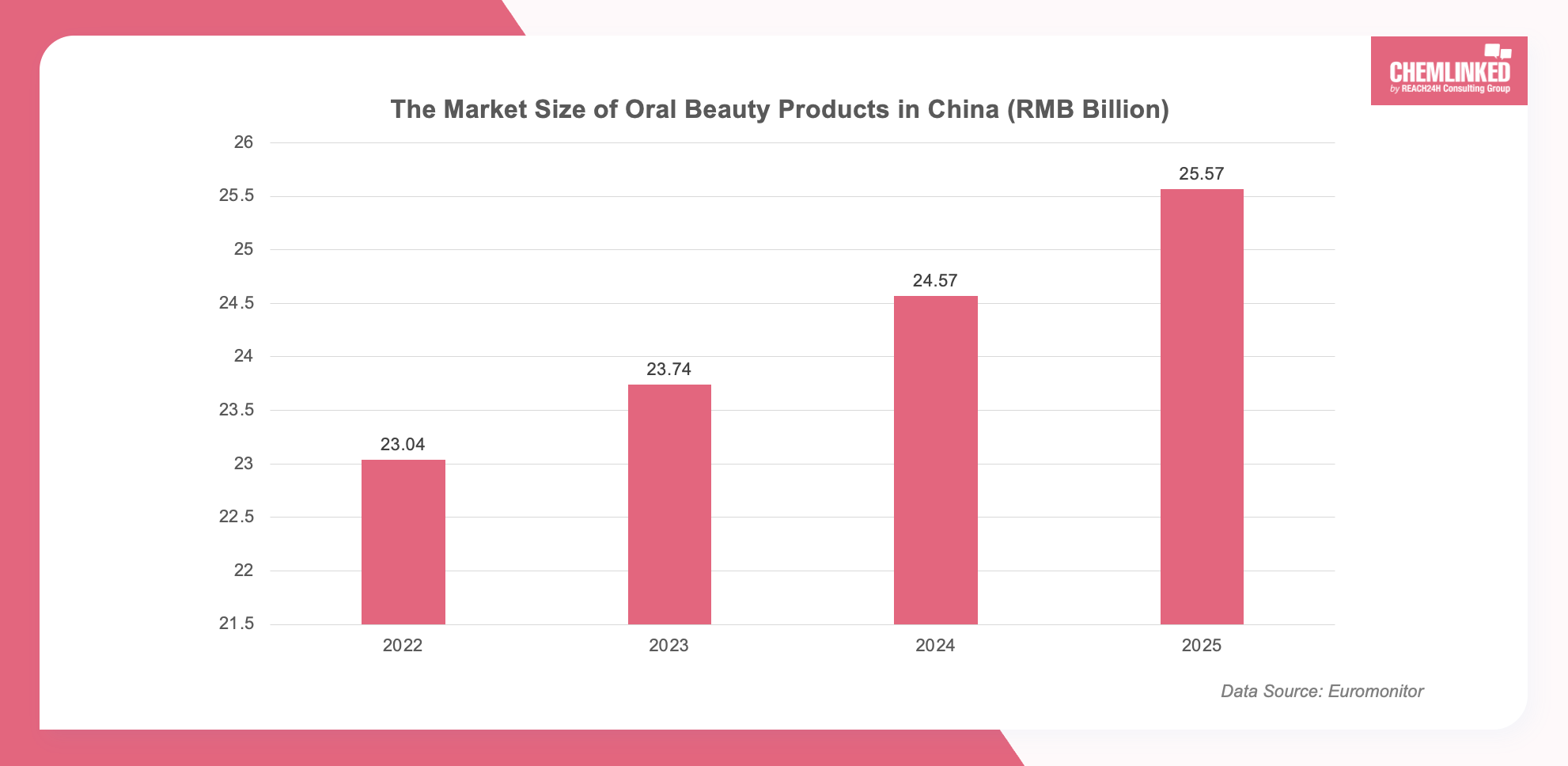
Amid the overall economic slowdown, China’s oral beauty industry is experiencing rapid growth, with strong market growth momentum. Euromonitor data indicates that market size is expected to surpass 25.57 billion yuan in 2025, with a compound annual growth rate (CAGR) of 3.8% from 2020 to 2025.
E-commerce Reshapes Retail Landscape
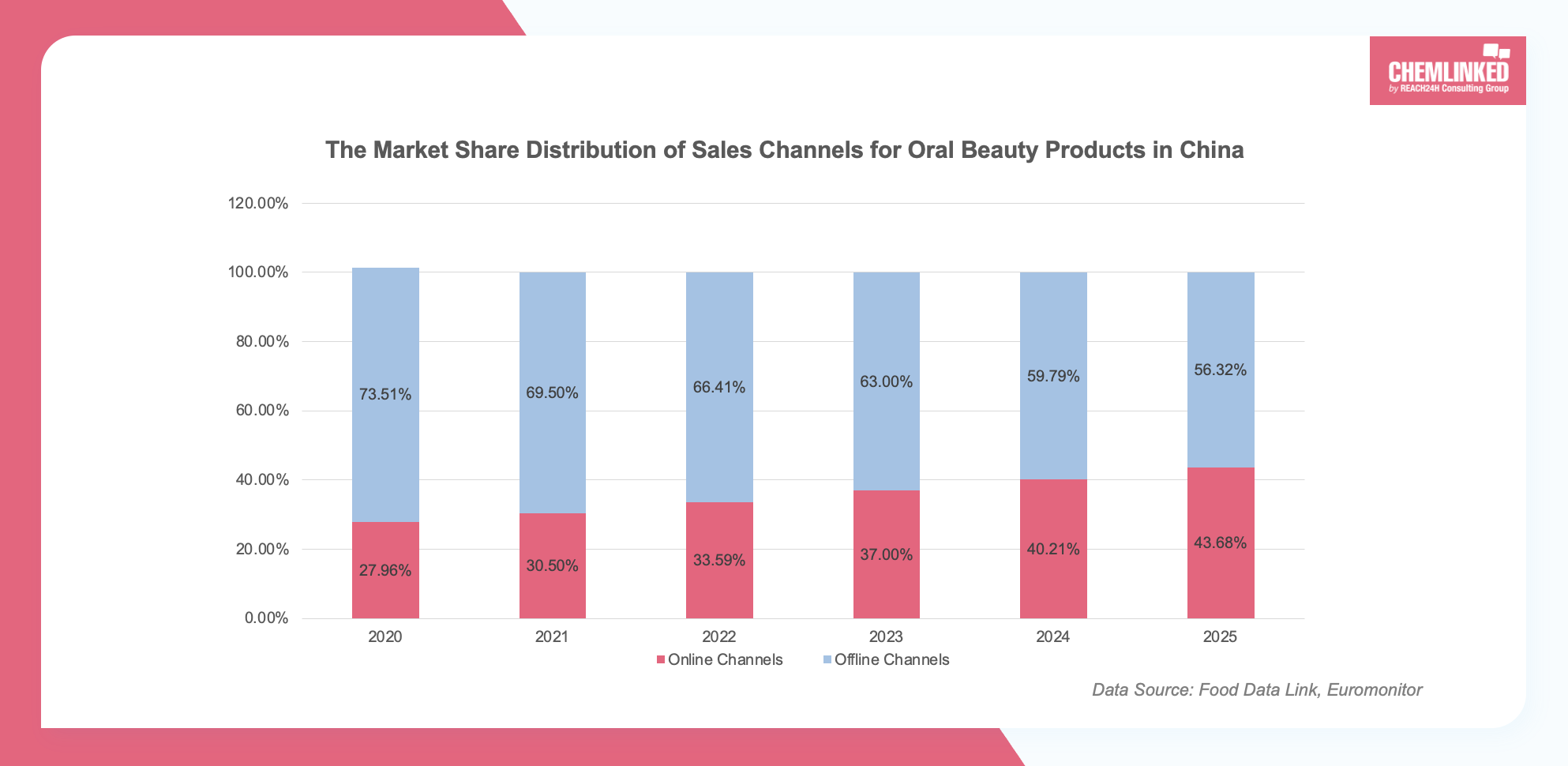
In terms of sales channels, the rise of digital payments and e-commerce platforms is reshaping the retail channels of oral beauty products. Currently, this sector is led by offline channels, while online channels steadily gaining ground. Data shows that over the past three years, the growth rate of online sales of oral beauty products has reached 24.2%. By 2025, the online sales market size will exceed 43%.
Younger Consumer Base
Additionally, Chinese oral beauty consumers are showing a trend toward younger demographics. Women account for over 70% of the oral beauty product market. Among them, 56% are aged between 19 and 35, while 37% fall within the 36-50 age range. As the demand for anti-aging products among the post-90s and post-00s generations surges, the consumer base is becoming notably younger and more specialized.
Debate on Effectiveness
Although the oral beauty market has performed well in recent years, with sales steadily rising and the concept of oral beauty gaining wider acceptance, consumer attitudes remain skeptical. The debate over whether oral beauty products are a “stupid tax” (i.e., whether they are effective instead of a gimmick) continues to spark intense discussion on social media, with the engagement of influencers sharing their experiences and recommendations. Some consumers report positive results, claiming their skin has become smoother and more refined, while others remain unconvinced, seeing little visible changes and even considering these products as mere “psychological placebos.” This skepticism stems from the lack of robust scientific evidence and convincing efficacy data to support the claimed effects.
This divide reflects the fragmented nature of the Chinese oral beauty market. On the one hand, the oral beauty sector is expanding, attracting substantial investment and new players. On the other hand, the swift market expansion has led to issues such as inconsistent product quality, which heightens consumer skepticism and raises concerns about product safety.
Compliance Requirements
In China, oral beauty products are not classified as cosmetics but fall under the category of food. It primarily falls under two food categories: one is pre-packaged food containing functional ingredients, and the other is health food. These two types of products are subject to different regulatory requirements and companies shall comply with their respective compliance standards.
Compliance Requirements | Pre-packaged Food | Health Food |
Scope | Pre-packaged food containing functional ingredients | Oral beauty products with health function claims under the Health Function Catalogue Allowed for Health Food Claims Non-Nutrient Supplement (2023) shall be regulated as health food, such as “help improve acne” and “help improve skin moisture condition” |
Pre-market approval |
| Health products shall undergo the registration or filing process with the relevant market supervision authorities before they can be launched on the market. For detailed registered/filing requirements, please refer to our Foodpedia. |
Label/Advertising requirements |
|
|
Chemlinked Comments
The oral beauty sector is currently experiencing rapid market growth, yet significant challenges remain. While regulatory compliance remains a fundamental requirement, the big issue centers on how to validate the effectiveness of these products. Looking ahead, companies that can bridge this critical gap and demonstrate leadership in advancing industry will be well-positioned to gain more consumer trust and market share.
 We provide full-scale global cosmetic market entry services (including cosmetic registering & filing, regulatory consultation, customized training, market research, branding strategy). Please contact us to discuss how we can help you by