Request a Demo
Chinese Mainland
On May 29, 2026, China's National Medical Products Administration (NMPA) announced updates to Chapter 4, "Physical and Chemical Testing Methods for Cosmetics," Chapter 6, "Toxicological Testing Methods for Cosmetics," and Chapter 7, "Human Safety Testing Methods," in the Safety and Technical Standards for Cosmetics (2015 Edition) (STSC). This revision introduces three new physical and chemical testing methods and one new human safety testing method. Additionally, four existing toxicological testing methods have been revised and replaced. These updates will take effect on March 1, 2027. Before the implementation date, the updated methods are encouraged for use in cosmetics registration and notification.
More regulation highlights in Chinese Mainland:
China NMPA Modifies Use Conditions for Mercury, Biphenyl-2-ol, and Acid Violet 43
Shanghai Launches Electronic Label Pilot for Imported Cosmetics
China GACC Reports Rejection of 40 Batches of Cosmetics in April 2026
NIFDC, Beijing MPA and Guangzhou AMR Released Four Batches of FAQs in May 2026
China Releases 5 New Cosmetic Standards, Publishes 1 Standard Submitted for Approval, and Launches Public Consultation on 10 Draft Standards in May 2026
Taiwan, China
Taiwan to Fully Implement Cosmetic GMP from July 1, 2026
On May 27, 2026, Taiwan Food and Drug Administration (TFDA) reminded industry stakeholders that cosmetic Good Manufacturing Practice (GMP) requirements are set to apply to nearly all cosmetic manufacturing facilities from July 1, 2026, completing a three-phase implementation plan launched in 2024. The framework, aligned with ISO 22716, establishes standards for manufacturing operations, quality control, and documentation. With the final phase approaching, companies supplying cosmetics to the Taiwan market should ensure their quality systems and operations comply with GMP requirements.
Japan
Japan Updates Guidance on Henna-Containing Hair Cosmetics Following Allergy Incident Reports
On May 20, 2026, Japan's National Consumer Affairs Center (NCAC) warned of anaphylaxis cases linked to henna hair products containing oxidative dyes. In response, the Ministry of Health, Labour and Welfare (MHLW) issued an updated guidance urging local authorities to ensure proper labeling and safety measures for cosmetics containing henna or henna-derived ingredients.
More regulation highlights in Japan:
Japan MHLW Releases Q&A Collection Regarding Applications for Manufacturing and Marketing Approval of Quasi-drugs, etc.
South Korea
South Korea Amends Regulations on Cosmetic Production and Import Reporting
On May 13, 2026, the Ministry of Food and Drug Safety (MFDS) of South Korea released a partial amendment to the Regulation for Notification of Cosmetics Manufacturing & Import Amount and Lists of Ingredients. The amendment strengthens fact verification and on-site inspection measures for companies that fail to report cosmetic production and import records, while also introducing incentives for compliant companies. The revised regulation took effect on the date of issuance, May 13, 2026.
More regulation highlights in South Korea:
South Korea Cracks Down on Counterfeit Cosmetics from Overseas Online Platforms
South Korea's MFDS Calls for Stricter Management of SPF Labeling and Quality Control
South Korea Amends Cosmetics Act to Ban Misleading AI-Generated Advertisements
MFDS Cracks Down on Misleading Ads for Cosmetics with Food-like Packaging
Souh Korea Revises Guideline for Analysis Methods of Cosmetic Restricted Ingredients
The Philippines
Philippines FDA Issues Consolidated Revisions to Cosmetic Ingredient Requirements under the ASEAN Cosmetic Directive
On May 4, 2026, the Philippines Food and Drug Administration (FDA) issued an official Circular to update the amendments to the ingredient annexes to the ASEAN Cosmetic Directive (ACD). These amendments were approved during the 40th–42nd ASEAN Cosmetic Scientific Body (ACSB) meetings, and mainly include the following:
1) Annex II: adding 30 prohibited ingredients, and revising the identification for 4 existing prohibited ingredients;
2) Annex III: adding 3 restricted ingredients, and revising the requirements for 2 restricted ingredients;
3) Annex VII: revising the requirements for 1 permitted UV filter, and deleting 1 permitted UV filter.

Vietnam
Vietnam Issues Latest Draft Decree on Cosmetic Management
On May 29, 2026, Vietnam notified its latest draft Decree on Cosmetic Management to the World Trade Organization (WTO). The draft is still under review and being revised based on feedback from ministries, industry associations, and enterprises, and it is expected to take effect on December 31, 2026.
Thailand
Thailand Finalizes Regulations Governing Microneedle Cosmetics
On May 21, 2026, Thailand's Ministry of Public Health (MOPH) together with the Cosmetic Committee issued three notifications in the Royal Thai Government Gazette, formally establishing a regulatory framework for microneedle cosmetics. The regulations entered into force on May 22, 2026, imposing a general prohibition on the manufacture, import, and sale of such products, while providing limited exemptions and labeling requirements for permitted products.
More regulation highlights in Thailand:
Thailand Issues New Regulations on the Use of Piperonal in Cosmetics
Thai FDA Unveils Five Category-Specific Cosmetic Advertising Guidance Infographics Based on 2024 Revised Cosmetic Advertising Manual
India
India Clarifies Injectable Products Fall Outside Cosmetic Scope
On May 19, 2026, India's Central Drugs Standard Control Organization (CDSCO) clarified that products supplied in injectable form do not meet the legal definition of cosmetics under the Drugs and Cosmetics Act, 1940 and Cosmetics Rules, 2020. The authority emphasized that cosmetic products cannot be administered by injection and reminded stakeholders of requirements regarding restricted and GNRAS ingredients, truthful claims, and label integrity. CDSCO also encouraged the public to report suspected regulatory violations.
More regulation highlights in India:
India Cancels Import Registration of High-Strength AHA Chemical Peel Product
India Debars Cosmetic Import Applicant for Submission of Fabricated Documents
India Revises Regulatory Guidelines for Sampling of Cosmetics and Other Regulated Products
Australia
Australia Consults on Proposed Amendments to Poisons Standard
On May 29, 2025, Australia’s Therapeutic Goods Administration (TGA) initiated a consultation on proposed amendments to the Poisons Standard. One of the amendments is regarding salicylic acid, with regulatory oversight for salicylic acid in cosmetics being tightened. Stakeholders are invited to provide their feedback by June 30, 2026.
More regulation highlights in Australia:
The European Union
EU SCCS Finds Acetophenone Safe Despite RAC's Proposed Reprotoxic Classification
On May 4, 2026, the EU Scientific Committee on Consumer Safety (SCCS) published a preliminary opinion on the safety of Acetophenone (CAS No. 98-86-2) as a constituent of natural ingredients in cosmetic products. The Committee concluded that the substance is safe at concentrations up to 100 ppm (0.01%) when used as part of Natural Complex Substances (NCS). The opinion is open for public consultation until July 6, 2026.
More regulation highlights in The European Union:
EU Corrects Ingredient Reference Numbers in Regulation (EU) 2026/909
The United States
California Finalizes SB 54 Packaging EPR Regulations
On May 1, 2026, California's permanent regulations implementing the SB 54 Plastic Pollution Prevention and Packaging Producer Responsibility Act took effect. The regulations establish an extended producer responsibility (EPR) framework for packaging and single-use plastic food service ware, with targets for recyclability, recycling, and source reduction by 2032. Producers were required to register with the approved Producer Responsibility Organization (CAA), apply as independent producers, or seek exemptions by June 1, 2026, or risk enforcement actions.
Canada
Canada Applies Significant New Activity Provisions to Two Cosmetic Ingredients
On May 2, 2026, the Canadian government published two Significant New Activity (SNAc) Notices in the Canada Gazette, Part I, Volume 160, Number 18, requiring companies to submit a Significant New Activity Notification (SNAN) before manufacturing or distributing for sale cosmetics containing Alkanedioic acid, di-branched alkyl ester or Hexanedioic acid, 1,6-diisotridecyl ester at concentrations of 0.1% or greater by weight. The notices took effect immediately on May 2, 2026.
Argentina
Argentina Updates Lists of Prohibited and Restricted Cosmetic Ingredients
On May 21, 2026, Argentina's National Administration of Drugs, Food and Medical Devices (ANMAT) issued Order No. 2599/2026 and Order No. 2601/2026, incorporating Mercosur/GMC/Resolution No. 06/2025 and Mercosur/GMC/Resolution No. 07/2025 into the national legal framework, respectively. The Orders amend the lists of prohibited and restricted cosmetic ingredients, with transitional periods of 12 to 24 months granted for compliance.
More regulation highlights in Argentina:
Webinar Recommendation
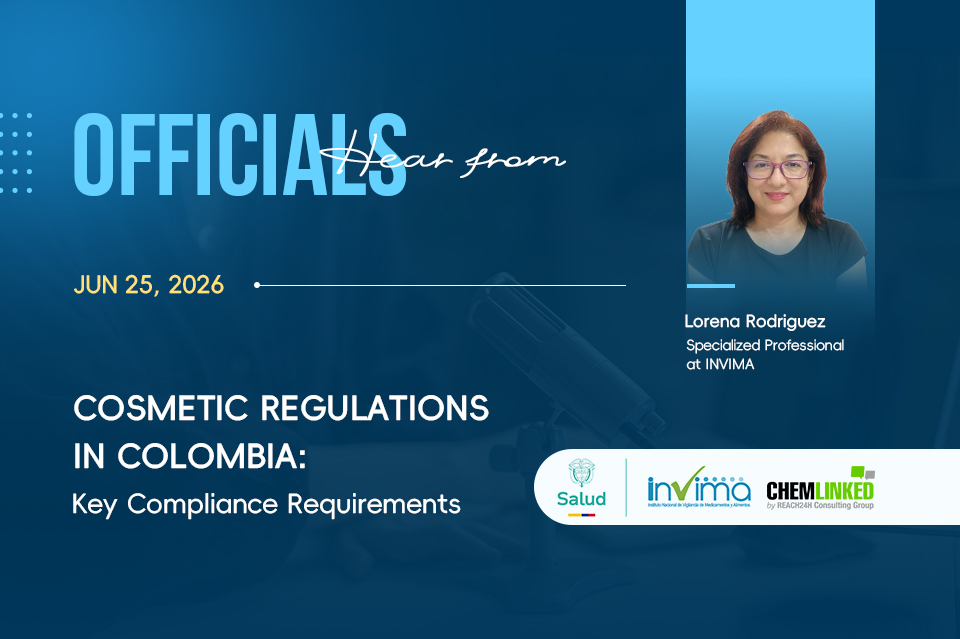
Colombia Cosmetic Regulations Webinar (June 25, 2026)
ChemLinked invited Lorena Rodriguez, a Specialized Professional at Instituto Nacional de Vigilancia de Medicamentos y Alimentos (INVIMA), the competent authority for cosmetics in Colombia, to provide a comprehensive overview of the country's cosmetic regulatory framework and key compliance requirements for cosmetic products.
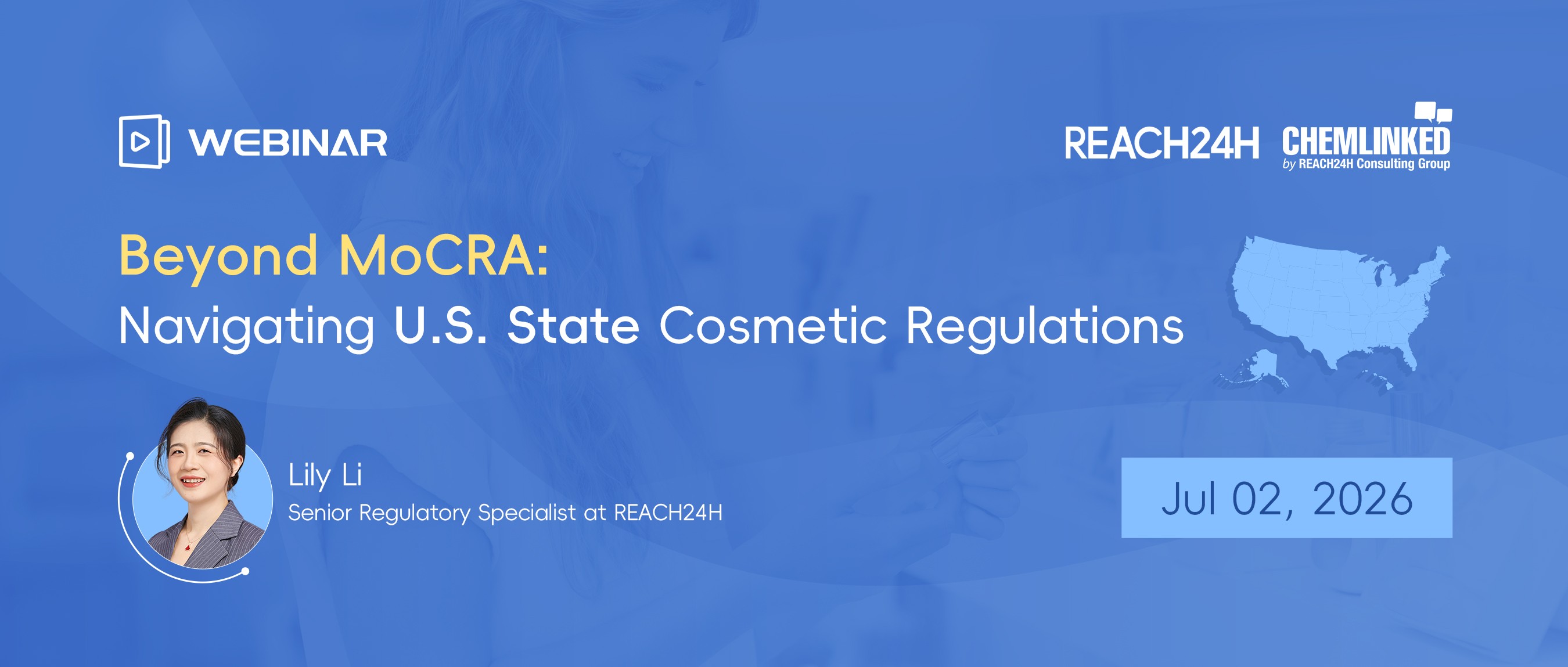
U.S. State Cosmetic Regulations Webinar (July 2, 2026)
To help cosmetic companies better understand the rapidly evolving regulatory landscape in the United States, ChemLinked has invited REACH24H to provide an overview of key state cosmetic regulations and emerging legislative trends. The webinar will cover ingredient restrictions, PFAS regulations, labeling requirements, and other state-specific compliance obligations in major markets such as California, Washington, and New York. Join the webinar to gain practical insights into navigating both federal and state-level requirements and participate in an interactive Q&A session with regulatory experts.
Further Reading
[Updated] Non-compliant Cosmetic Cases in Southeast Asia in 2026
India’s Non-compliant Cosmetic Cases in 2026
 We provide full-scale global cosmetic market entry services (including cosmetic registering & filing, regulatory consultation, customized training, market research, branding strategy). Please contact us to discuss how we can help you by