Request a Demo
Vietnam' s cosmetic' s sector is rapidly evolving. The growing number of middle-class in the country has driven the expansion of the cosmetic market evidenced by increasing demand for personal care and beauty products.
This new trend has definitely attracted a wide range of local and foreign players into the Vietnamese cosmetic market. A report from Nielsen has shown that the Vietnamese cosmetics market has an annual turnover of VND 15 trillion (approximately US$ 704.2 million).
The average per-capita spending on cosmetics in Vietnam is US$4/person annually. Comparing this with neighbors Thailand (US$20/person annually) underlines the high ceiling and excellent potential of Vietnam’s underdeveloped cosmetics sector.
Cosmetic Market Analysis in Vietnam
Mintel' s report showed that Vietnam' s cosmetics market reached a valuation of US$2.35 billion in 2018, growing considerably when compared to the 2016 valuation of US$1.78 billion. The market is expected to sustain this growth in the coming years driven by GDP growth of 6% and a middle-income population of 33 million by 2020.
Foreign Cosmetics Brands' Market Share
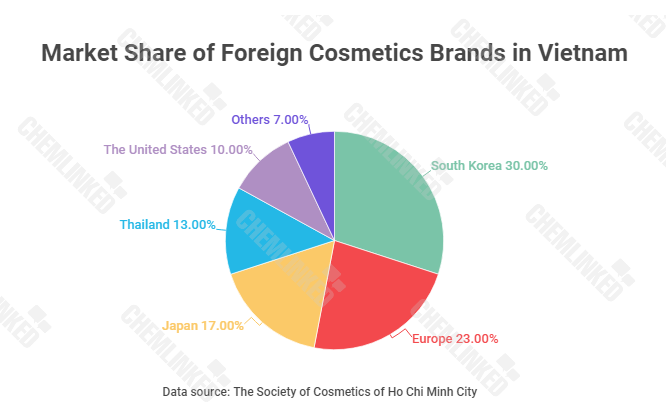
The report of The Society of Cosmetics of Ho Chi Minh City indicates that there are more than 400 cosmetics businesses in Vietnam. Despite this foreign brands control 90% of the market, and tend to offer high-end product lines. The majority of these foreign brands are from South Korea (30%), Europe (23%), Japan (17%), Thailand (13%), the United States (10%), and others (7%).
Local Cosmetics Brands Lack Marketing and R&D Capacities
Source: Internet
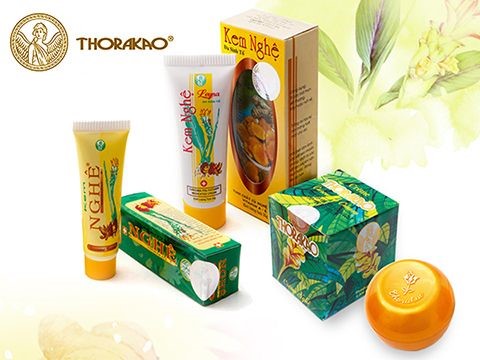
One of the several reasons that explain why Vietnamese brands are performing poorly is because of limited financial capability. As a result, they do not have the ability for marketing, advertisement and most importantly research and development (R&D). Furthermore, while many of the domestic brands have high-quality products, these companies do not really understand branding and product positioning.
Increased Potential with Reduced Tax for Imported Cosmetics
On top of that, the government of Vietnam has made considerable efforts to sign trade agreements with many countries. Through these agreements, tax prices of imported cosmetics are to be reduced to between 0%-5%, in hopes of fostering accelerated growth in the sector.
Cosmetics Regulations in Vietnam
Cosmetics are strictly regulated in Vietnam. Under Vietnamese regulations, which follows the ASEAN Cosmetic Directive, you will need to register your cosmetics products before you can import, distribute or sell them in Vietnam.All cosmetic product registrations are regulated by the Drug Administration of Vietnam (DAV). The DAV is part of the Vietnam Ministry of Health (MOH). Each cosmetic product/SKU that will be sold in Vietnam will need a separate product registration [1]. Registration can be done by an organization or an individual, as long as the registrant is the product owner or someone appointed by the owner.
Product Proclamation Number in Vietnam
Once the cosmetic product registration is successful, the MOH will issue a product proclamation number (in receipt) for each of the products.A Product Information File (PIF) is also required for every cosmetic product upon its distribution. A PIF should include the following:
A product summary and administrative documents
Product quality
Material quality
Effectiveness/Efficiency and safety
Cosmetics Labeling Requirements in Vietnam
According to ASEAN Cosmetic Directive, here are the labeling contents that should be included on the packaging label of the cosmetic products sold in Vietnam:Name and functions of the product, unless the presented form of the product has been displayed clearly the product’s function
Instruction of usage
Full ingredients of the product formula. All ingredients must be clearly stated in accordance with the latest international nomenclatures
The country of origin in which the product was manufactured
Weight and volume in British Imperial System or International System of Units
Name and instruction of the individuals or organizations that are in charge of the distribution and sale of the products. They should be indicated in Vietnamese in accordance with the investment registration certificate or enterprise registration certificate. Other information on the labeling can be written in English or Vietnamese
Quantification is presented with weight or volume, with regard to the meter system or the British system
Manufacturing lot number
Date of manufacture or date of expiry must be stated clearly and precisely in the format of DD/MM/YYYY or MM/YYYY. Instruction can be included in regards to product stability if necessary
For products with shelf life fewer than 30 months, the date of expiry is mandatory and must be printed on the label
Warning statement about the usage safety if required
Cosmetics Claim Requirements in Vietnam
Other than labeling, all cosmetic products manufactured in or imported into Vietnam must have proper claims before it can be distributed or sold in the country.While individuals or organizations that put the products on the market are responsible for the product’s safety, quality and effectiveness, they will also need the approval of claims from the authority.
Claims are acceptable as long as evidence and reports are available. For medicinal or therapeutic benefits, their approval is subject to individual assessment by the national authority.
Some prohibited claims are:
Skin products: Eliminates scars; reverses aging
Hair products: Reverses hair loss; gets rid of dandruff permanently
Deodorants/antiperspirants: Prevents sweating entirely
Cosmetics Advertising Requirements in Vietnam
All cosmetic advertising on any of these media: radio, television, internet, newspapers, magazines, posters, events, etc. are regulated under Vietnamese Law and must be approved before they are shown publicly. The content of the cosmetic advertisement must be appropriate and not misleading. It should conform to effectiveness, safety and quality of the product based on ASEAN Cosmetic Directive.The dossiers of cosmetic advertisement required for approval are listed below:
Filled application of the advertisement.
A copy of the cosmetic product registration with seal from the product owner or organization.
A copy of enterprise registration certificate with seal.
An authorization letter from the product owner for the person or organization that registers for the advertisement.
The advertisement scenarios with clear descriptions of the music, pictures and contents used.
The subtitles materials of the product’s properties and utilities in case the advertised content and the presented content at the seminar or the cosmetic introduction event show the cosmetic’s properties and utilities that are outside the presented content in the cosmetic product proclamation report.
 We provide full-scale global cosmetic market entry services (including cosmetic registering & filing, regulatory consultation, customized training, market research, branding strategy). Please contact us to discuss how we can help you by