Request a Demo
Background
Currently, in China, the fundamental regulation guiding the cosmetic sector is the outdated Cosmetics Hygiene Supervision Regulations (CHSR), which has been implemented for 30 years and only subtle refinements were made during the period. To align the regulatory regime with the current industry practices, China has been in the process of amending the overarching regulation since 2013 and renamed it as Cosmetic Supervision and Administration Regulation (CSAR).
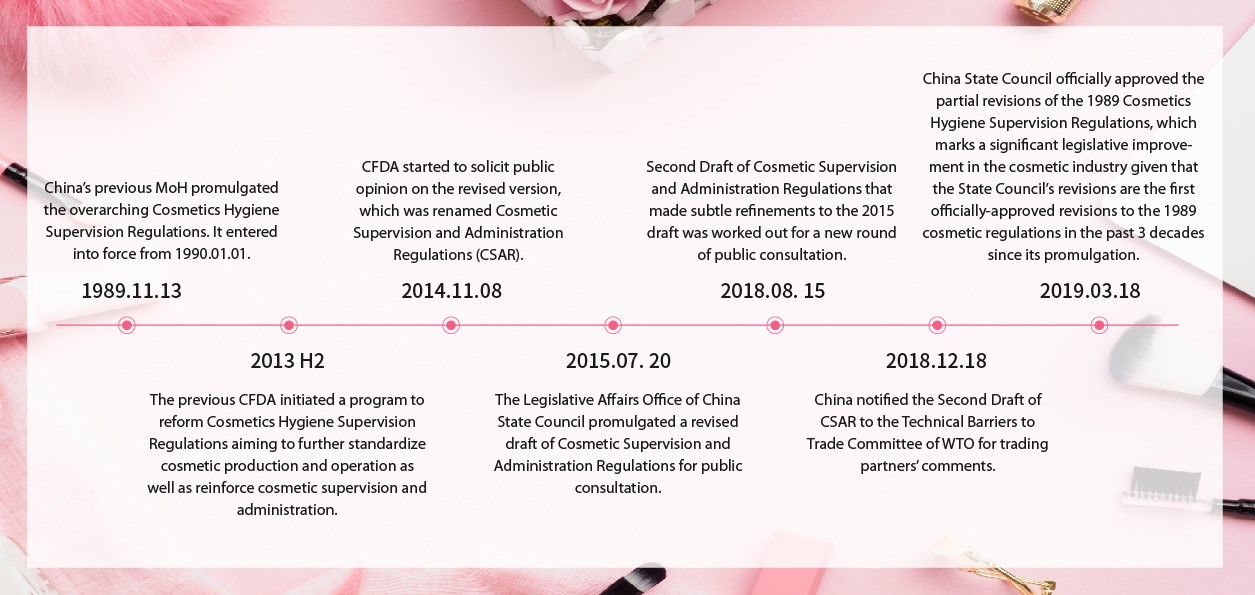 (Revision history of CSAR)
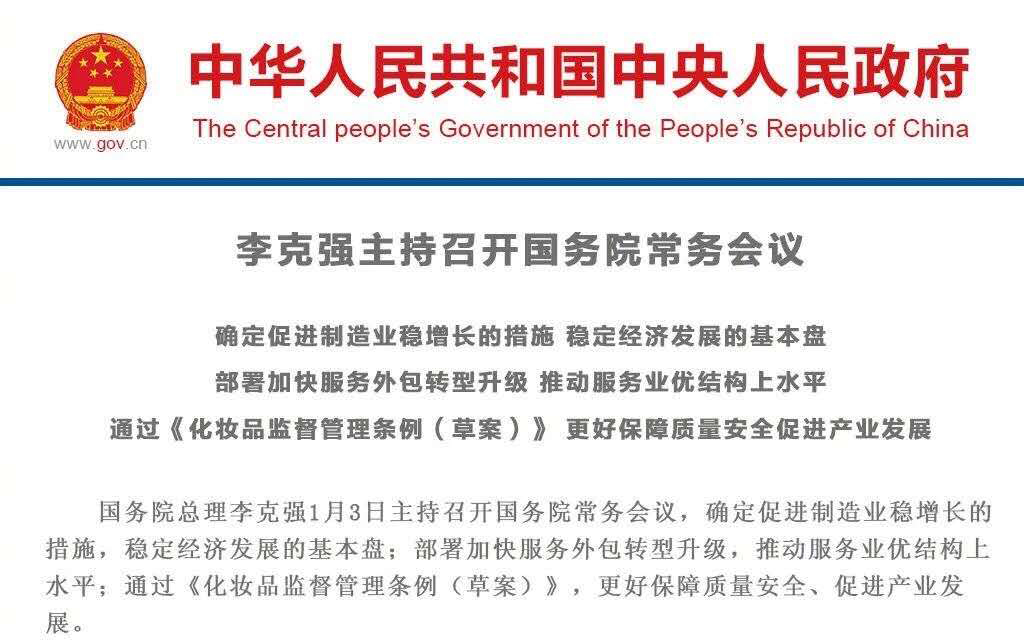
On Jan 3, 2020, China State Council finally passed the Cosmetic Supervision and Administration Regulation (draft) during its executive meeting.
In the meeting, the following three future regulatory trends were stressed:
Cosmetic finished products and cosmetic ingredients will be regulated based on their risk
Licensing procedures will be simplified
The punishment for violations of the law will be more severe, e.g. significantly increase fines
The approval of the China State Council means that the CSAR is formally finalized. The final version of the regulation is expected to be released soon. Following the release, a series of supporting rules should be introduced in succession. An overhauled China's cosmetic regulatory framework can be expected in 2020.
ChemLinked Interpretation
China's outdated cosmetic regulatory framework has been a major stumbling block stymying innovation and progress. The finalization of Cosmetic Supervision and Administration Regulation is one of the essential moves for China to align the regulatory system with the current industry practices and with the international markets. The new CSAR will greatly facilitate progress in the sector, which represents a new era for China's cosmetic sector and a very exciting time for international stakeholders.
The major principles underpinning China's new cosmetic regulation are classified supervision based on risk, strengthened post-market surveillance and development of a regulatory environment that fosters industry self-regulation.
The CSAR is just a basic framework. The specific regulatory measures, company obligations and requirements for trending topics such as animal testing, risk assessment, and efficacy validation still depend on the subordinate cosmetic regulations such as Guidance for Cosmetic Safety Risk Assessment, and Administrative Measures for Filing of Non-special Use Cosmetics.
*** Please stay tuned with ChemLinked for the upcoming China cosmetic regulatory updates.
 We provide full-scale global cosmetic market entry services (including cosmetic registering & filing, regulatory consultation, customized training, market research, branding strategy). Please contact us to discuss how we can help you by