Request a Demo
On July 24, 2024, Malaysia's National Pharmaceutical Regulatory Agency (NPRA) released a deficiency analysis report on on-site routine Good Manufacturing Practice (GMP) inspections of cosmetics manufacturers conducted in 2023. 1 The report covers routine on-site inspections of manufacturing facilities for various products, including cosmetics, carried out between January to December 2023.
Among the 130 inspections of domestic cosmetics manufacturers, 125 were found to have an acceptable GMP status, while the remaining 5 were deemed unacceptable. Regulatory actions were taken against 2 of the 5 manufacturers with unacceptable GMP status. The identified GMP defects were categorized as minor, major, or critical in nature.
The following figure shows the number of inspections with critical and major deficiencies (some companies have multiple deficiencies). The data indicates that premises & equipment, occurred 98 times, was the top contributor to critical and major GMP deficiencies, followed by production and quality control.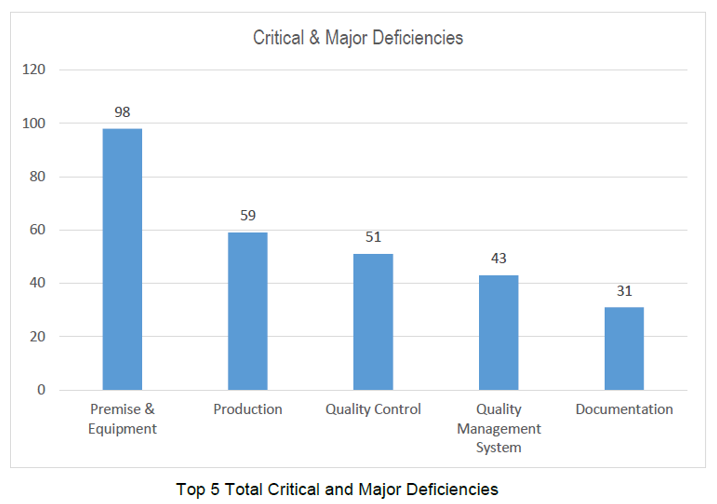
Analyzing Factors Contributing to GMP Deficiencies
Cosmetics GMP inspections in Malaysia are conducted based on Annex 1, Part 11: Guideline for Cosmetic Good Manufacturing Practice, Guidelines for Control of Cosmetic Products in Malaysia, Second Edition, August 2022. Regarding the top contributors to critical and major GMP deficiencies, the key requirements are:
Premise
Effective measures should be taken to avoid any contamination of the product from the surrounding environment and pests. All surfaces exposed to the processing activities may pose risks of contamination, therefore cleanliness is vital in any manufacturing facility. Facility should be designed for easy cleaning and sanitising activity, and must have proper segregation.
Procedure and Processing
Particular attention should be paid to cross-contamination in all stages of processing.
Risks of cross-contamination may occur during processing, packaging and storage activity. Manufacturers should ensure no cross contamination may occur by proper segregation of production activities and detailed labelling of rooms, equipment, materials, documents and others. Proper planning is also important to optimize resources and minimise cross-contamination as well as wastage.
Quality Control
Quality control is a critical aspect throughout and after the manufacturing process. Specific quality control steps involve sampling, inspecting and testing of starting materials as well as in-process, intermediate, bulk, and finished products. Prior to product release, manufacturers must ensure that cosmetics meet standards through these quality control activities. It also includes environmental monitoring programs, review of batch documentation, sample retention program, stability studies and maintaining correct specifications of materials and products where applicable.

 We provide full-scale global cosmetic market entry services (including cosmetic registering & filing, regulatory consultation, customized training, market research, branding strategy). Please contact us to discuss how we can help you by