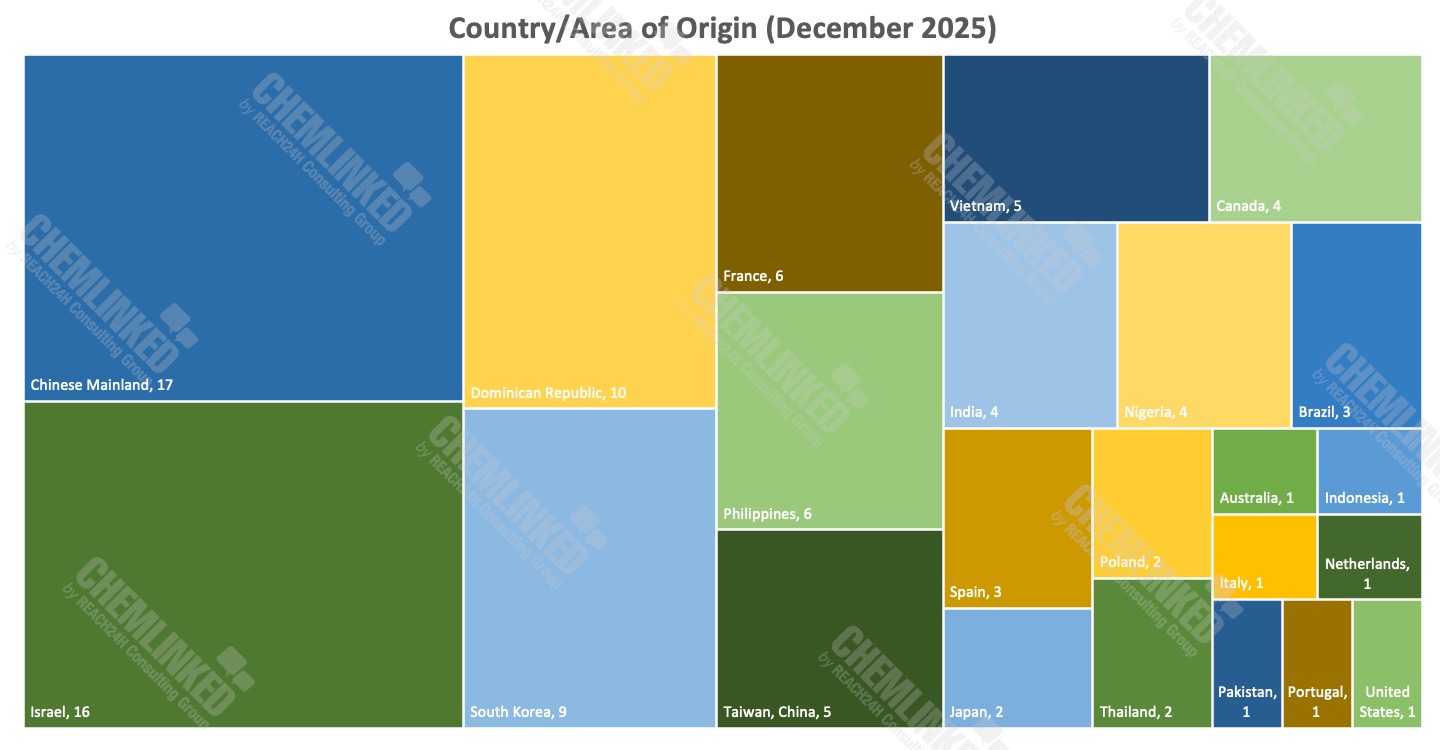
In December 2025, the U.S. Food and Drug Administration (FDA), under the Food, Drug, and Cosmetic Act (FD&C Act), refused entry to 105 batches of imported cosmetics from 22 countries due to regulatory non-compliance. Upon detection of violations, the FDA issued "Notices of FDA Action" to product owners or consignees, which specified the nature of the violations. Failure to demonstrate compliance or submit a corrective plan resulted in a final notice, requiring the rejected products to be exported or destroyed within 90 days.
Chinese mainland accounted for the largest share of refusals, representing over 16% of the total, followed by Israel and the Dominican Republic.
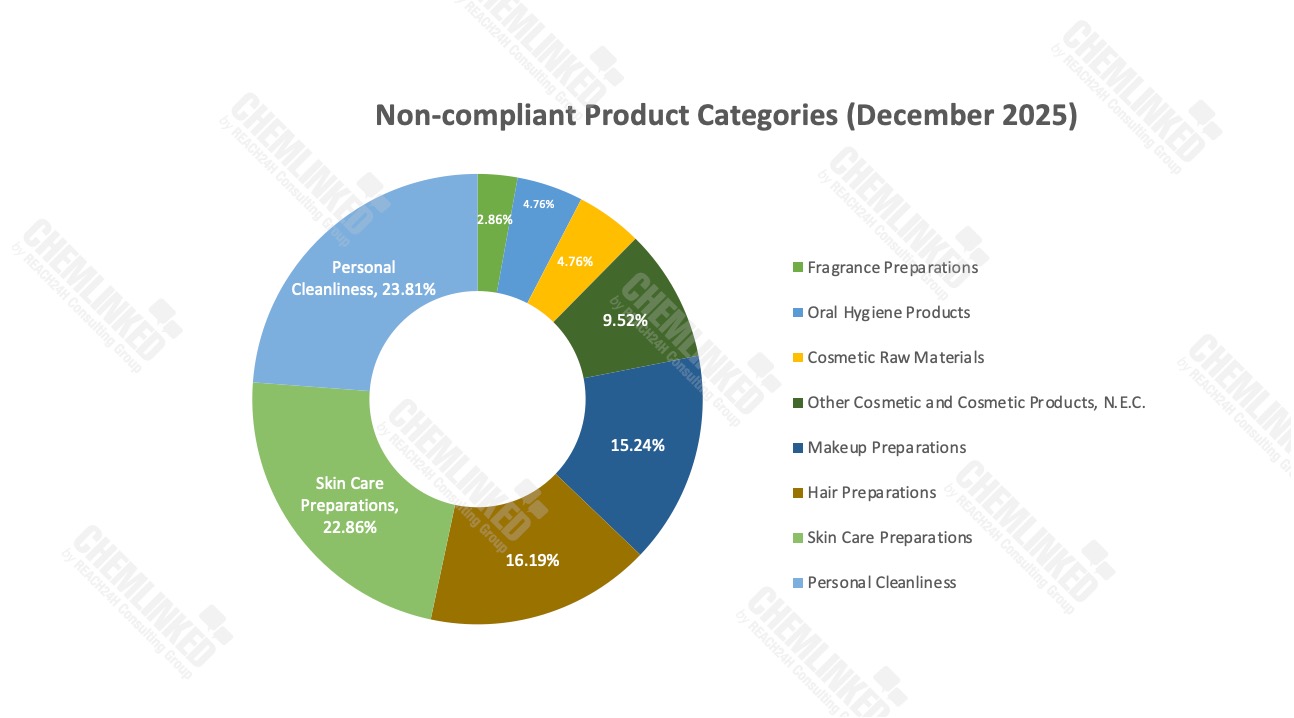
 The rejected products spanned eight categories, with personal cleanliness products comprising the largest portion (23.81%), followed by skin care preparations (22.86%), hair preparations (16.19%), and makeup preparations (15.24%).
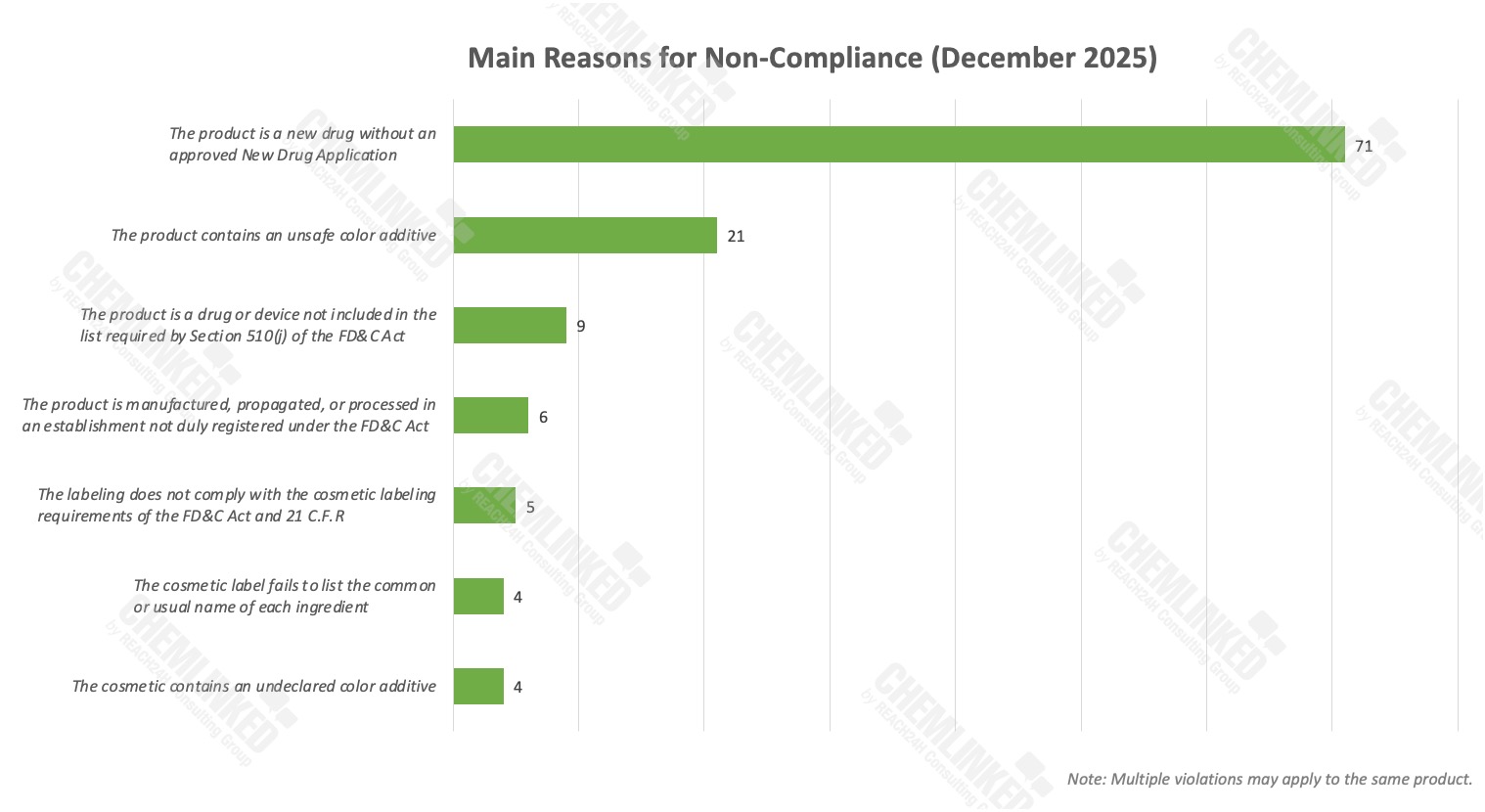
 The most frequent cause of refusal was the misclassification of drugs as cosmetics, with nearly 71% of these products considered drugs or medical devices in the U.S. Other violations included the use of non-compliant color additives and labeling deficiencies.
U.S. FDA Report (November 2025): 75 Batches of Imported Cosmetics Rejected
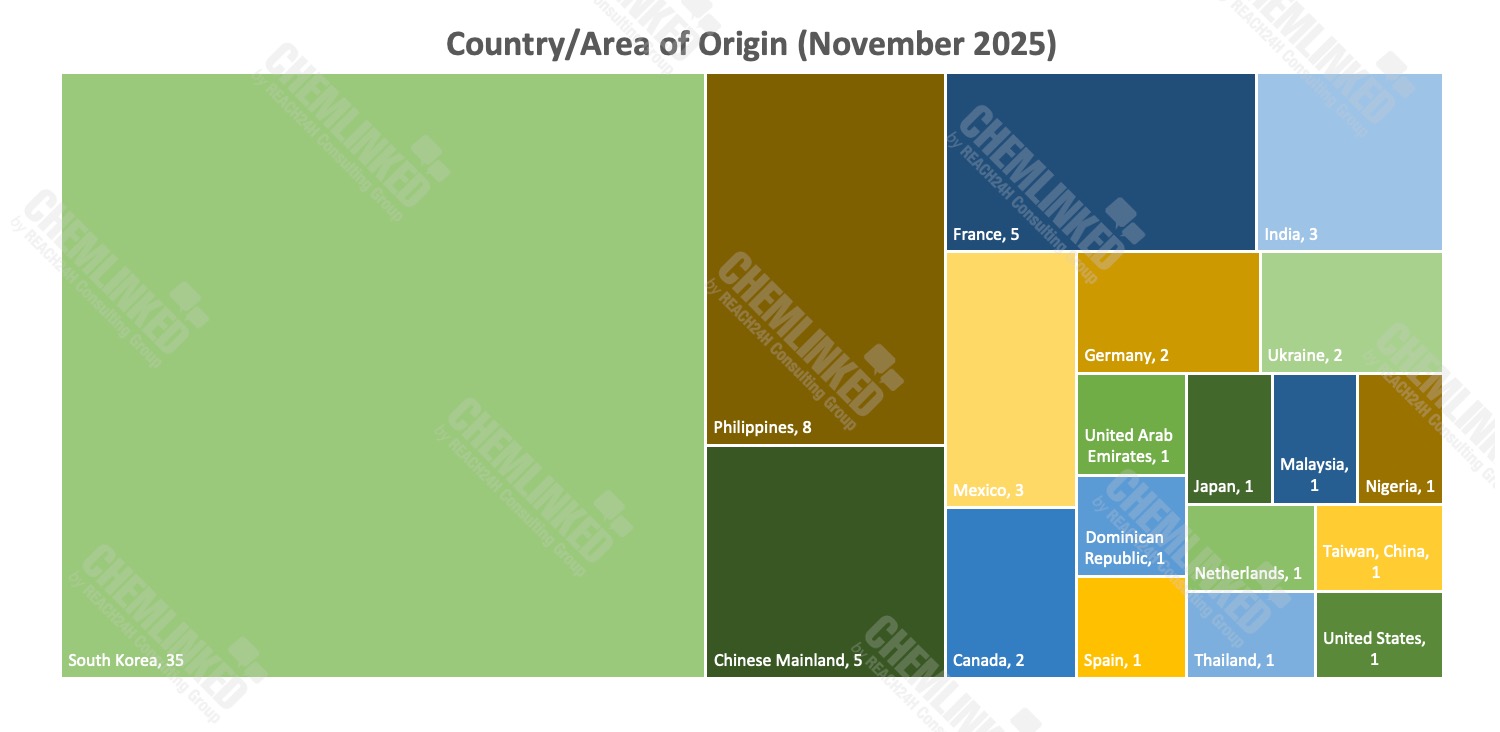
In November 2025, the U.S. Food and Drug Administration (FDA), under the Food, Drug, and Cosmetic Act (FD&C Act), refused entry to 75 batches of imported cosmetics from 18 countries due to regulatory non-compliance. Upon detection of violations, the FDA issued "Notices of FDA Action" to product owners or consignees, which specified the nature of the violations. Failure to demonstrate compliance or submit a corrective plan resulted in a final notice, requiring the rejected products to be exported or destroyed within 90 days.
South Korea accounted for the largest share of refusals, representing over 46% of the total, followed by the Philippines and Chinese mainland.
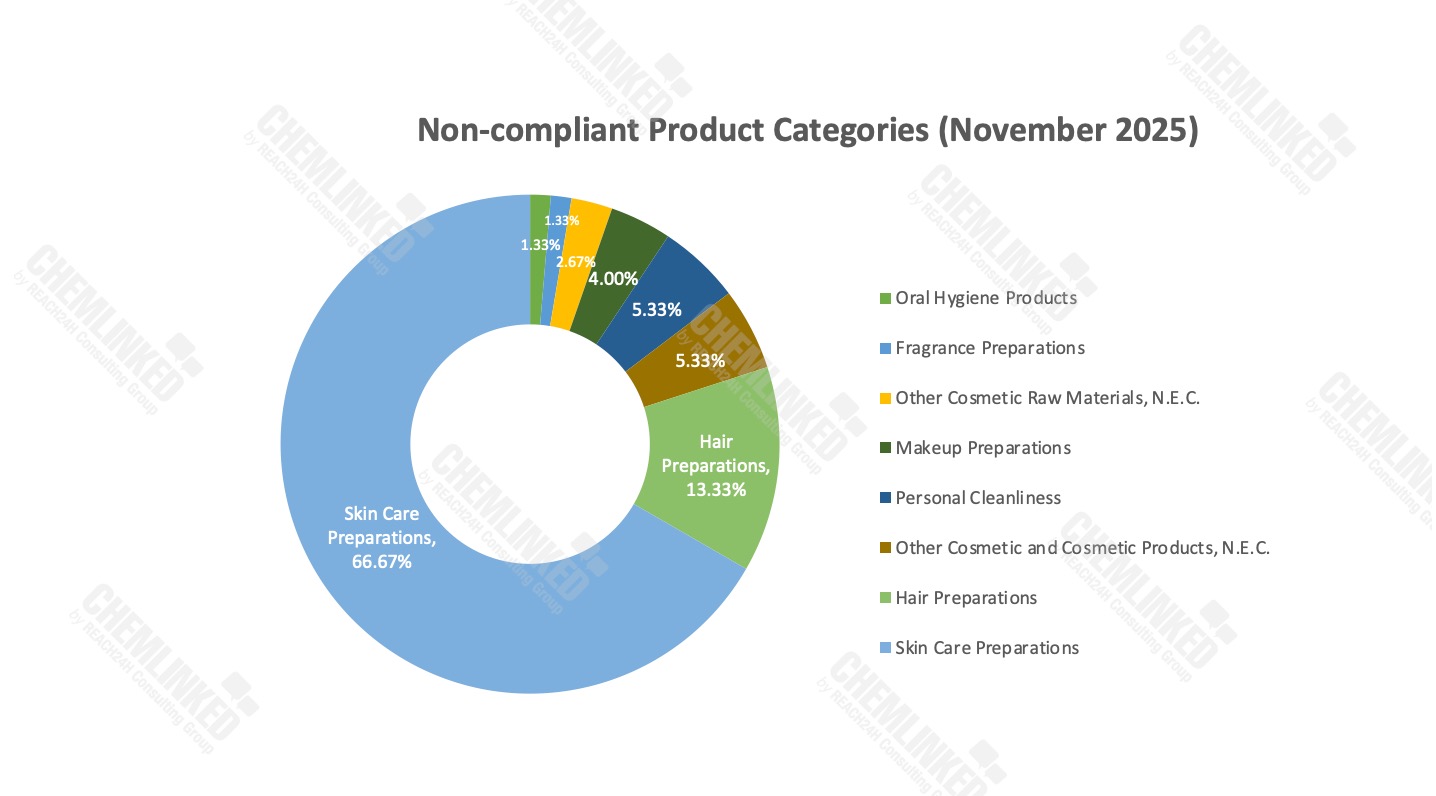
 The rejected products spanned eight categories, with skin care preparations comprising the largest portion (66.67%), followed by hair preparations (13.33%), other cosmetics (5.33%), and personal cleanliness products (5.33%).
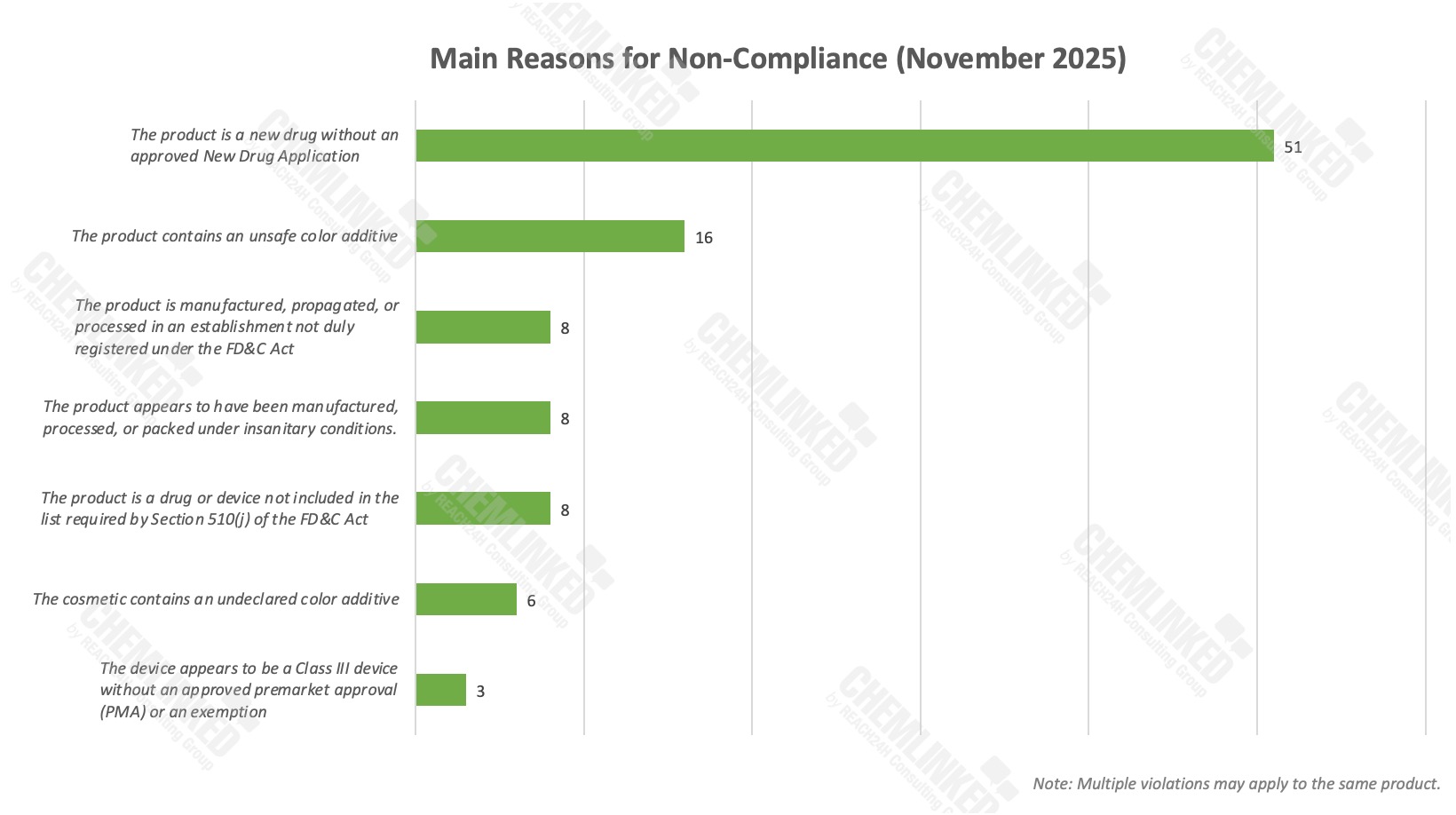
 The most frequent cause of refusal was the misclassification of drugs as cosmetics, with nearly 67% of these products considered drugs or medical devices in the U.S. Other violations included the use of non-compliant color additives and labeling deficiencies.
U.S. FDA Report (October 2025): 95 Batches of Imported Cosmetics Rejected
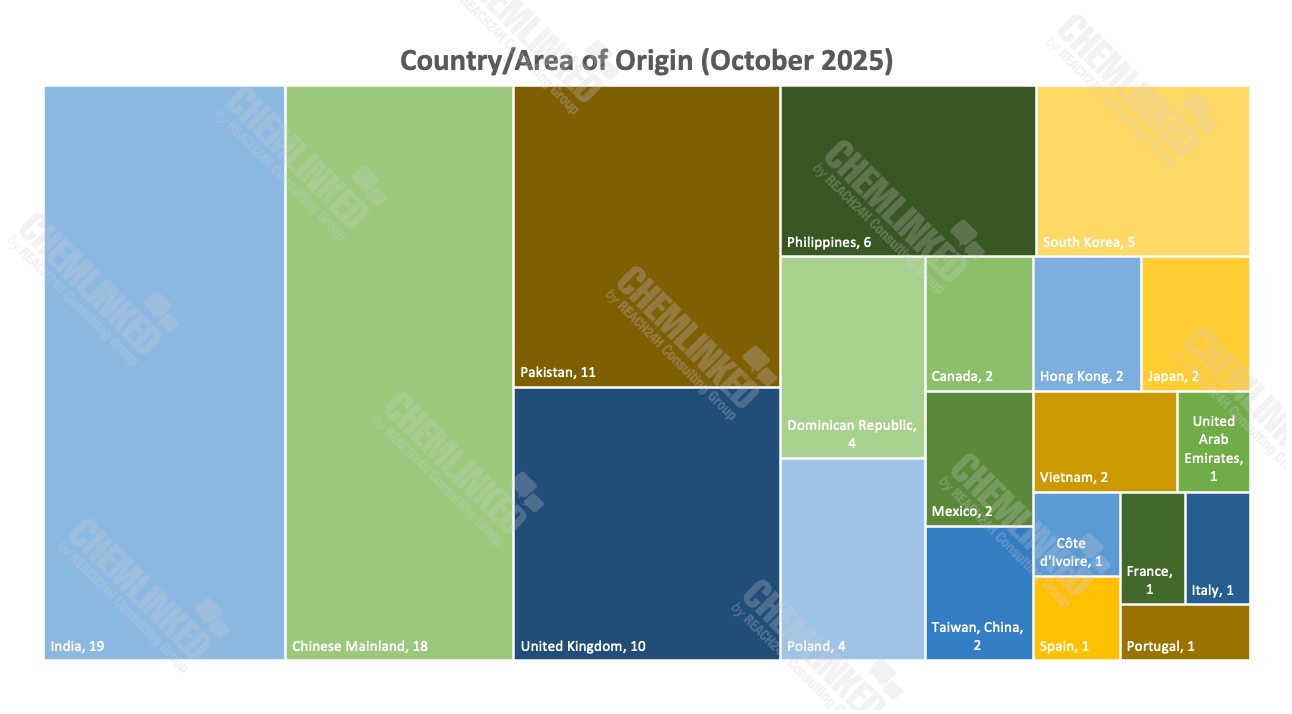
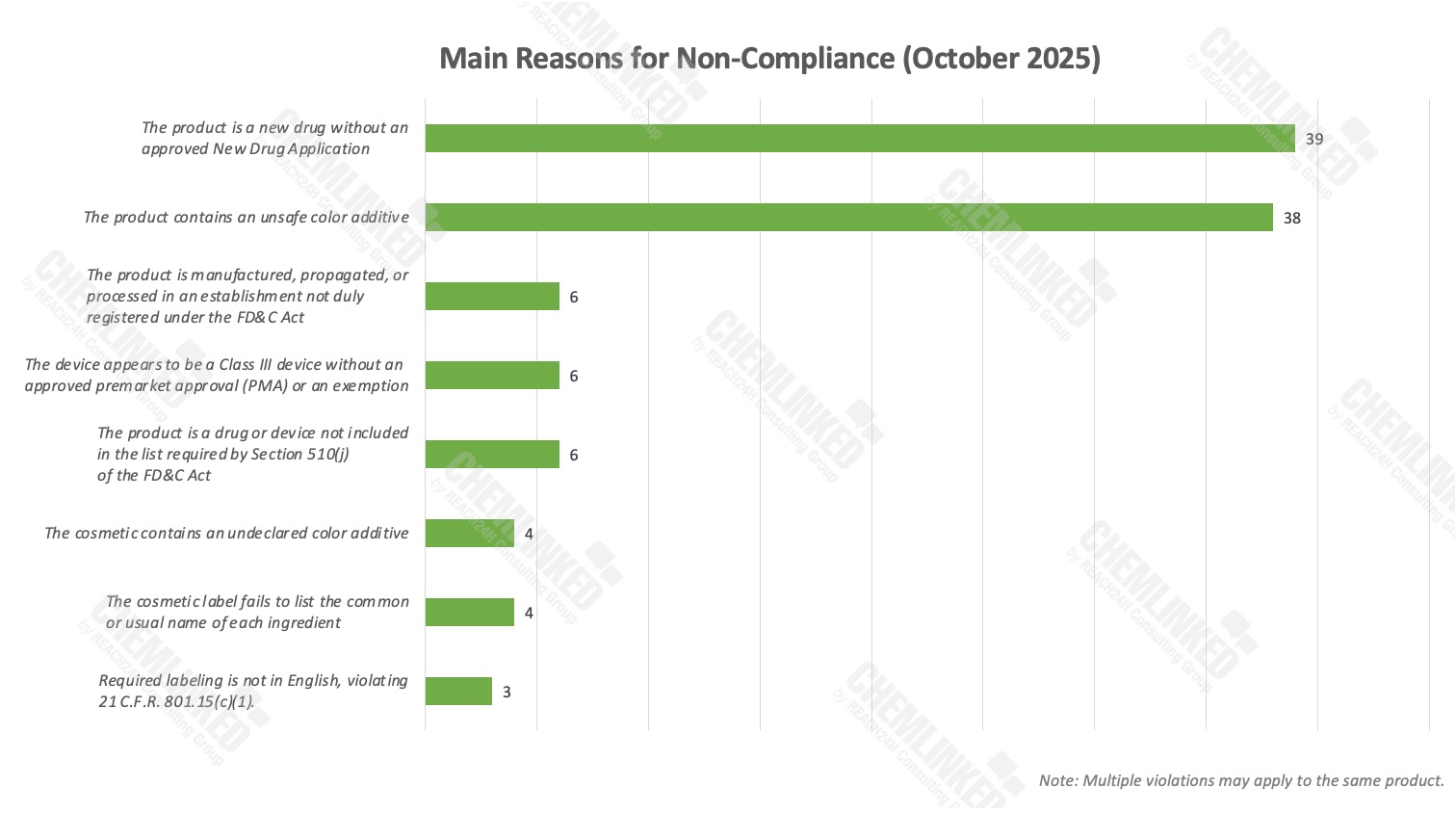
In October 2025, the U.S. Food and Drug Administration (FDA), under the Food, Drug, and Cosmetic Act (FD&C Act), refused entry to 95 batches of imported cosmetics from 18 countries due to regulatory non-compliance. Upon detection of violations, the FDA issued "Notices of FDA Action" to product owners or consignees, which specified the nature of the violations. Failure to demonstrate compliance or submit a corrective plan resulted in a final notice, requiring the rejected products to be exported or destroyed within 90 days.
India accounted for the largest share of refusals, representing 20% of the total, followed by Chinese mainland and Pakistan.
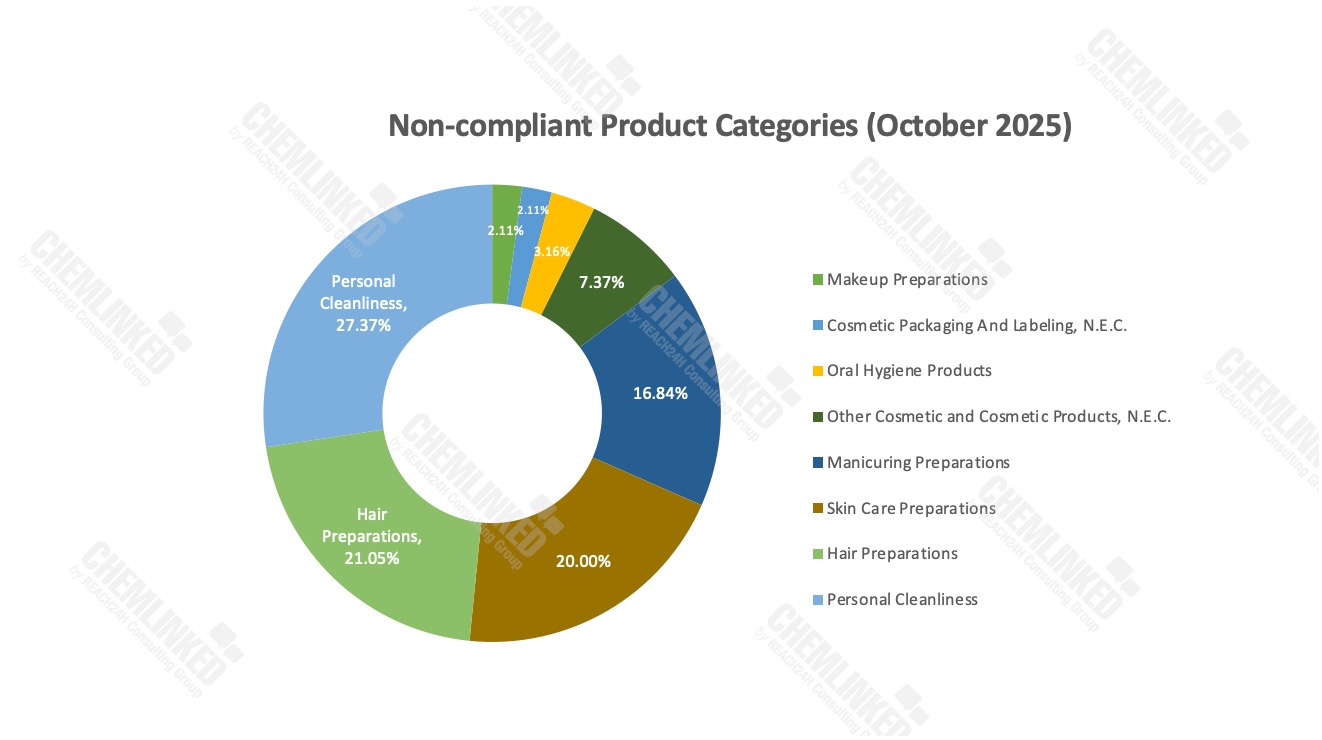
 The rejected products spanned eight categories, with personal cleanliness products comprising the largest portion (27.37%), followed by hair preparations (21.05%), skin care preparations (20.00%), and manicuring preparations (16.84%).
 The most frequent cause of refusal was the misclassification of drugs as cosmetics, with nearly 49% of these products considered drugs or medical devices in the U.S. Other violations included the use of non-compliant color additives and labeling deficiencies.
U.S. FDA Report (September 2025): 79 Batches of Imported Cosmetics Rejected
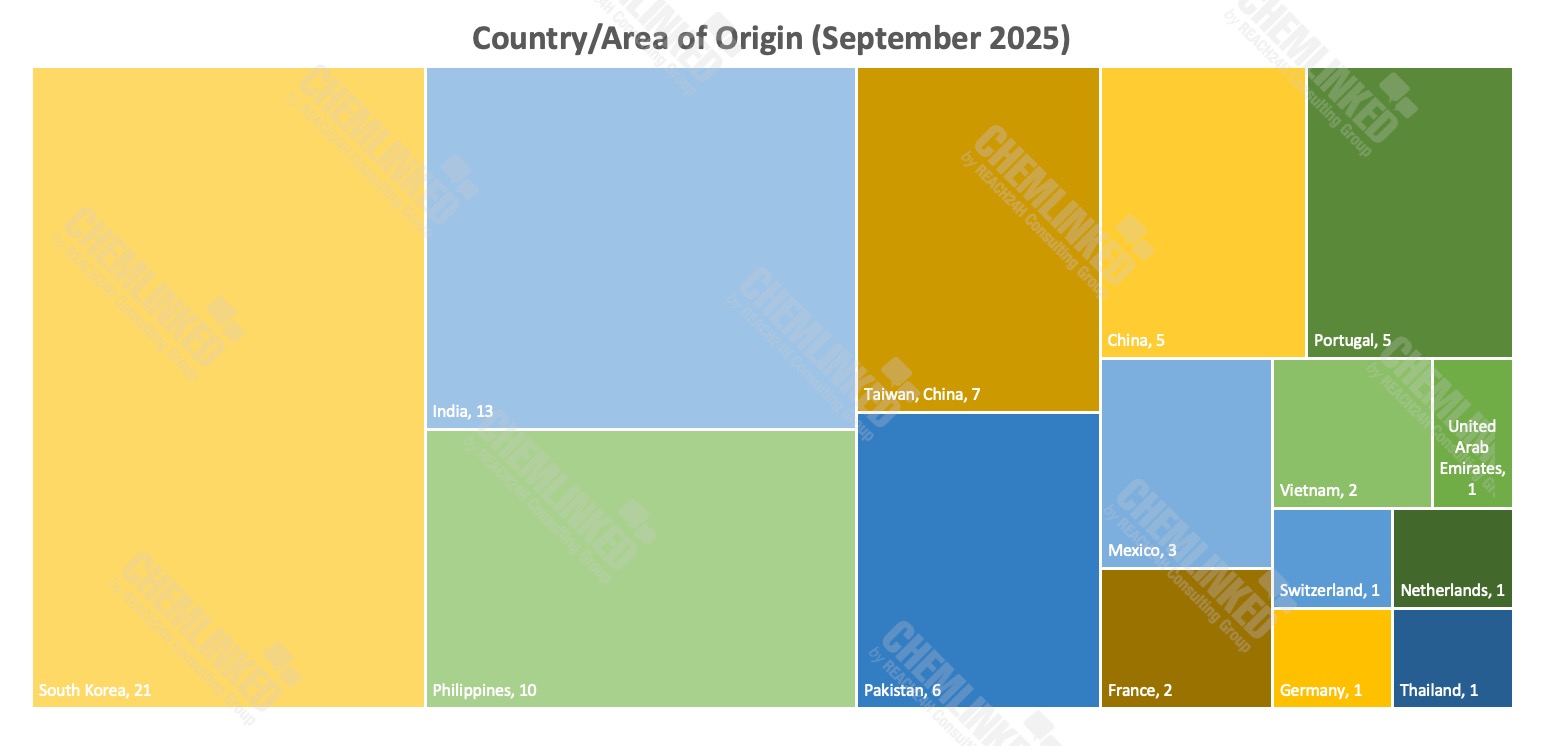
In September 2025, the U.S. Food and Drug Administration (FDA), under the Food, Drug, and Cosmetic Act (FD&C Act), refused entry to 79 batches of imported cosmetics from 14 countries due to regulatory non-compliance. Upon detection of violations, the FDA issued "Notices of FDA Action" to product owners or consignees, which specified the nature of the violations. Failure to demonstrate compliance or submit a corrective plan resulted in a final notice, requiring the rejected products to be exported or destroyed within 90 days.
South Korea accounted for the largest share of refusals, representing over 26% of the total, followed by India and the Philippines.
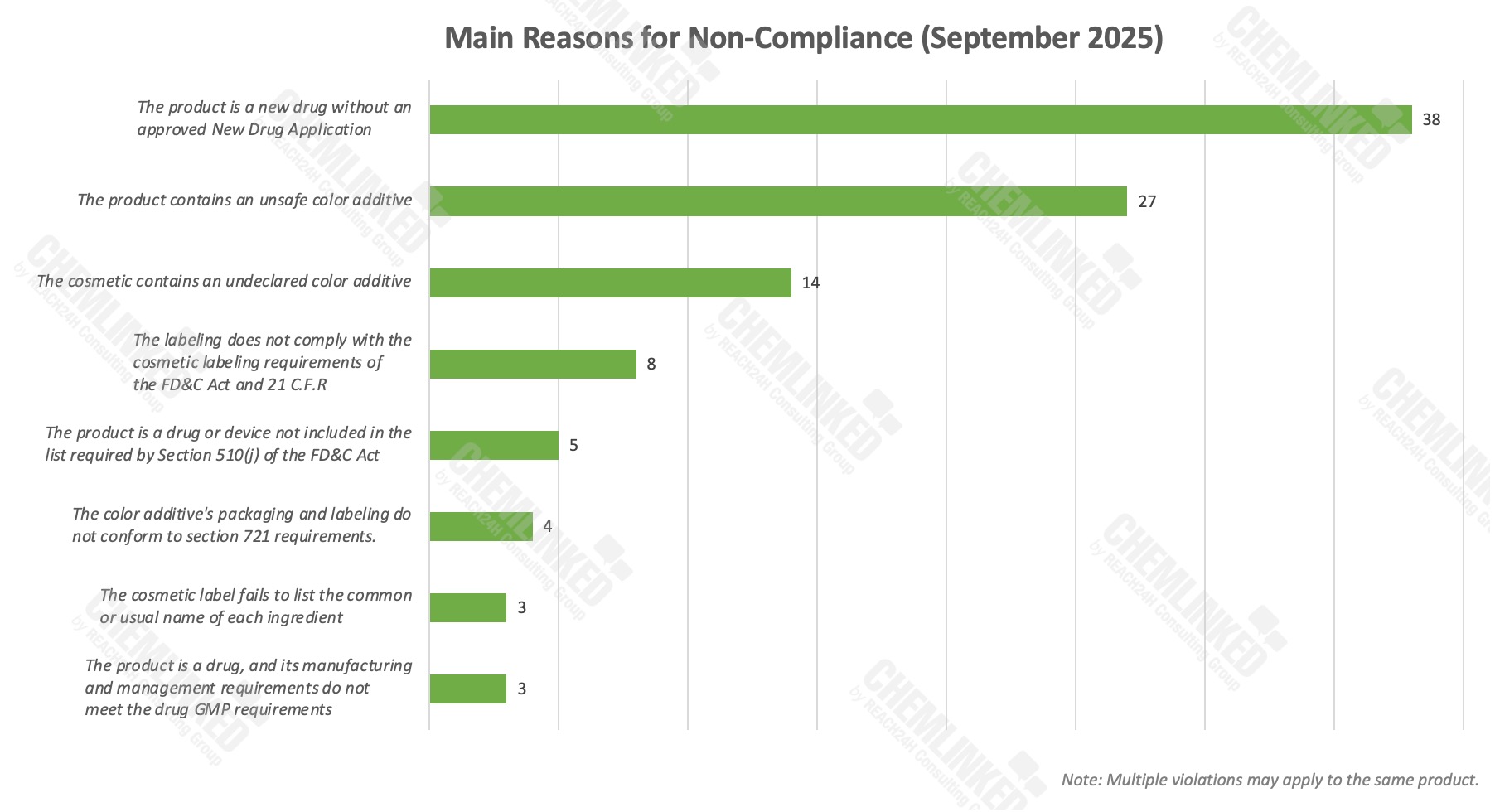
 The rejected products spanned eight categories, with skin care preparations comprising the largest portion (35.44%), followed by personal cleanliness products (29.11%), other cosmetics (10.13%), and makeup preparations (10.13%). Notably, the rejected items included two batches of children’s makeup products and one batch of baby skin care preparation.
 The most frequent cause of refusal was the misclassification of drugs as cosmetics, accounting for nearly 43% of total cases. Other violations included the use of non-compliant color additives and labeling deficiencies.
U.S. FDA Report (August 2025): 54 Batches of Imported Cosmetics Rejected
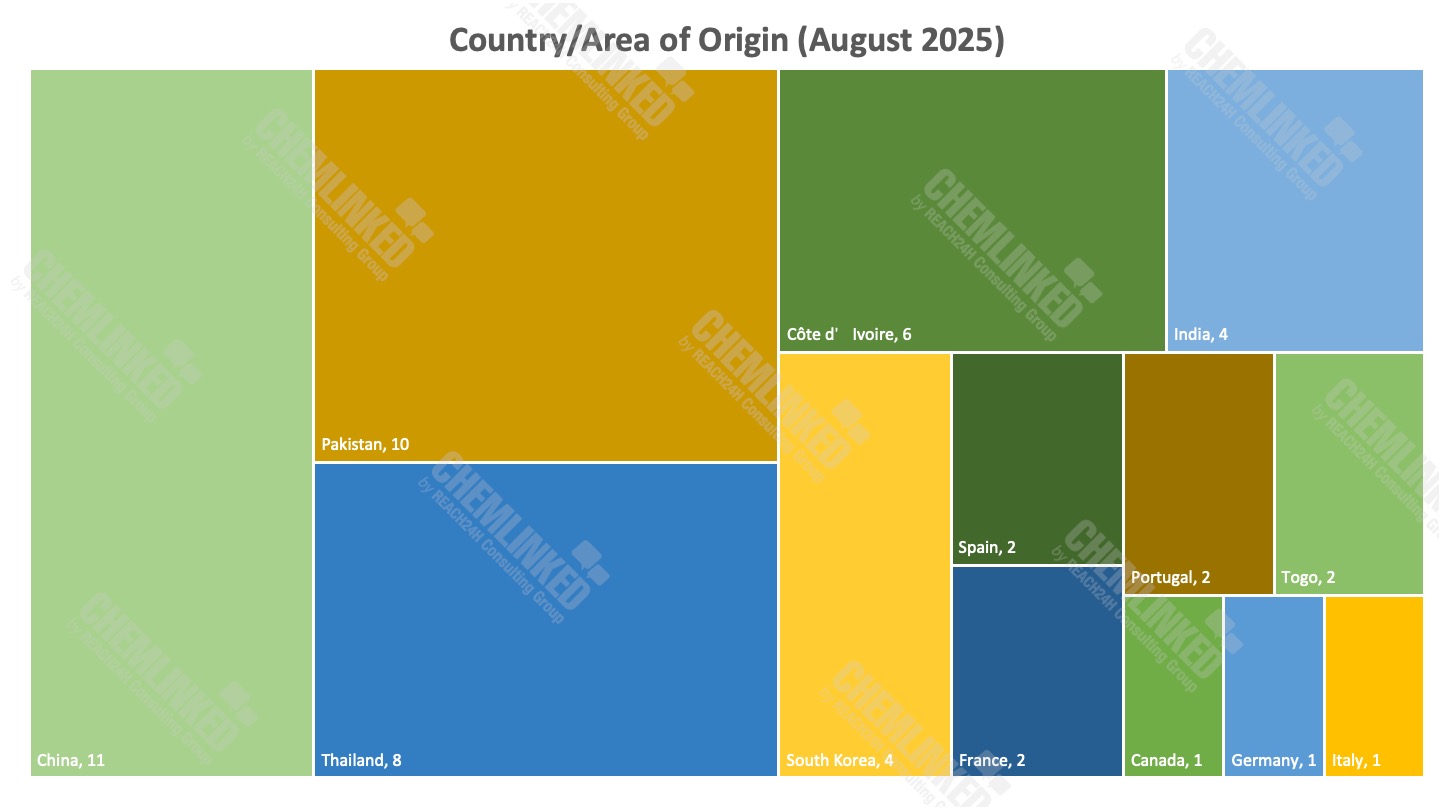
In August 2025, the U.S. Food and Drug Administration (FDA), under the Food, Drug, and Cosmetic Act (FD&C Act), refused entry to 54 batches of imported cosmetics from 13 countries due to regulatory non-compliance. Upon detection of violations, the FDA issued "Notices of FDA Action" to product owners or consignees, which specified the nature of the violations. Failure to demonstrate compliance or submit a corrective plan resulted in a final notice, requiring the rejected products to be exported or destroyed within 90 days.
China accounted for the largest share of refusals, representing over 20% of the total, followed by Pakistan and Thailand.
The rejected products covered nine categories, with skin care preparations and fragrance preparations each representing 18.52%, followed by makeup preparations (16.67%).
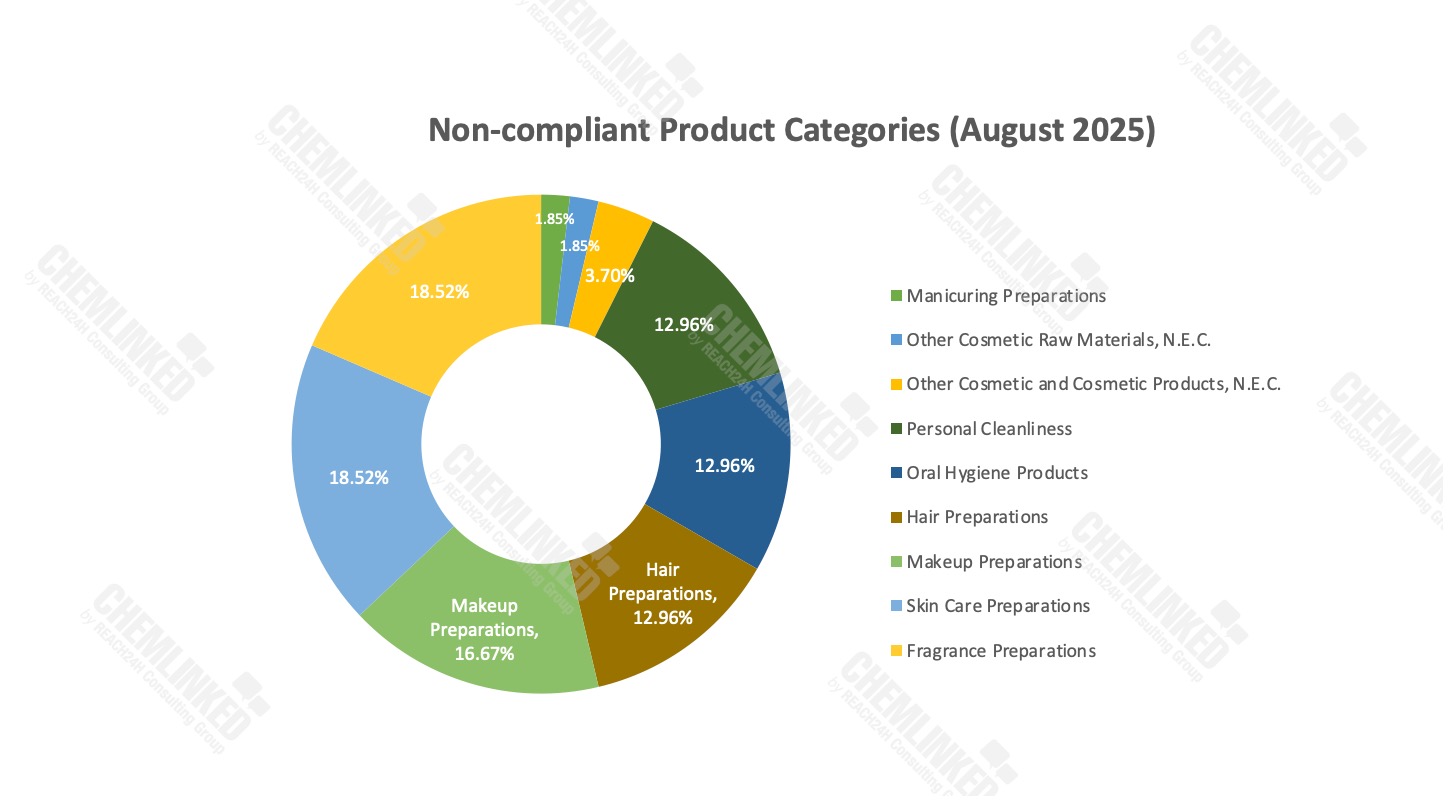
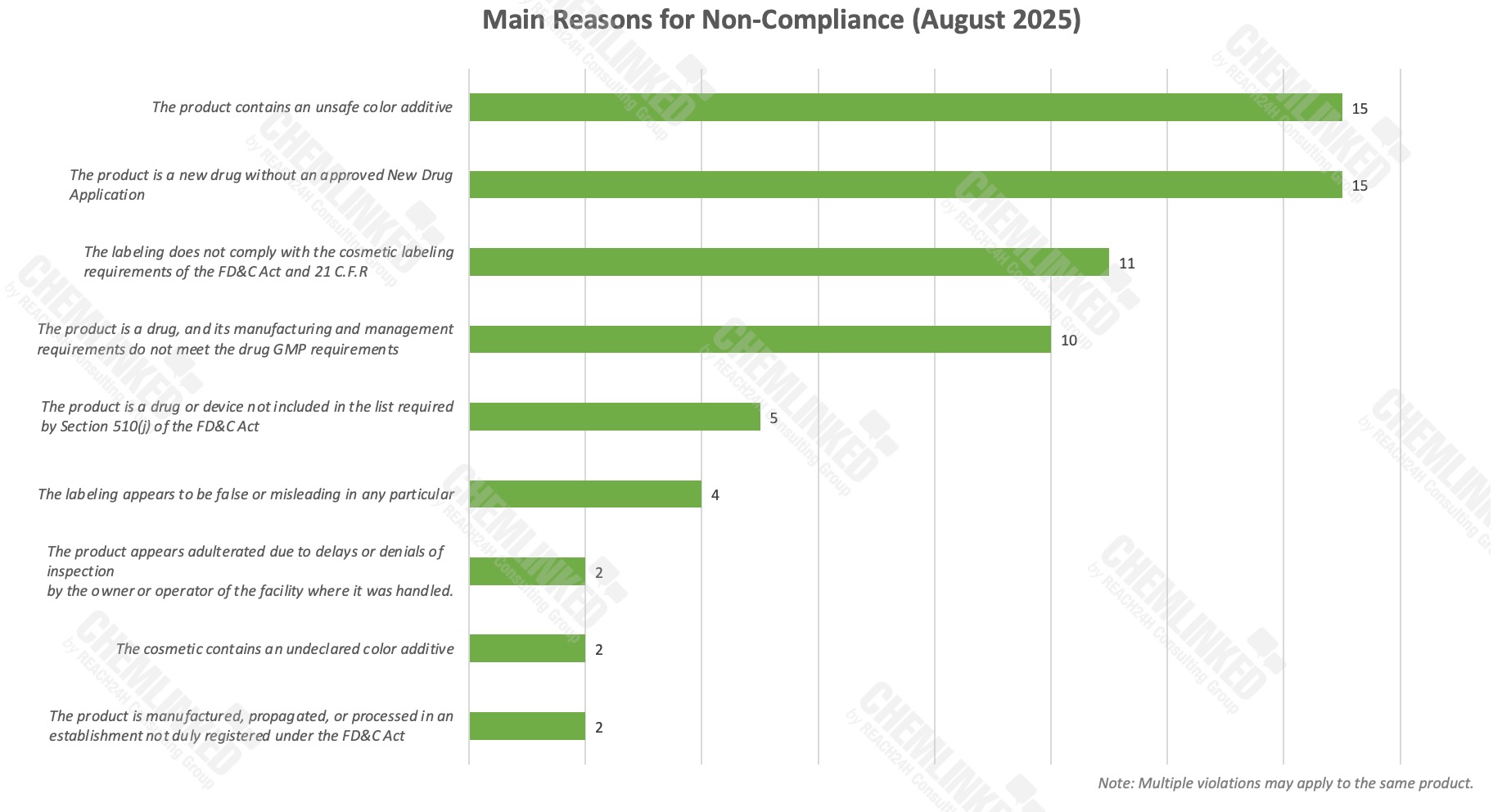
The most common cause of rejection was the misclassification of drugs as cosmetics, accounting for nearly 51% of the total cases. Other violations included the use of non-compliant color additives and labeling deficiencies.
U.S. FDA Report (July 2025): 48 Batches of Imported Cosmetics Rejected
In July 2025, the U.S. Food and Drug Administration (FDA), under the Food, Drug, and Cosmetic Act (FD&C Act), refused entry to 48 batches of imported cosmetics from 13 countries due to regulatory non-compliance. Upon detection of violations, the FDA issued "Notices of FDA Action" to product owners or consignees, which specified the nature of the violations. Failure to demonstrate compliance or submit a corrective plan resulted in a final notice, requiring the rejected products to be exported or destroyed within 90 days.
South Korea accounted for the largest share of refusals, representing over 29% of the total, followed by China and India.
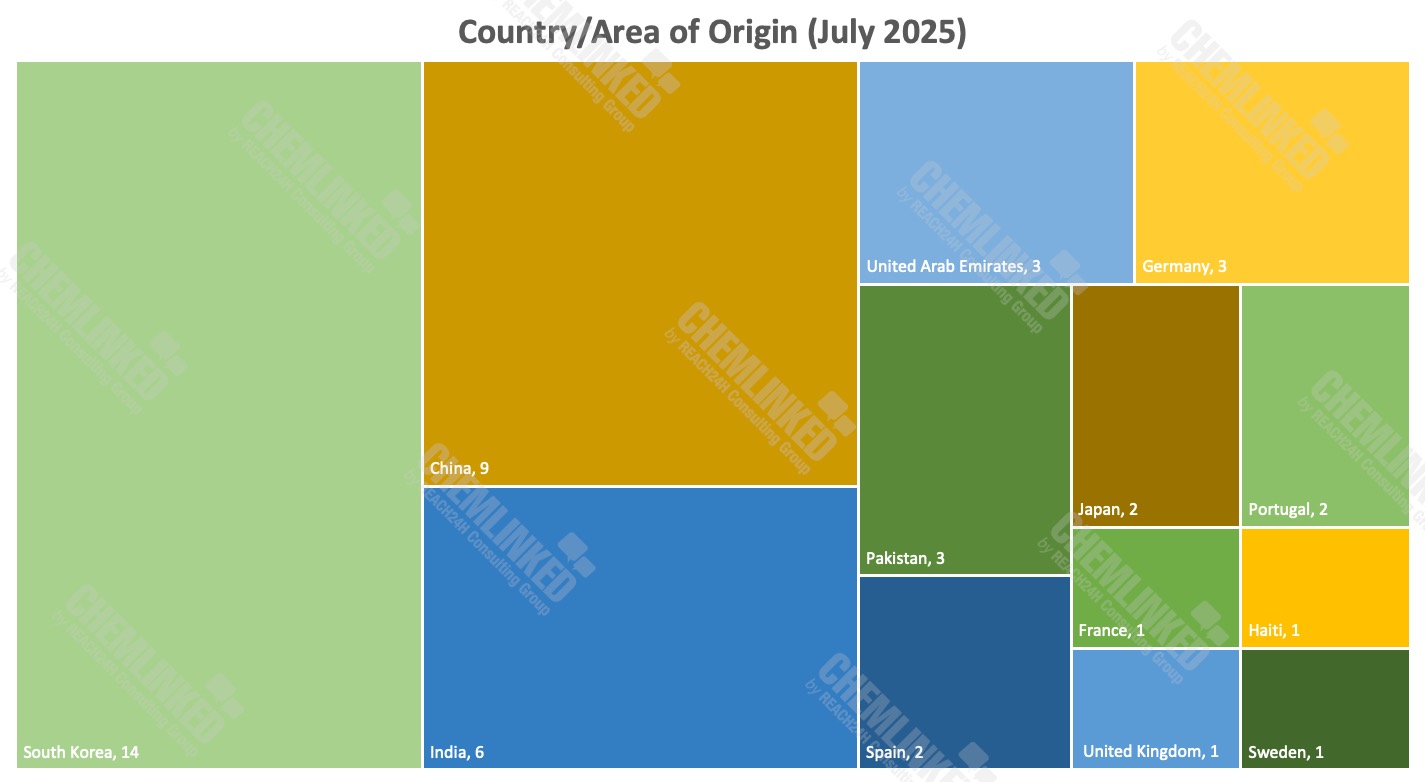 Country/Area of Origin (July 2025)The rejected products spanned seven categories, with skin care preparations comprising the largest portion (33.33%), followed by makeup preparations (22.92%) and other cosmetics (18.75%).
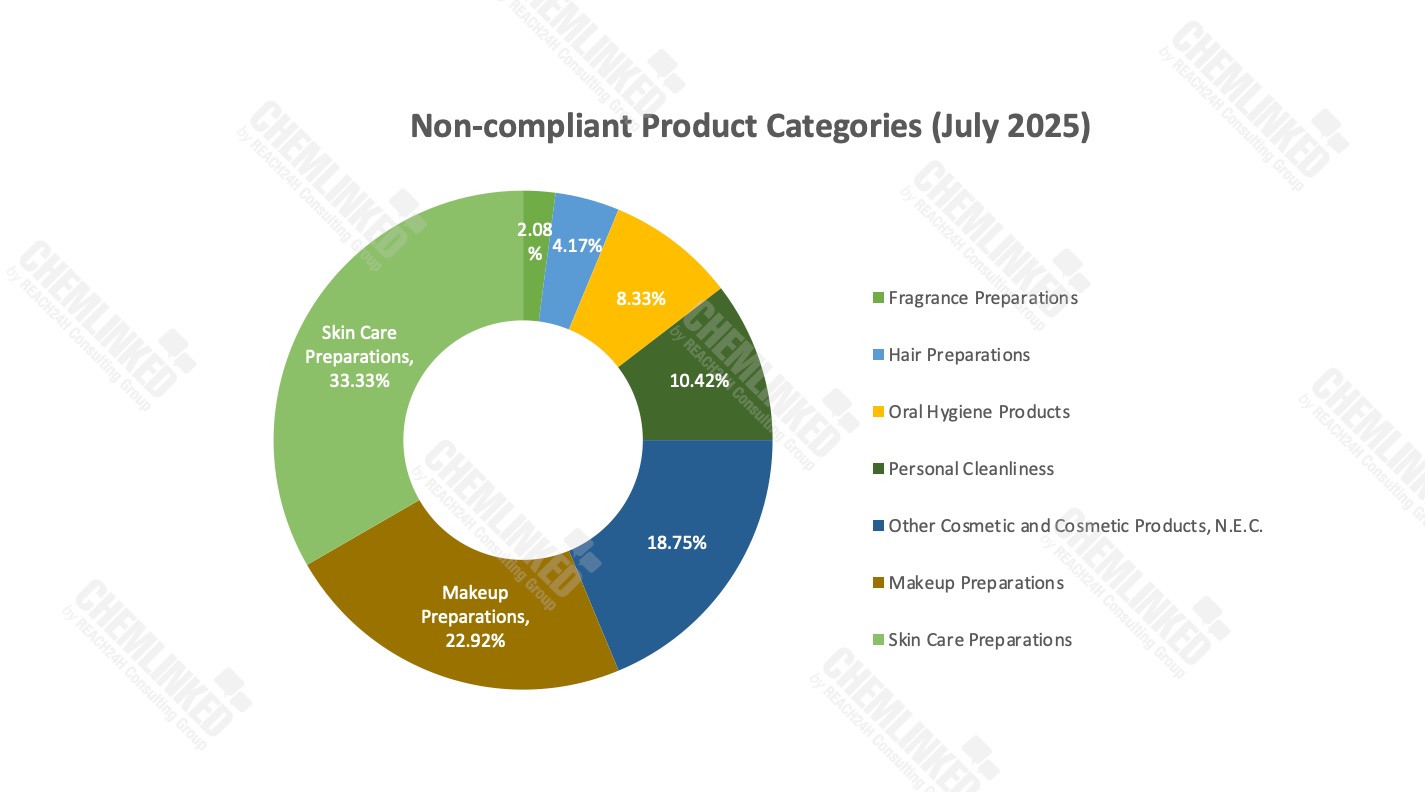 Non-compliant Product Categories (July 2025)The most common reason for rejection was the misclassification of drugs as cosmetics, with 21 batches of rejected products considered drugs or medical devices in the U.S. Other reasons included the use of non-compliant color additives and labeling deficiencies.
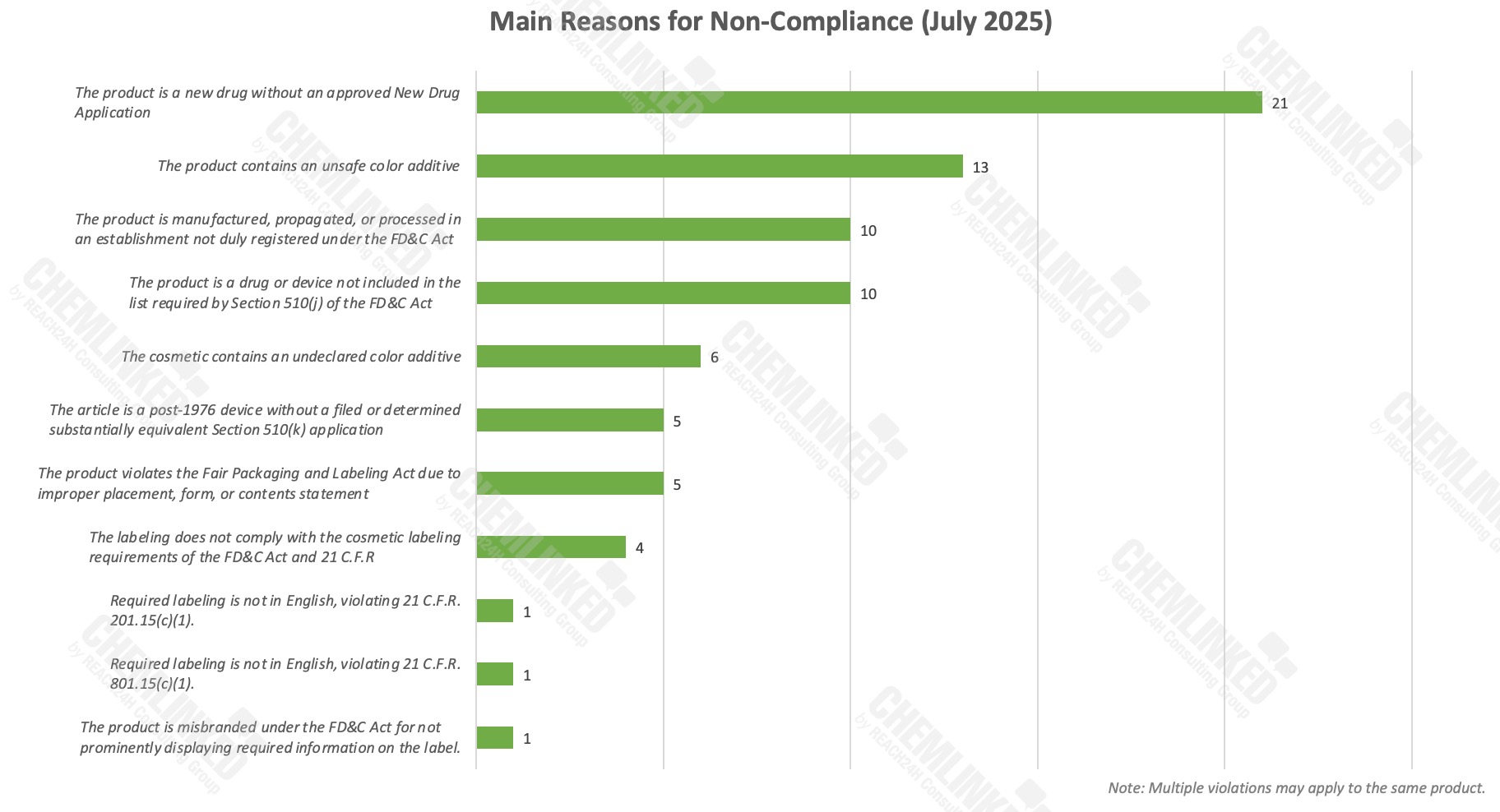 Reasons for Non-compliance (July 2025)
U.S. FDA Report (June 2025): 64 Batches of Imported Cosmetics Rejected
In June 2025, the U.S. Food and Drug Administration (FDA), under the Food, Drug, and Cosmetic Act (FD&C Act), refused entry to 64 batches of imported cosmetics from 16 countries due to regulatory non-compliance. Upon detection of violations, the FDA issued "Notices of FDA Action" to product owners or consignees, which specified the nature of the violations. Failure to demonstrate compliance or submit a corrective plan resulted in a final notice, requiring the rejected products to be exported or destroyed within 90 days.
India accounted for the highest number of refusals, representing approximately 25% of the total. Other countries with multiple rejections included China, Japan, and Pakistan.
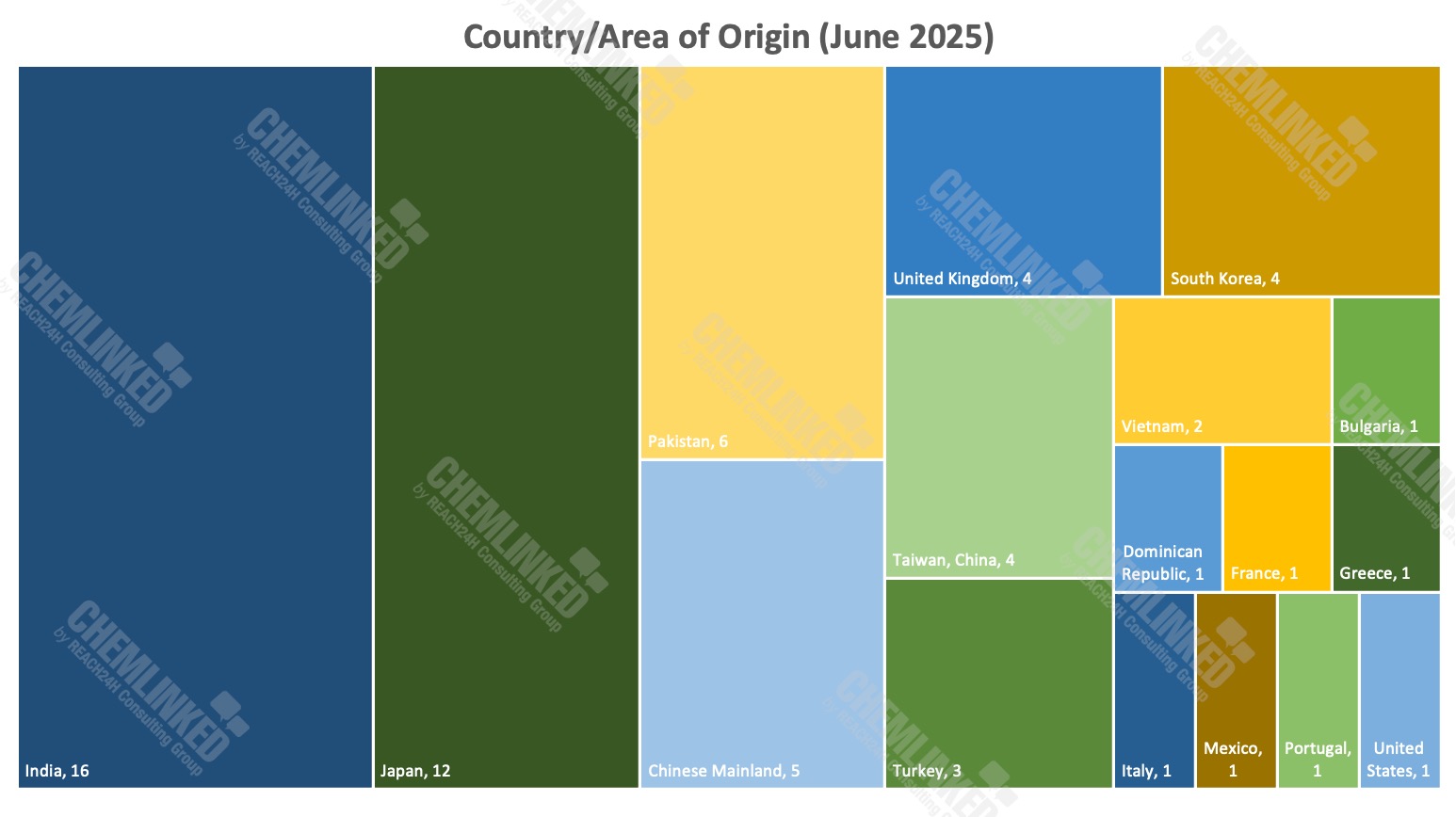 Country/Area of Origin (June 2025)The rejected products fell into six categories, with skin care preparations making up the majority (50.00%), followed by hair preparations (23.44%), makeup preparations (7.81%), and personal cleanliness products (7.81%).
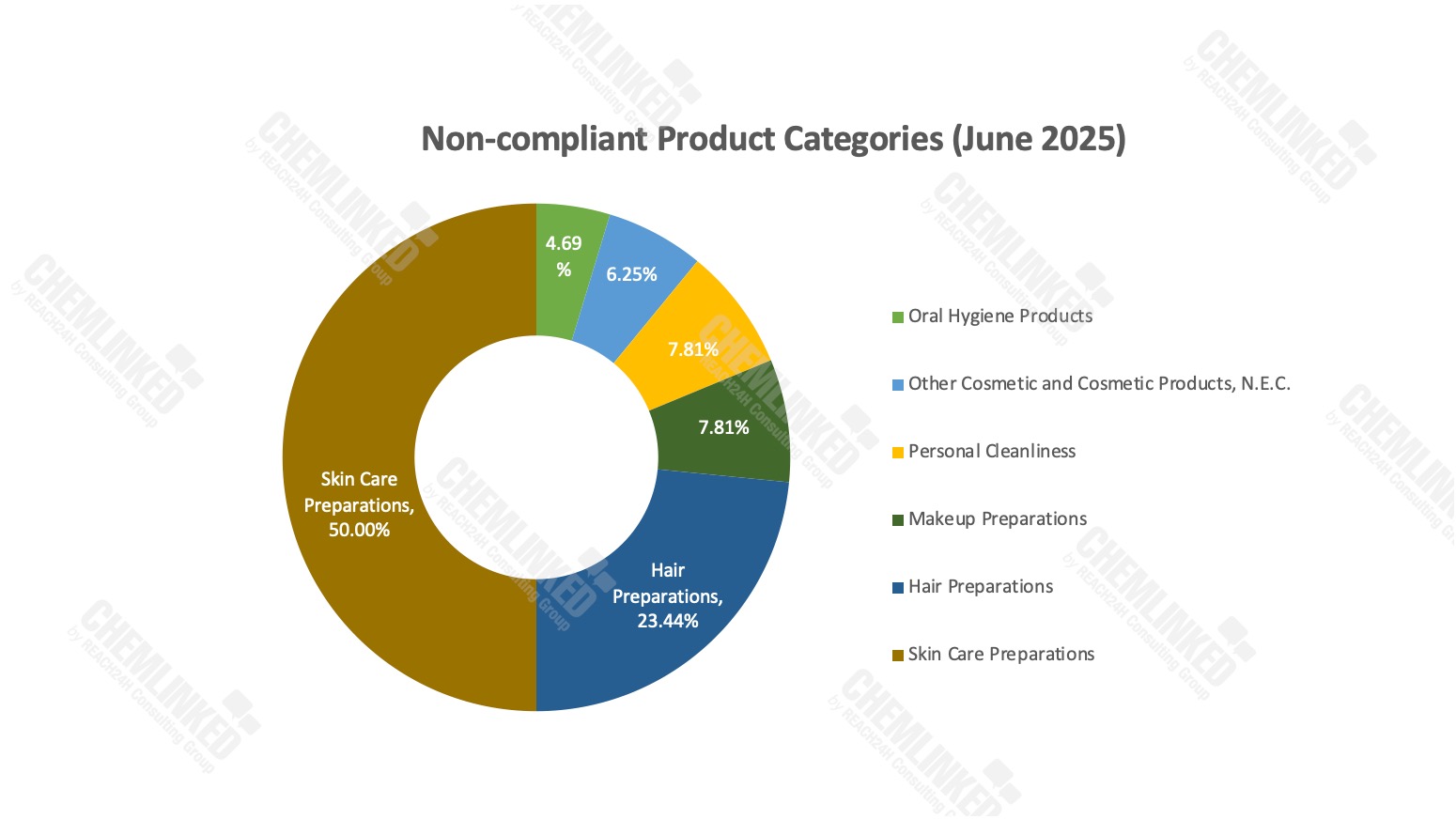 Non-compliant Product Categories (June 2025)The most common reason for rejection was the misclassification of drugs as cosmetics, with 18 batches flagged as "unapproved new drugs." Additional reasons for refusal included unqualified labeling and the use of non-compliant color additives.
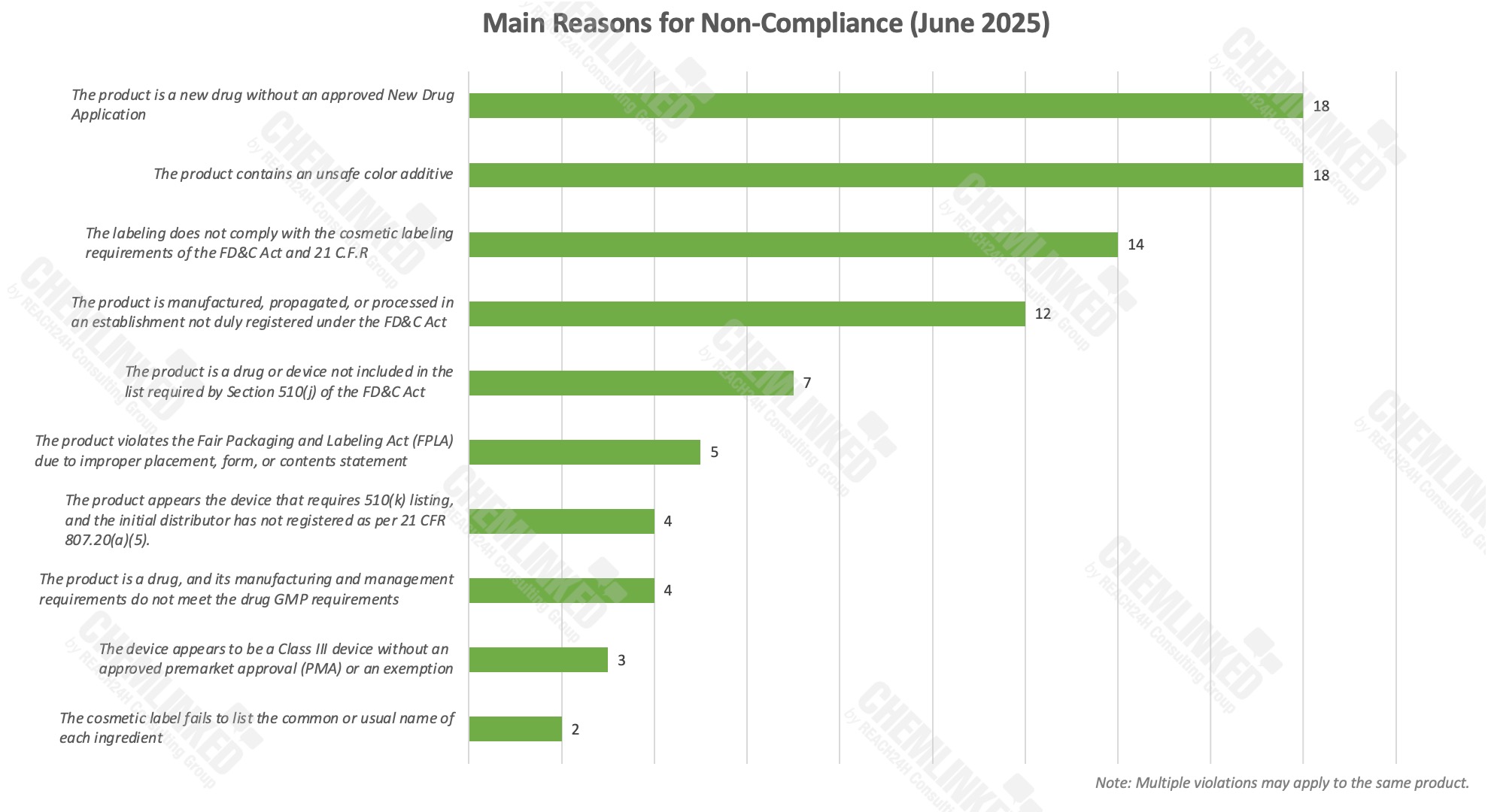 Reasons for Non-compliance (June 2025)
U.S. FDA Report (May 2025): 89 Batches of Imported Cosmetics Rejected
In May 2025, the U.S. Food and Drug Administration (FDA), under the Food, Drug, and Cosmetic Act (FD&C Act), refused entry to 89 batches of imported cosmetics from 18 countries due to regulatory non-compliance. Upon detection of violations, the FDA issued "Notices of FDA Action" to product owners or consignees, which specified the nature of the violations. Failure to demonstrate compliance or submit a corrective plan resulted in a final notice, requiring the rejected products to be exported or destroyed within 90 days.
India led in the number of refusals, accounting for over 21% of the total. Other countries with multiple rejections included Nigeria, China, and Côte d'Ivoire.
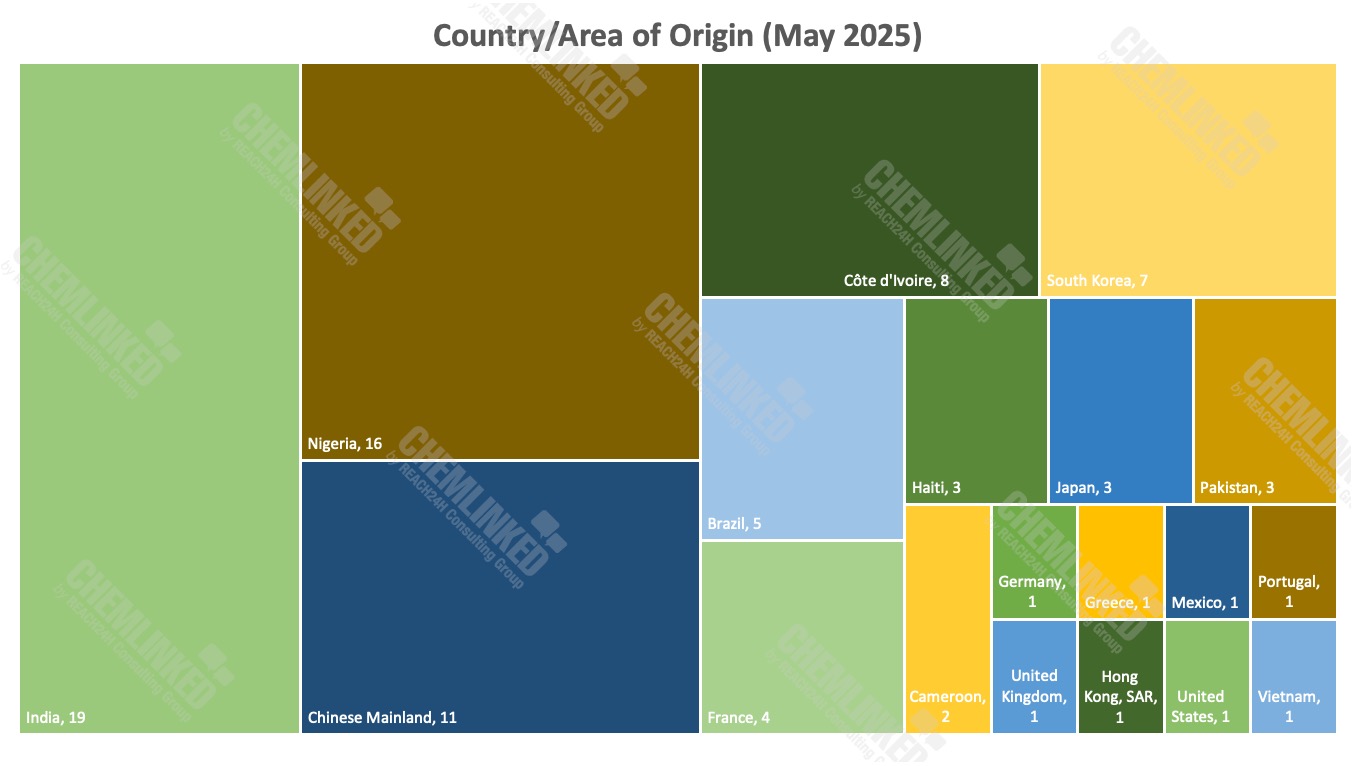 Country/Area of Origin (May 2025)
The rejected products fell into seven categories, with skin care preparations comprising the largest share (28.09%), followed by other cosmetic products (20.22%) and hair preparations (16.85%).
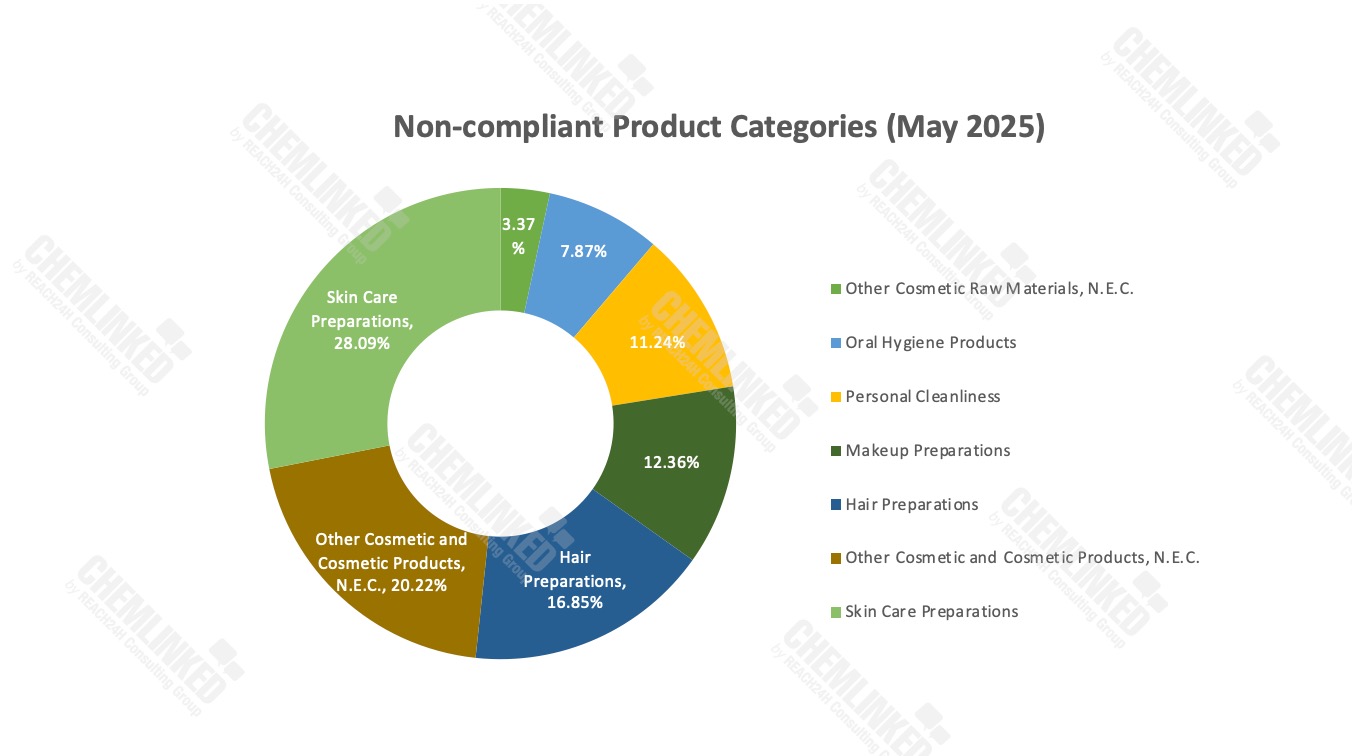 Non-compliant Product Categories (May 2025)
The most common reason for rejection was the misclassification of drugs as cosmetics, with 50 batches flagged as "unapproved new drugs." Other violations included unqualified labeling and the use of non-compliant color additives.
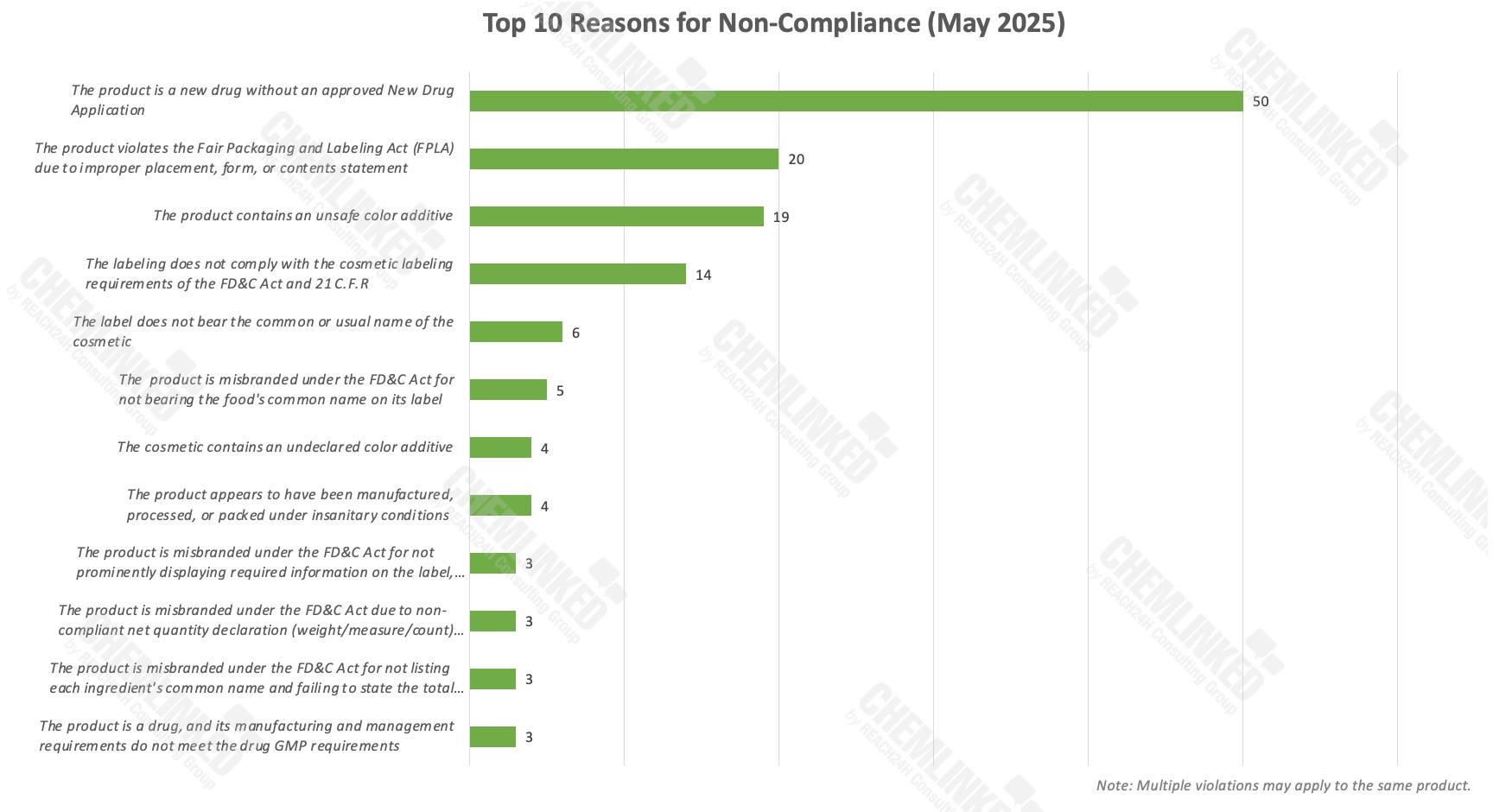 Reasons for Non-compliance (May 2025)
U.S. FDA Report (Apr 2025): 83 Batches of Imported Cosmetics Rejected
In April 2025, the U.S. Food and Drug Administration (FDA), under the Food, Drug, and Cosmetic Act (FD&C Act), refused entry to 83 batches of imported cosmetics from 14 countries due to regulatory non-compliance. Upon detection of violations, the FDA issued "Notices of FDA Action" to product owners or consignees, which specified the nature of the violations. Failure to demonstrate compliance or submit a corrective plan resulted in a final notice, requiring the rejected products to be exported or destroyed within 90 days.
China topped the list of countries with the most refusals, accounting for over 27% of the total. Other countries with multiple rejections included Portugal, Canada, and India.
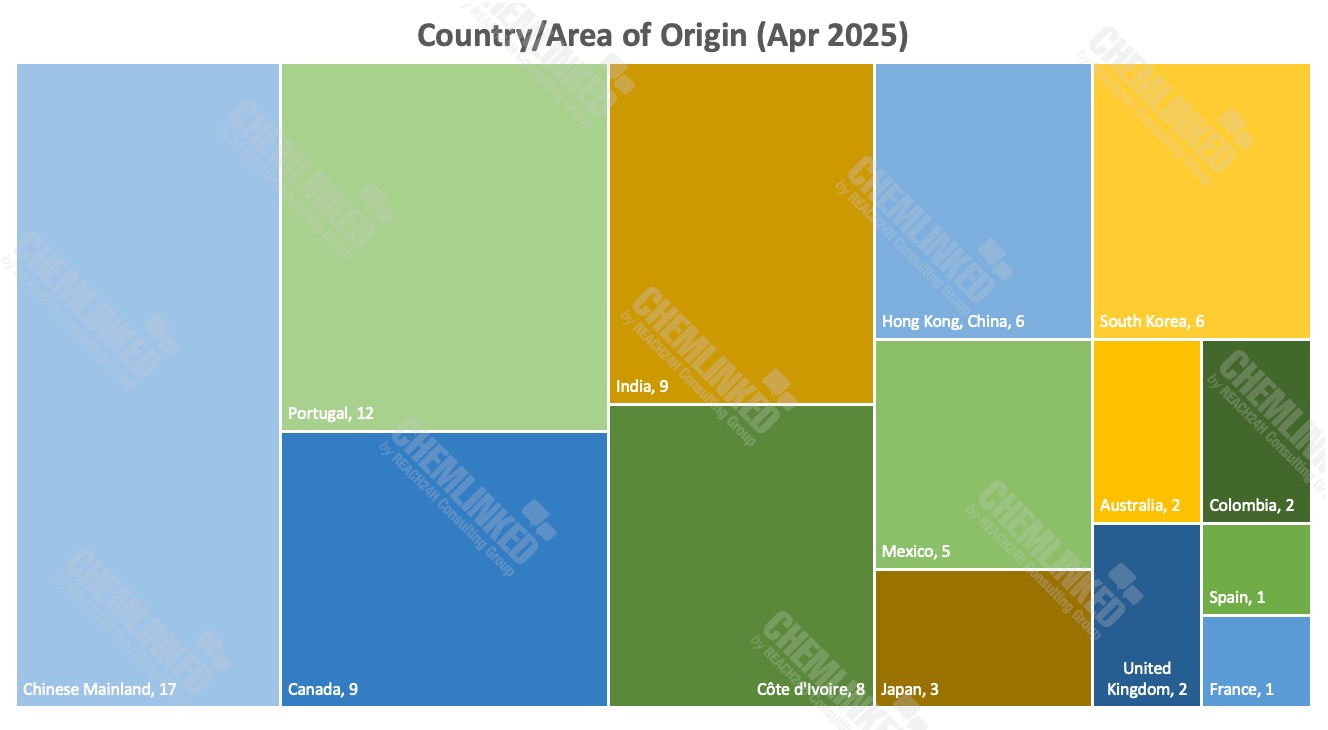 Country/Area of Origin (April 2025)
The rejected products fell into seven categories, with skin care preparations comprising the largest share (37.35%), followed by makeup preparations (22.89%) and hair products (13.25%).
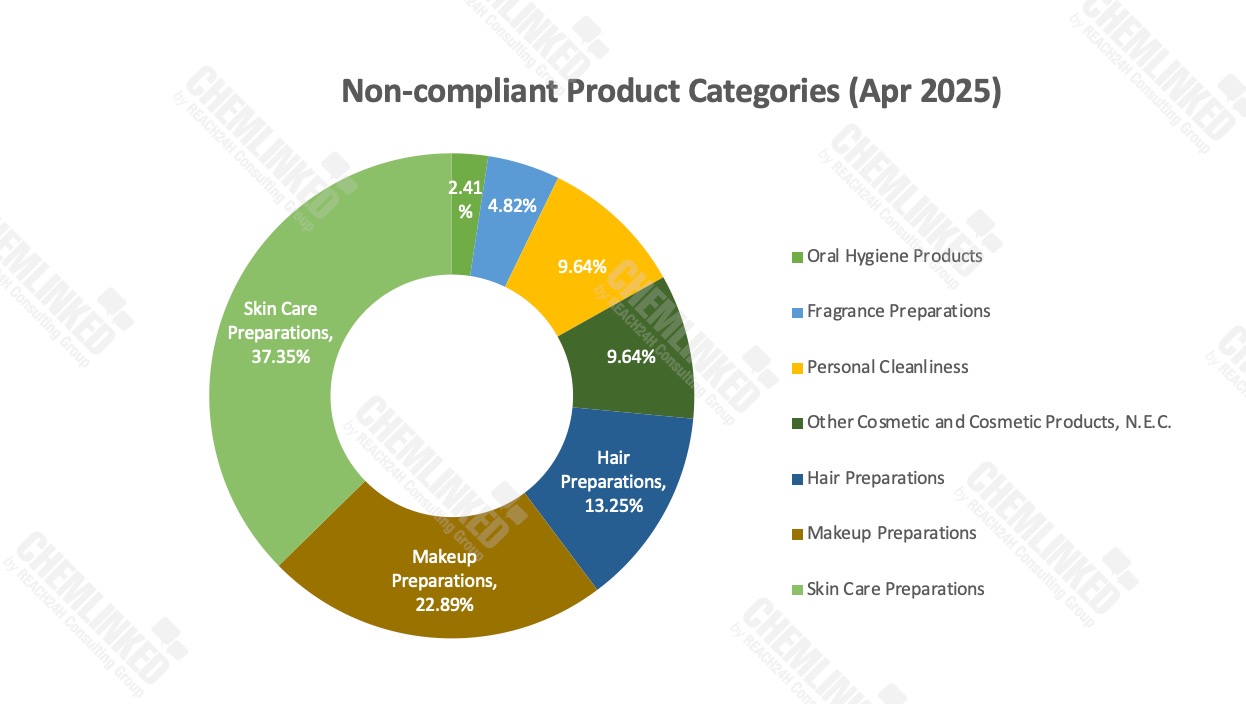 Non-compliant Product Categories (April 2025)The most common reason for rejection was the use of non-compliant color additives, followed by misclassification of drug products as cosmetics and unqualified labeling.
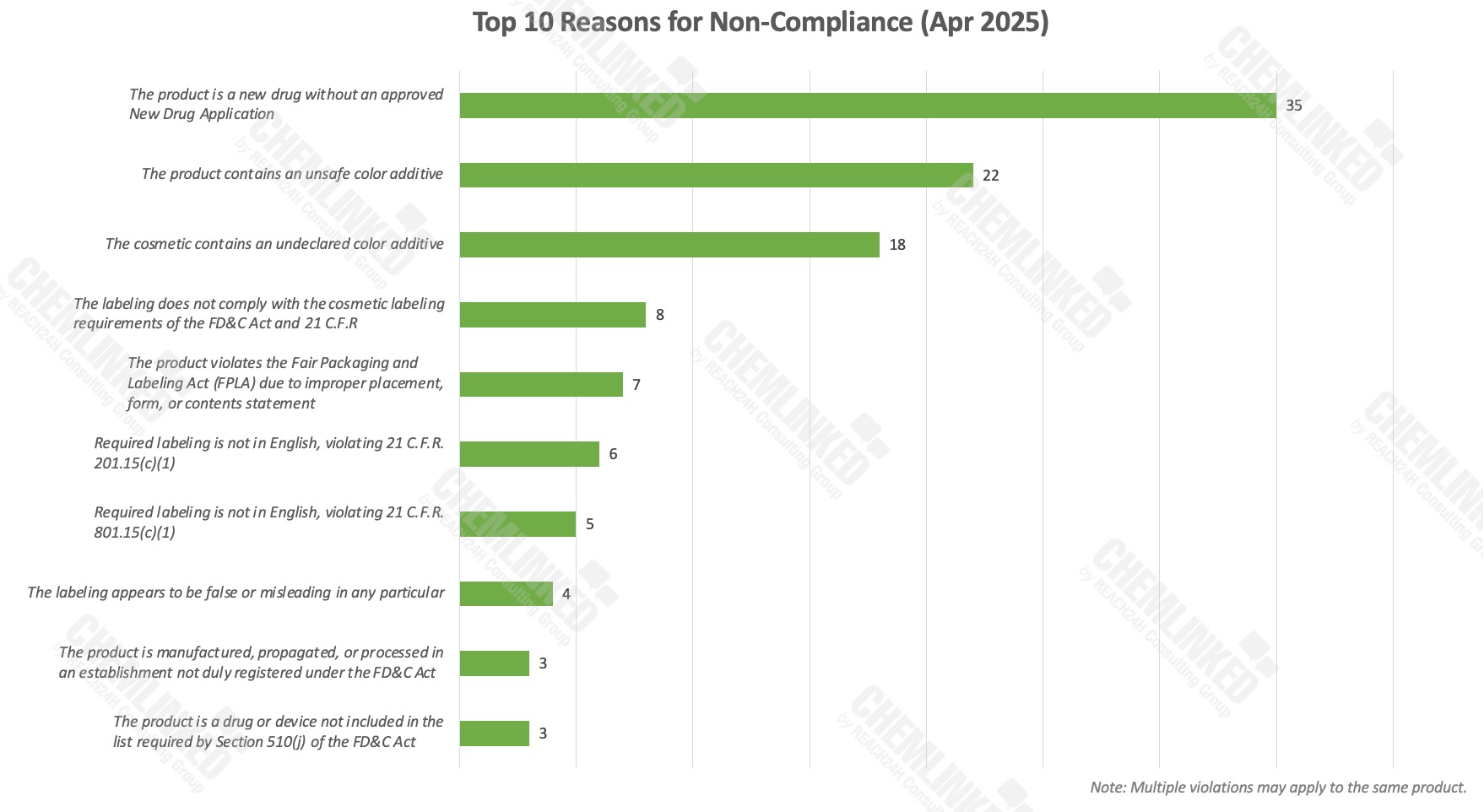 Reasons for Non-compliance (April 2025)
U.S. FDA Report (March 2025): 53 Batches of Imported Cosmetics Rejected
In March 2025, the U.S. Food and Drug Administration (FDA), under the Food, Drug, and Cosmetic Act (FD&C Act), refused entry to 53 batches of imported cosmetics from 17 countries due to regulatory non-compliance. Upon detection of violations, the FDA issued "Notices of FDA Action" to product owners or consignees, which specified the nature of the violations. Failure to demonstrate compliance or submit a corrective plan resulted in a final notice, requiring the rejected products to be exported or destroyed within 90 days.
Greece ranked first among the countries of origin, accounting for over 24% of total refusals. Other countries with multiple rejections included South Korea, China, Germany, and Japan.
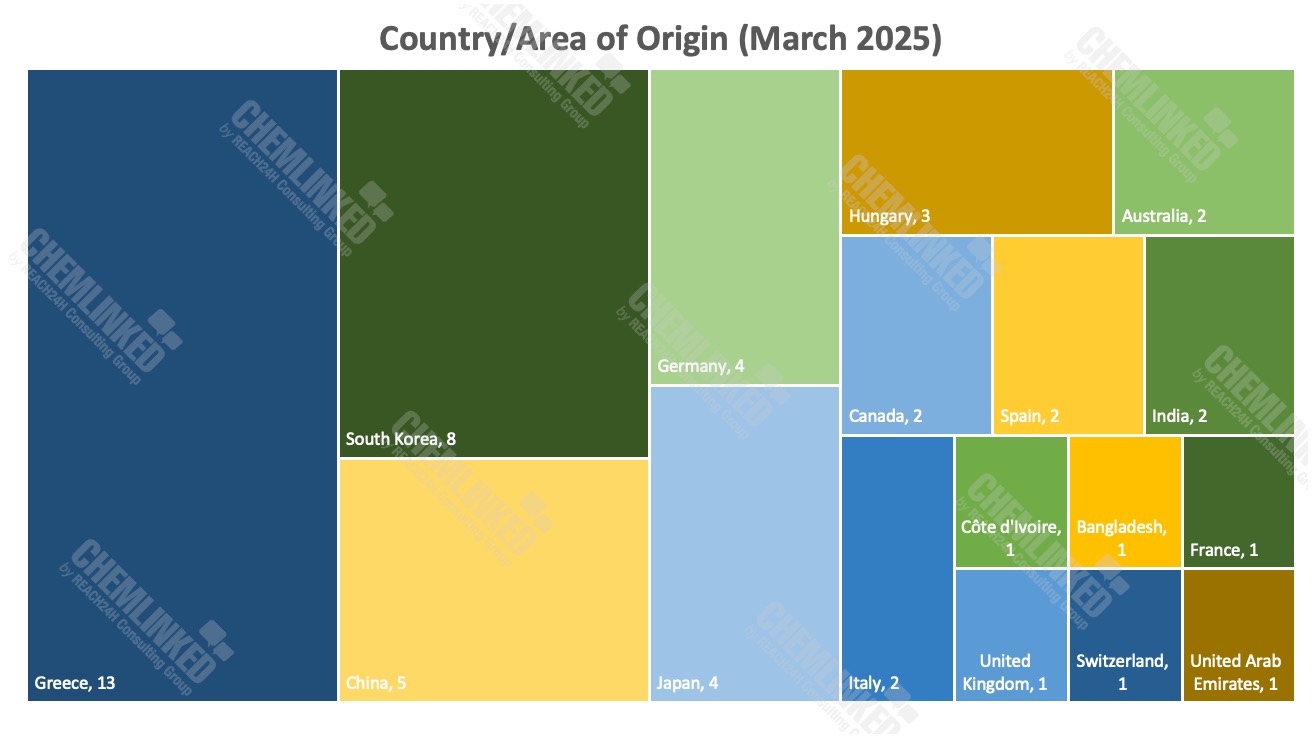 Country/Area of Origin (March 2025)The rejected products spanned eight categories, with skin care preparations comprising the largest share at 32.08%, followed by other cosmetics (26.42%) and hair care products (11.32%).
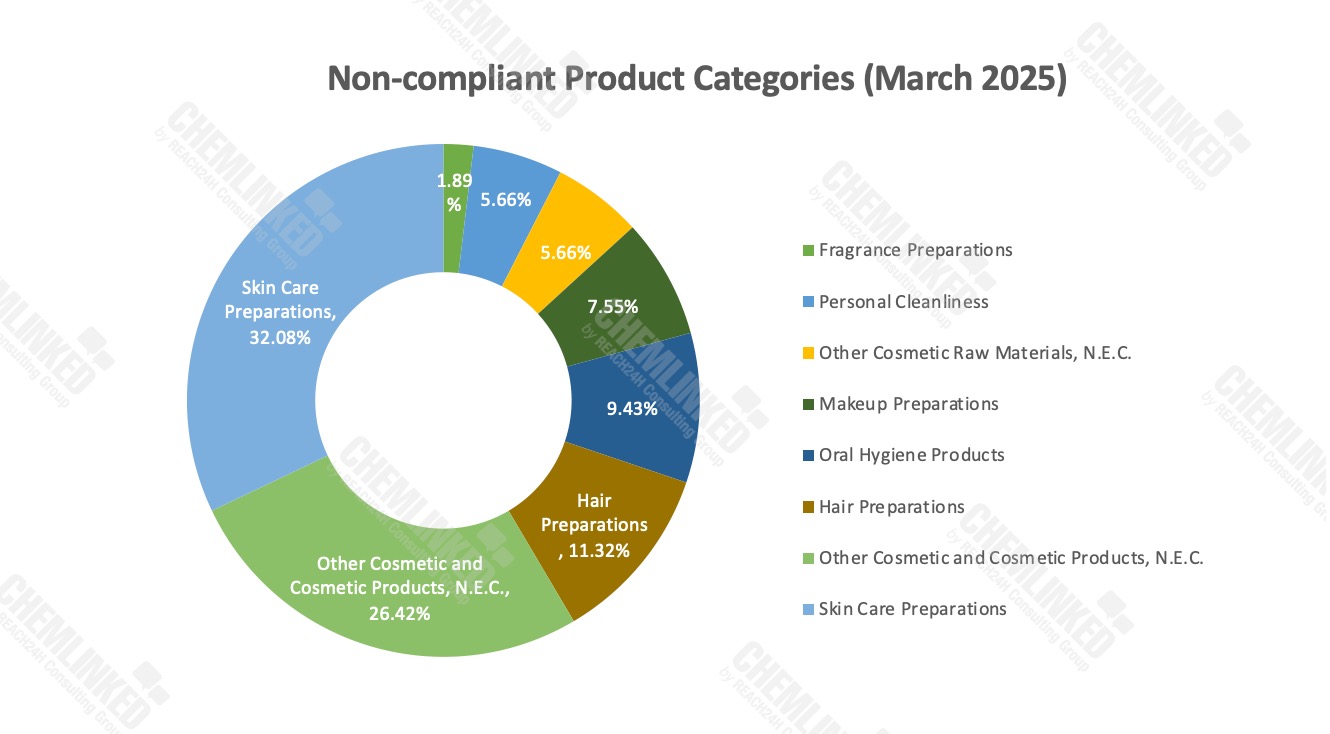 Non-compliant Product Categories (March 2025)The most common cause for rejection was the misclassification of drug products as cosmetics. Specifically:
20 batches were cited for appearing to be unlisted drugs or devices under Section 510(j) of the FD&C Act.
Another 20 batches were rejected because they were manufactured or processed in facilities not registered under Section 510.
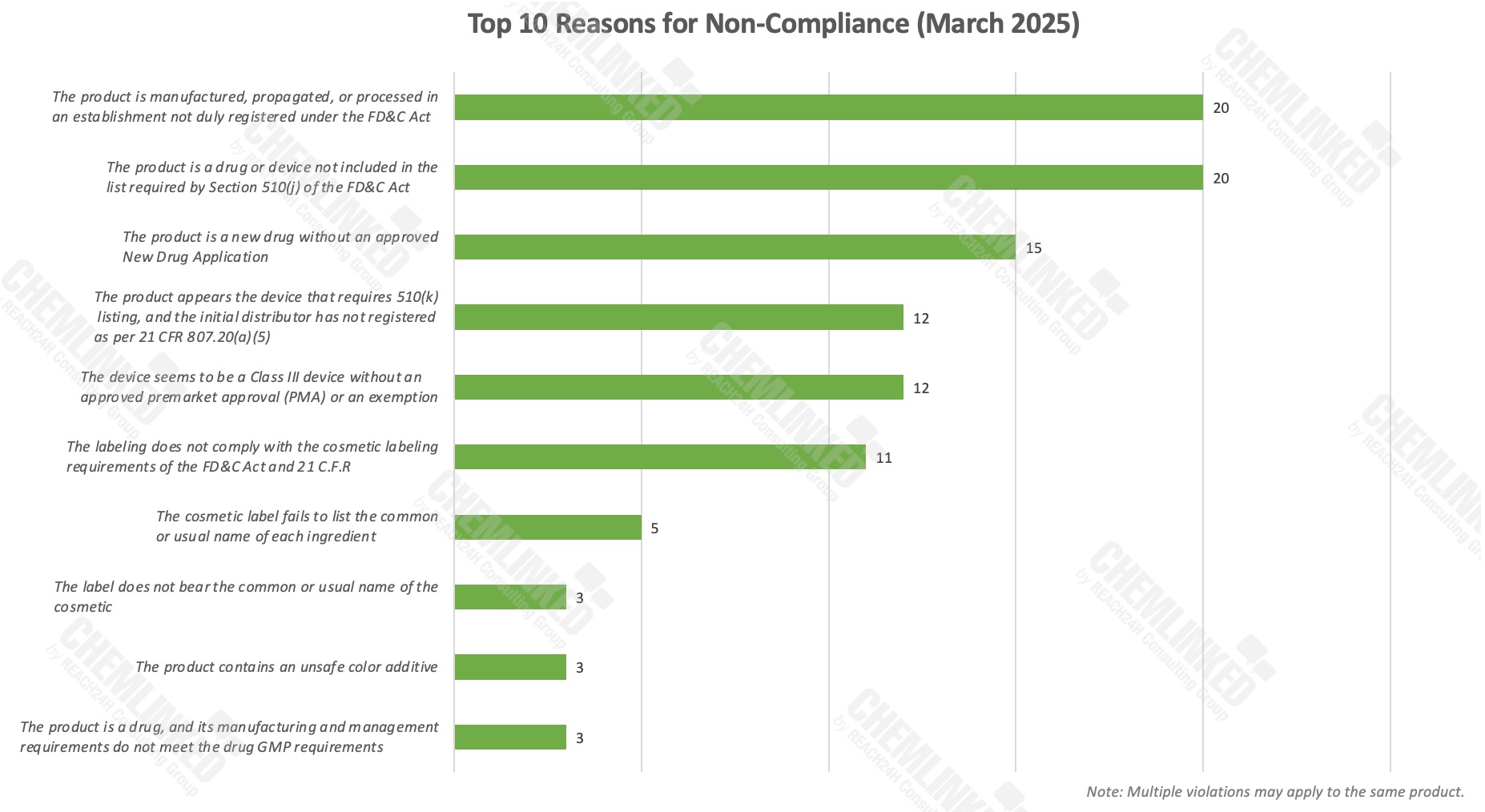 Reasons for Non-compliance (March 2025)
U.S. FDA Report (February 2025): 101 Batches of Imported Cosmetics Rejected
In February 2025, the U.S. Food and Drug Administration (FDA), under the Food, Drug, and Cosmetic Act (FD&C Act), refused entry to 101 batches of imported cosmetics from 16 countries due to regulatory non-compliance. Upon detection of violations, the FDA issued "Notices of FDA Action" to product owners or consignees, which specified the nature of the violations. Failure to demonstrate compliance or submit a corrective plan resulted in a final notice, requiring the rejected products to be exported or destroyed within 90 days.
South Korea topped the list of countries with the most rejections, accounting for over 40% of the total. Other countries with significant rejections included Germany, China, Japan, and Pakistan.
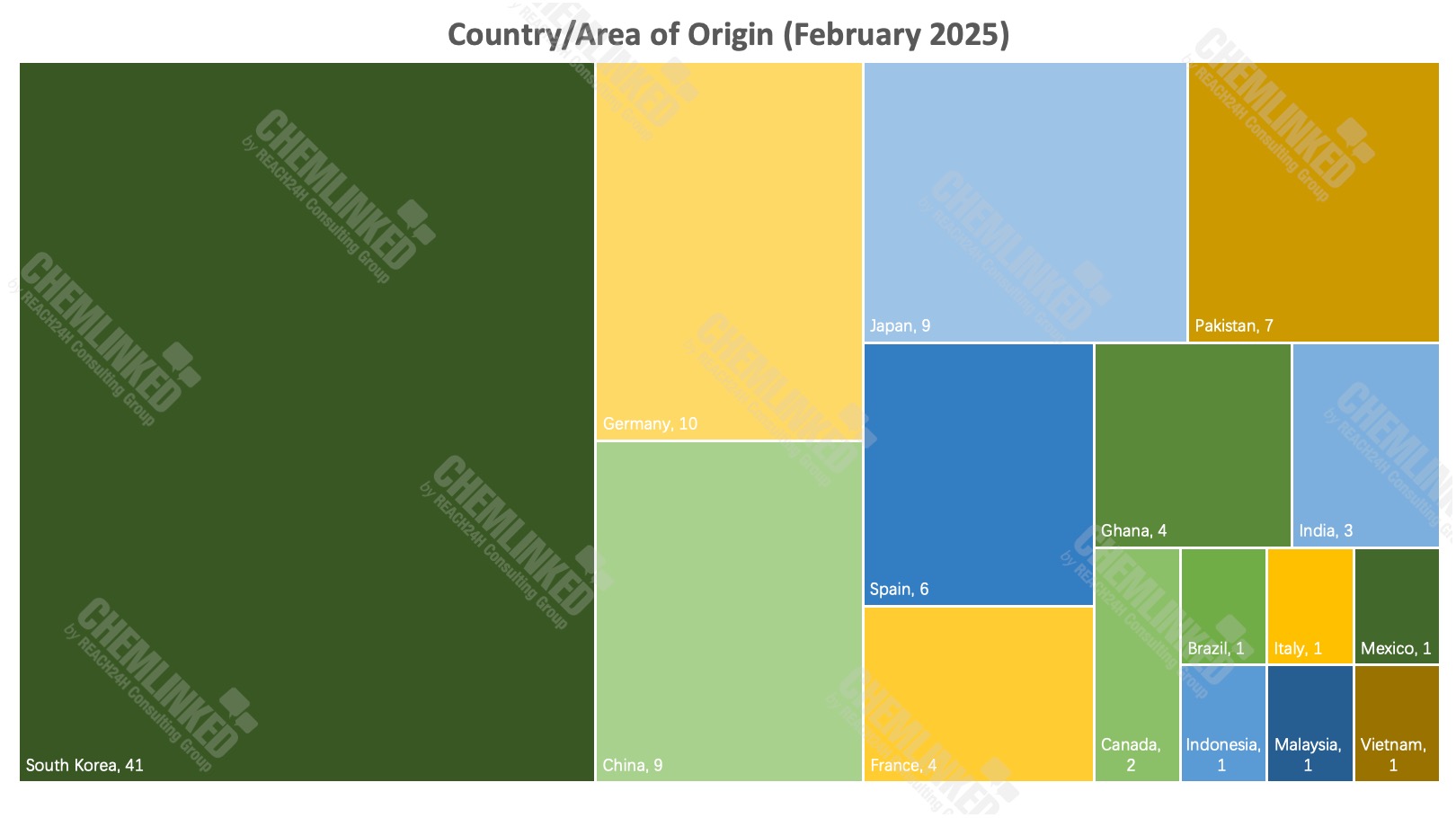 Country/Area of Origin (February 2025)The rejected products fell into six categories, with skin care preparations making up the largest share at 53.47%. This was followed by hair preparations (14.85%), personal cleanliness (10.89%), and makeup preparations (9.90%).
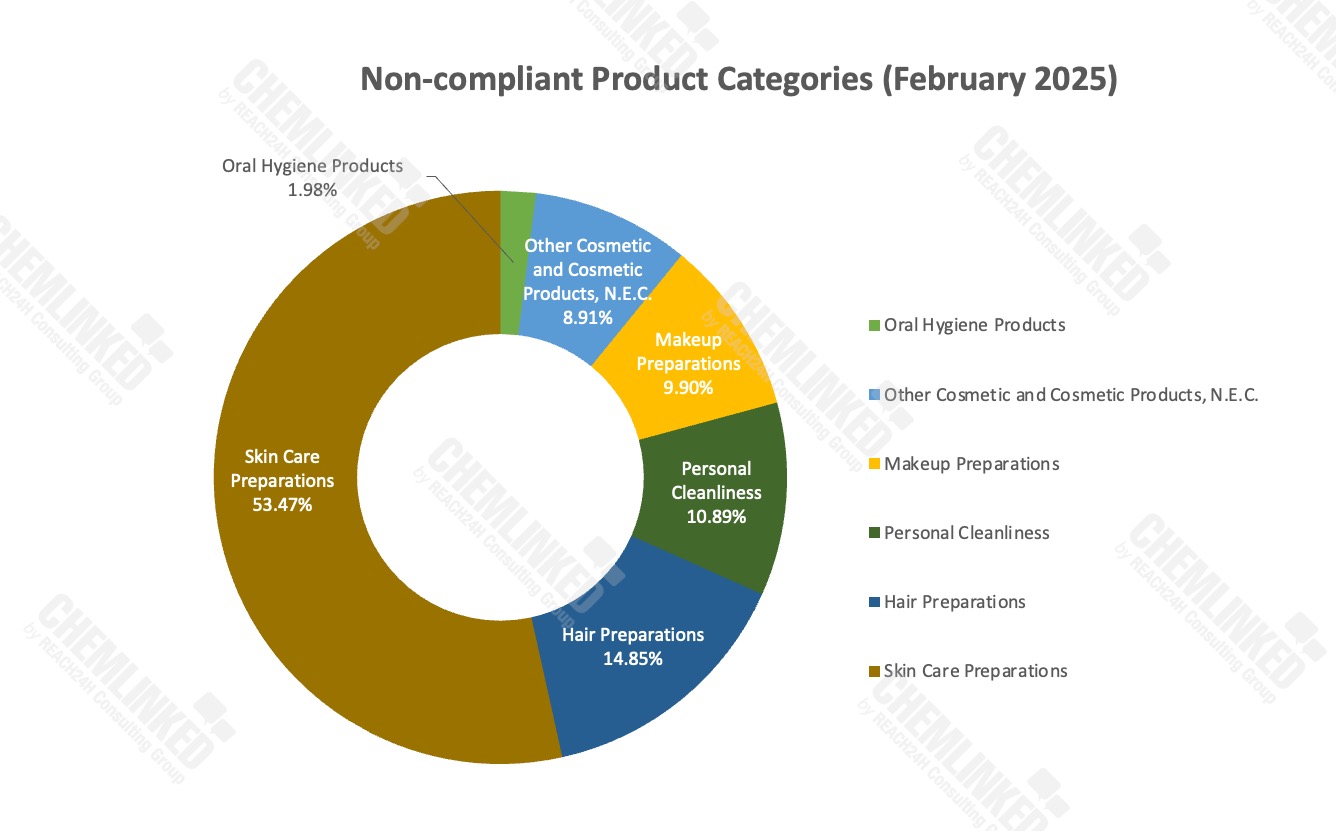 Non-compliant Product Categories (February 2025)The leading cause for rejection was the misclassification of drugs as cosmetics, among which 41 batches were flagged as "unapproved new drugs." Additional reasons for rejection included color additive violations and unqualified labeling.
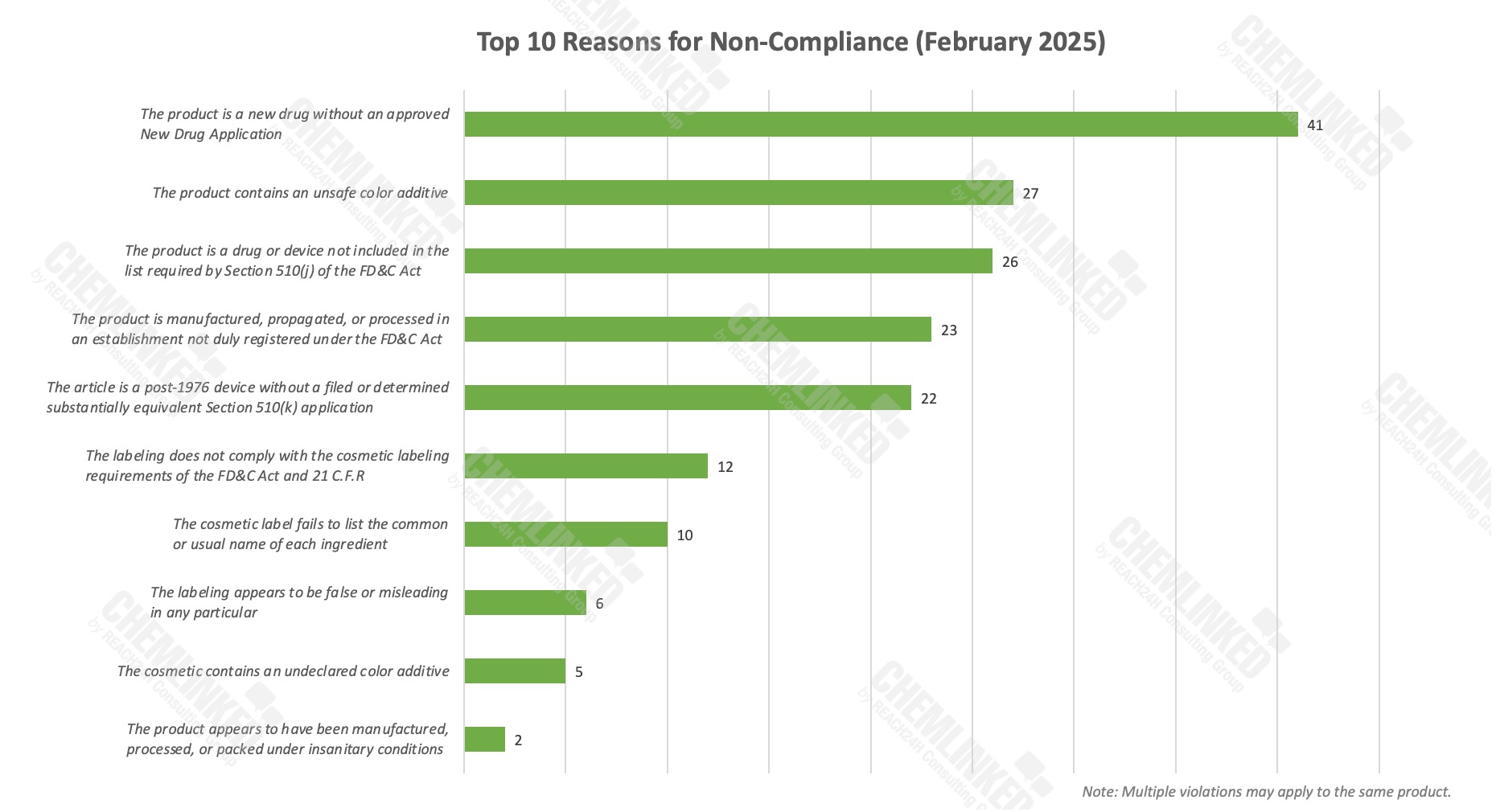 Reasons for Non-compliance (February 2025)
U.S. FDA Report (January 2025): 89 Batches of Imported Cosmetics Rejected
In January 2025, the U.S. Food and Drug Administration (FDA), under the Food, Drug, and Cosmetic Act (FD&C Act), refused entry to 89 batches of imported cosmetics from 24 countries due to regulatory non-compliance. Upon detection of violations, the FDA issued "Notices of FDA Action" to product owners or consignees, which specified the nature of the violations. Failure to demonstrate compliance or submit a corrective plan resulted in a final notice, requiring the rejected products to be exported or destroyed within 90 days.
India led the list of countries with the most rejections, accounting for over 21% of the total. It was followed by South Korea, France, mainland China, and Colombia.
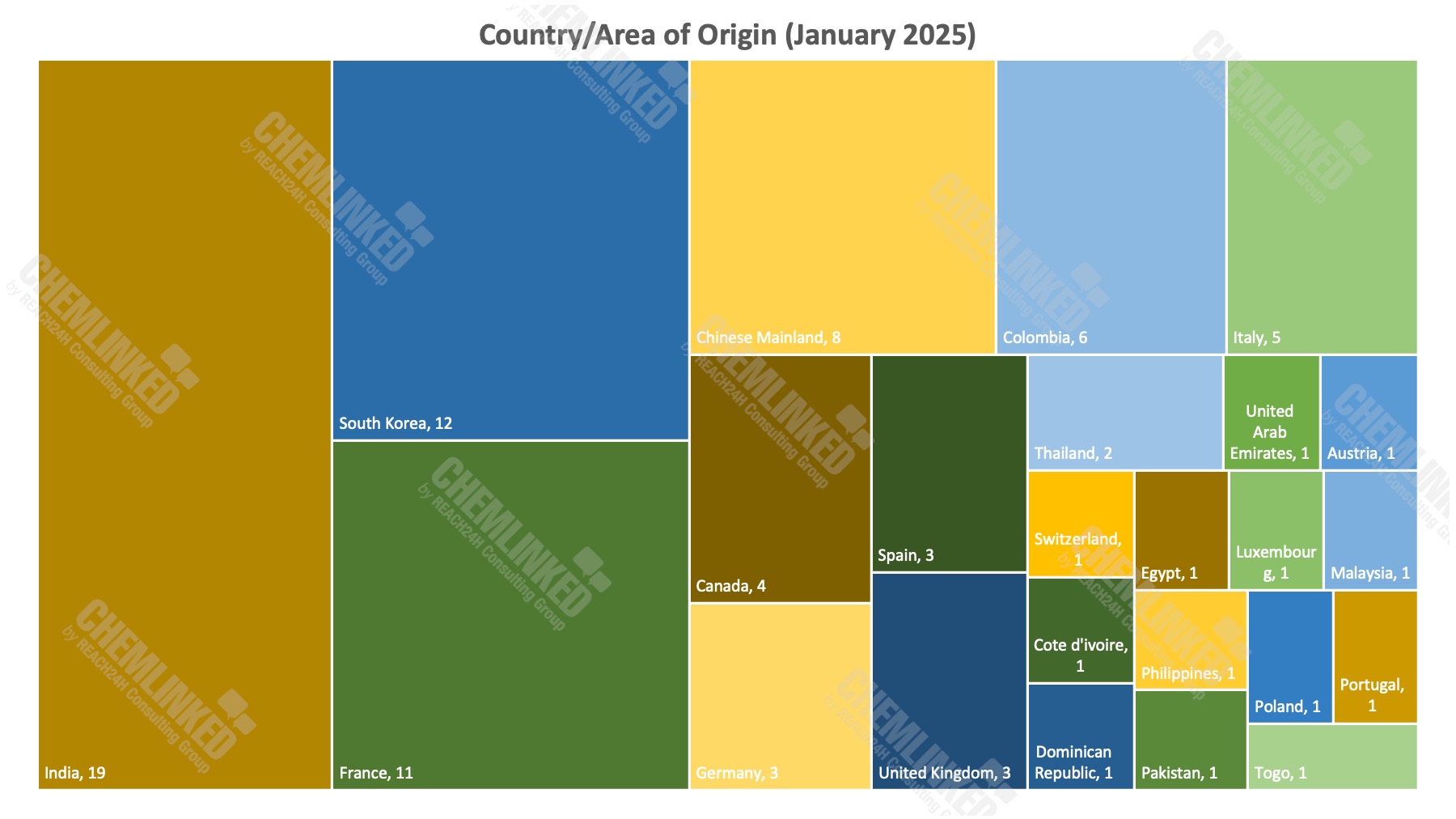 Country/Area of Origin (January 2025)The rejected products fell into eight categories, with makeup preparations being the most frequently rejected at 35.96%. Skin care preparations ranked second at 26.97%, while personal cleanliness and oral hygiene products tied at 19.32%.
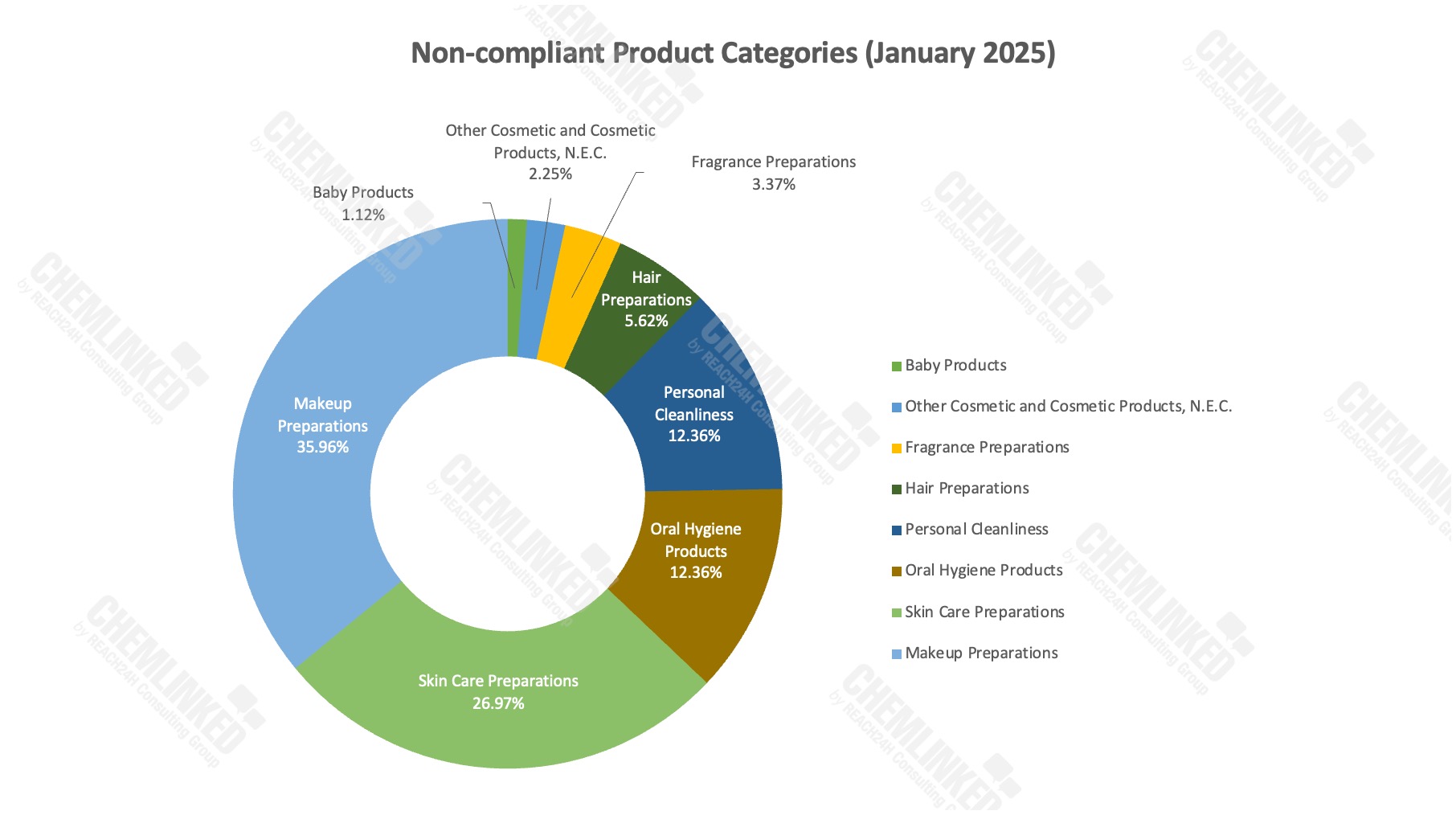 Non-compliant Product Categories (January 2025)The primary cause for rejection was the misclassification of drugs as cosmetics, among which 38 batches were flagged as "unapproved new drugs." Other reasons for rejection include labeling deficiencies and color additive violations.
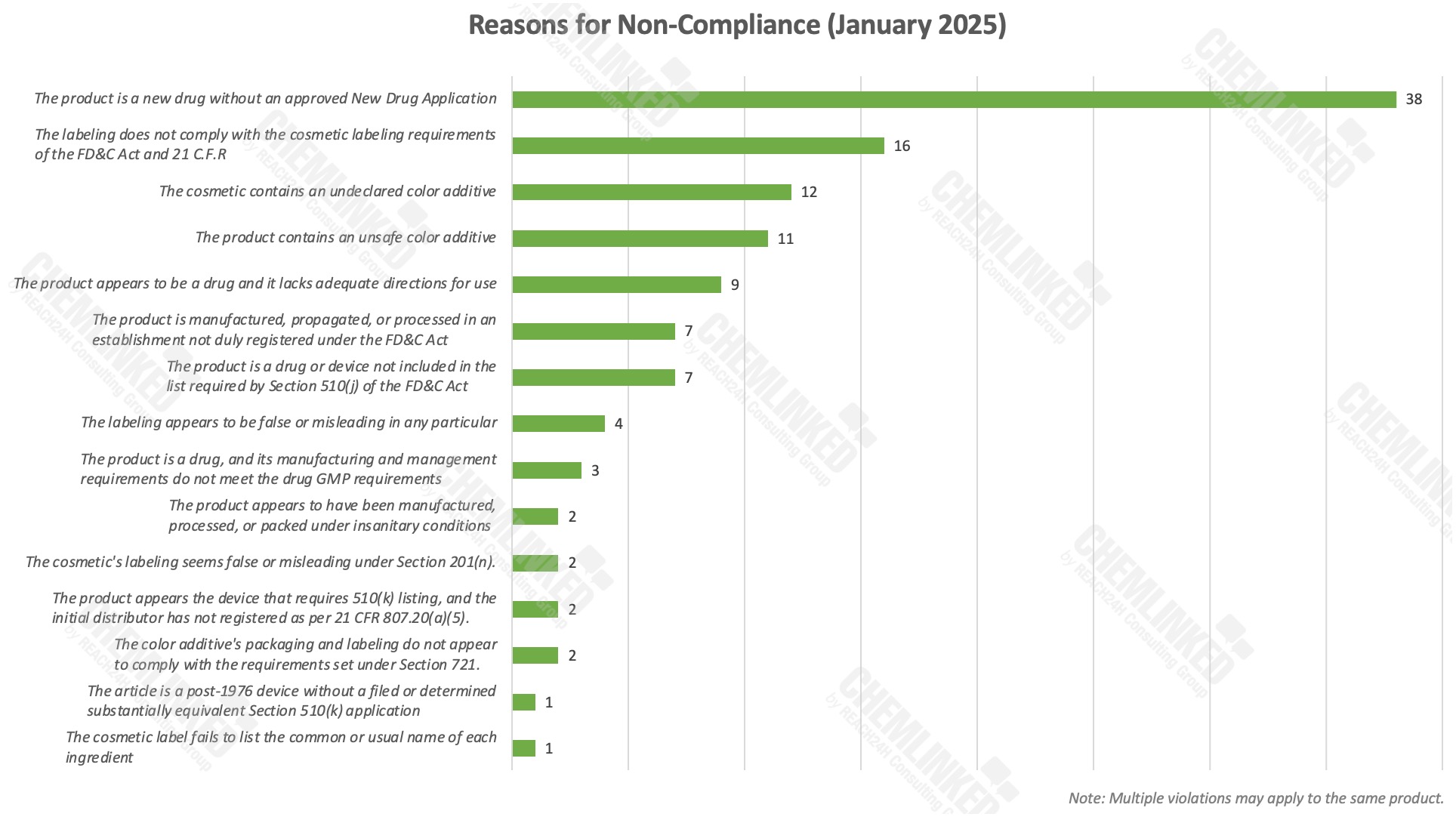 Reasons for Non-compliance (January 2025)

Further Reading


 Request a Demo

 We provide full-scale global cosmetic market entry services (including cosmetic registering & filing, regulatory consultation, customized training, market research, branding strategy). Please contact us to discuss how we can help you by