Request a Demo
ABSTRACT: This article offers an overview on the new cosmetic importation system operating in Shanghai China dubbed the "Pudong Trial". The article offers readers an overview of critical issues pertaining to the pilot program. Furthermore this article will highlight the status quo of cosmetic filing practices as well as a more in-depth analysis of pros and cons of the new trial system. Finally, tips will be included for exporters to help develop an efficient market entry strategy.
PUDONG TRIAL LOWERS MARKET ENTRY THRESHOLD
From March 1st 2017, a pilot filing process has been implemented for non-special cosmetics imported for the first time to ports in the Shanghai Pudong New Area using domestic dealers registered in the same area. The pilot program will test the feasibility of a post market supervision and inspection system for imported non-special cosmetics. It also introduces the concept of "Domestic Responsible Person".
The Status Quo of the Pudong Filing Trial
The filing management for first imported non-special cosmetics has been implemented for more than half a year and has attracted loads of attention from the global cosmetic industry with many companies even participating in the trial.
On March 1st, the day when the pilot program was launched, L'Oreal and Shiseido Co. became the first batch of companies to successfully register as a "domestic responsible person". On March 9th, L'Oreal's product "LANCOME PURE EMPREINTE MINERAL MASK" obtained the first non-special cosmetic filing electronic certificate. On May 12th, Shiseido Co. became the first beneficiary of this pilot project: a batch of facial cleansers entered China successfully after finishing the inspection by the Shanghai Pudong Inspection and Quarantine Bureau.
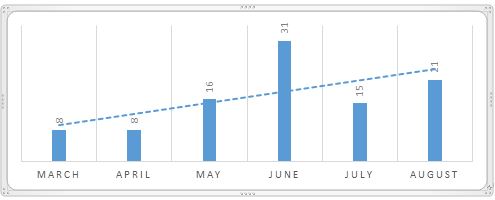
As more organizations consider choosing the Pudong trial, the number of filing system accounts keeps growing. By September, there were a total of 99 accounts and 64 "domestic responsible persons" registered.
Figure 1 Accounts for Filing System (by September, 2017)
(Source: CFDA filing database)
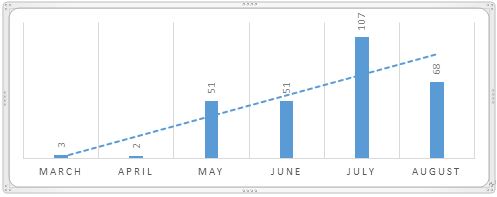
Each month, the number of new filed cosmetics keeps growing up. As of September, a total of 592 cosmetics have applied for filing certificates by 22 applicants. The critical information of filed product (ingredient, label & manufacturer) remains up-to-date and publicized online.
Figure 2 Numbers of Filed Cosmetics (by September, 2017)
(Source: CFDA filing database)
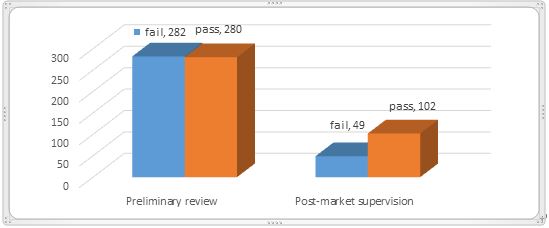
After filing, the Shanghai FDA carries out preliminary review and post-market supervision of the submitted files within 3 months. Plenty of problems occur in this phase. As of September, 562 products have gone through the preliminary review, of which only 50% passed and finished the online filing application successfully. 151 products have undergone the post-market inspection, of which 67.5% passed the inspection, the rest failed the review process due to insufficient materials. Relevant information has been released on the website.
Figure 3 Results of Supervision by Shanghai FDA (by September, 2017)
(Source: CFDA filing database)
Comparing the Filing Trial with CFDA Registration…
Advantages of the Filing Trial
Compared to the CFDA approval process, the filing procedure offered by Shanghai FDA has been simplified in many ways, key changes are the absence of pre-market approval and a shortened time to market products in China:
♦ The "political decentralization" pilot project has shortened the time to market for non-special use cosmetics in China. Previously, foreign non-special purpose cosmetics were subject to an administration approval system in which technical review normally takes more than 45 working days. With the Pudong trial imported non-special use cosmetics do not need to get approval prior to marketing as long as they file an online record. Specifically, a filing certificate could be issued within 5 working days. Unlike the CFDA certificate, the certificate issued by SH FDA does not have to be renewed every four years.
♦ The new trial offers expedited market access and dispenses with time consuming administrative approval. Based on this companies can adjust their production supply plans and increase their investment in the Chinese market to achieve better development. It also allows Chinese consumers to have the opportunity to enjoy the latest advances and the most up to date cosmetics on the global market.
♦ The trial is also favorable for baby products. Basically, the application requirements for children cosmetic are much more stringent and demanding. The application process could be seriously impeded by the regulatory gap. Using the Pudong trial, a non-special use baby product can theoretically obtain its filing certificate within 5 working days. For example, JOHNSON & JOHNSON has already benefited from this pilot project with 6 of its baby shower gel and cream products being filed during last several months.
Drawbacks
Although new filing policies may seem to significantly reduce market access requirements on closer analysis there are still some issues which importers need to be cognizant of:
► First of all the Pudong filing process is only applicable to enterprises satisfying all the following conditions:
1) Products: Non-special cosmetics imported for the first time
2) Entrust "Domestic Responsible Person" registered in Pudong New Area
3) Import products from Pudong New Area
Unfortunately, for some enterprises, many of their most profitable and innovative lines such as whitening products, sunscreen products fall into special cosmetic scope, and these lucrative products can't enjoy the benefits of the Pudong filing management system.
Besides, a lot of foreign companies such as Procter & Gamble Co., L'Oreal, Shiseido Co. and Unilever have already made progress undertaken CFDA registration for many of their products. These companies have also established their responsible agents all over the country, and to transfer their existing business procedures to Pudong filing management would be complicated and cause unnecessary expenditure.
► The Pudong pilot notification aims at streamlining the market entry process without reducing the requirements for product safety. The application duration has indeed been shortened, however, Pudong officials tend to follow a rigid procedure and be more stringent about vetting applicants. New entrants to the market may not be familiar with how challenging the changing regulatory requirements can be, as a result, the passing rates of Pudong Filing supervision are not satisfactory so far (see Figure 3 above). Take JOHNSON & JOHNSON for example, their pre-market filing appeared to be going well, however, most of its baby products were found to have defects in their filing dossiers during the post-market supervision.
► The new system puts a focus on full lifecycle quality supervision, instead of the previous entry examination and approval. The newly defined "responsible person (RP)" shoulders more responsibility for not only the product filing but also its import, sale and most importantly, safety. After the cosmetic reaches the shelves, the RP in China should have the ability to undertake extra responsibilities such as ensuring the safety and quality of products by adopting quality management and product traceability.
► The cost of non-compliance can be more expensive than pre-market registration by CFDA. The new post-market supervise is by no means a tokenistic gesture and will be backed up by the regulation such as the "disposition methods". Enterprise found in violation of these regulations will face investigation or recall of the product immediately depending on the severity of the non-compliance situation. Any non-compliance will be recorded and disclosed to public in real time.
► The changing regulatory landscape has always been one of the biggest hurdles for foreign companies attempting to break into China. The Pudong trial will continue until 21st December 2018 and it is hoped that it will be seen as workable by the Chinese authorities for rolling out across China. Although "decentralization" is clearly a trend, many companies believe that ahead of December 21st 2018 (the end date of the trail), Pudong trial is unlikely to become a popular choice for common enterprises.
Think Ahead and Be Prepared
Either the traditional CFDA registration approach or Pudong pilot can be used as compliance solutions, each with its own set of benefits and drawbacks. For those who want to enjoy the preferential policy, a feasibility analysis should be made before making a decision to enter China.
The new policy legally defines the applicable scope of products that can be filed, a company should ensure whether the products fall into this scope. For special use cosmetics, registration via CFDA would be the only option, while non-special products, especially baby products and season-specific products such as lipsticks can choose to take full use of Pudong trial to enjoy its flexibility. But stakeholders should keep in mind that although filing management apparently shortens the review time, it doesn't reduce control of product quality and safety, sometimes it can be even stricter.
The "Domestic Responsible Person" should take the potential quality and safety problems of their products into consideration before deciding to utilize the Pudong filing process. For smaller enterprises, the strict post- market requirement could be burdensome. If a company is not able to establish quality management and a product traceability system using a qualified regulatory specialist, then Pudong trial would not be a wise choice.
 We provide full-scale global cosmetic market entry services (including cosmetic registering & filing, regulatory consultation, customized training, market research, branding strategy). Please contact us to discuss how we can help you by