Request a Demo
On March 7, 2026, Health Canada (HC) announced an update to its enforcement approach regarding fragrance allergen disclosures in cosmetics. Under the updated policy, reporting the specific concentration of most fragrance allergens on the Cosmetic Notification Form (CNF) will become optional for manufacturers and importers. The adjustment aims to reduce regulatory burden on industry while maintaining consumer protection.
Optional Concentration Reporting on CNF
The update follows concerns raised by industry stakeholders regarding the difficulty of sharing confidential business information, particularly fragrance composition details provided by suppliers. In response, Health Canada will introduce flexibility in its interpretation of the existing regulations.
Under the revised approach, companies must still list designated fragrance allergens as separate ingredients on the CNF. However, providing the exact concentration or concentration range code will no longer be mandatory for most fragrance allergens. Health Canada clarified that this change reflects a policy interpretation rather than an amendment to the Cosmetic Regulations.
Crucially, the requirements for on-label disclosure to consumers are not affected by this update. Fragrance allergens must still be listed in the ingredients on a cosmetic product's label if their concentration exceeds 0.01% in rinse-off products or 0.001% in leave-on products. This ensures that consumers with sensitivities can continue to identify and avoid relevant allergens.
Exceptions for Allergens Listed in Hotlist
The flexibility does not apply to all fragrance allergens. If an allergen is also listed on the Cosmetic Ingredient Hotlist with a condition linked to a specific concentration, its concentration or concentration range code remains mandatory on the CNF. Examples provided include eucalyptus, camphor, and methyl salicylate.
HC also indicated that the CNF and the Cosmetic Notification Guide will be updated to reflect these changes.
Phased Enforcement Approach
HC emphasized the phased enforcement approach for the allergen disclosure rules:
Phase 1 (Compliance Promotion): From April 12, 2026, to April 11, 2027, the focus will be on education and promoting compliance with regulated parties.
Phase 2 (Standard Enforcement): Beginning April 12, 2027, compliance and enforcement activities will follow a standard risk-based approach.
 Further Reading
Webinar | Global Fragrance Allergen Regulations: A Comprehensive Overview
Canada Implements Phased Compliance for Fragrance Allergen Labeling in Cosmetics
Canada Requires Cosmetics to Be Labeled with Fragrance Allergens
Webinar Recommendation
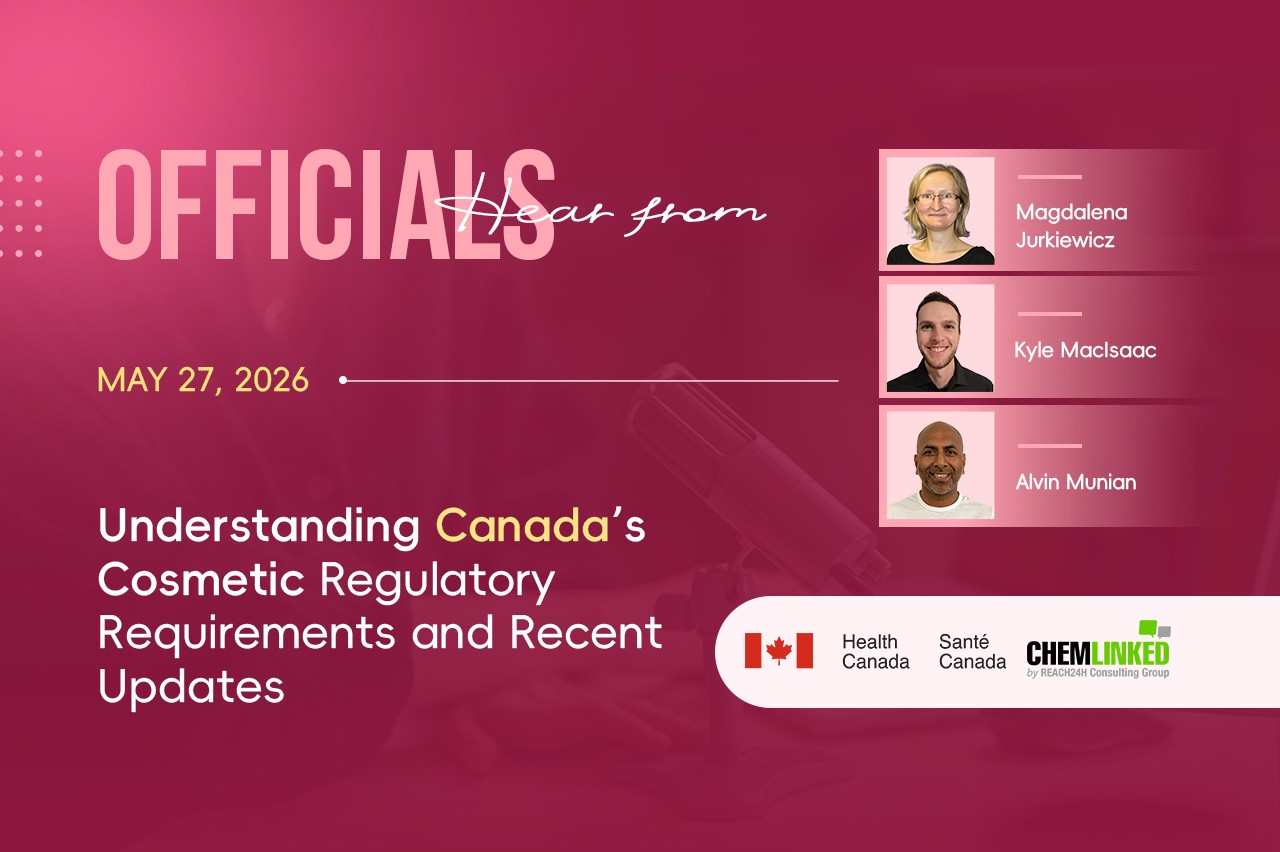
To help global beauty companies seamlessly access the Canadian market, ChemLinked invited three officials from Health Canada to explain Canada's current regulatory framework and offer guidance on both pre- and post-market requirements. The webinar will conclude with a live Q&A session, offering businesses an opportunity to engage with Health Canada regulators and have their questions addressed.
 We provide full-scale global cosmetic market entry services (including cosmetic registering & filing, regulatory consultation, customized training, market research, branding strategy). Please contact us to discuss how we can help you by