Request a Demo
1. Background
Global trends toward product customization have gained a large foothold in South Korea. MFDS added a series of provisions related to custom cosmetics in the Cosmetics Act in March 2018, and these provisions will be effective on March 14, 2020 [1]. Then MFDS proposed draft amendments to Enforcement Decree of the Cosmetics Act [2] and Enforcement Rule of the Cosmetics Act [3] in August 2018 and August 2019 to further clarify the requirements on custom cosmetics sales business.
2. A Glance at the Regulation Requirements
Definition
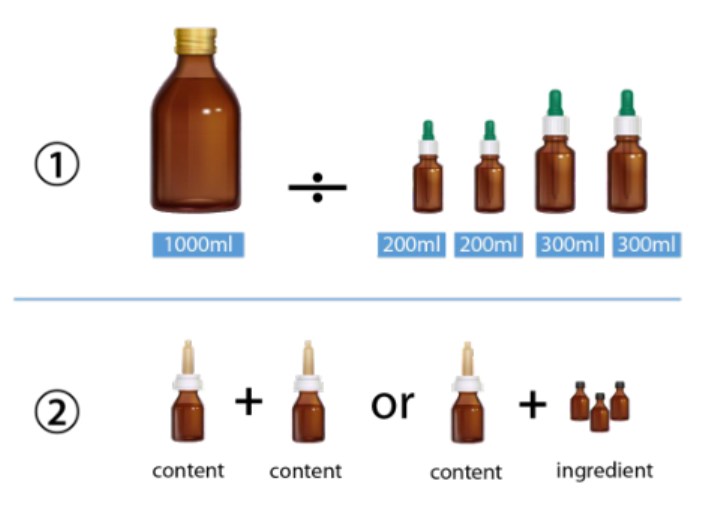
According to the Cosmetics Act, custom cosmetics are products that are blended or dispensed at the sales place by a qualified cosmetic compounding manager according to the consumers' skin type and preferences for color and fragrance. It refers to any of the following:
1) A cosmetic repackaged by dividing the contents of manufactured or imported cosmetics into smaller amounts
2) A cosmetic made by mixing the contents of a manufactured or imported cosmetic with the contents of any other cosmetic or an ingredient prescribed by the MFDS
Custom Cosmetics Sales Business Requirements
According to the Cosmetics Act, custom cosmetics sellers shall file a report with the MFDS. The procedures are applied to the local office --> review of report materials --> issuance of report certificate.
According to the draft amendments to Enforcement Rule of the Cosmetics Act in August 2019, custom cosmetics sellers shall also:
1) Employ a custom cosmetic compounding manager engaged in the mixing and division into smaller amounts of a custom cosmetic. A custom cosmetic compounding manager shall pass the qualification test required by the MFDS.
Testing Contents |
Understanding of the Cosmetics Act |
Manufacture and quality control of cosmetics |
Safety management of cosmetics circulation |
Understanding of custom cosmetics |
2) Inspect facilities and equipment regularly.
3) Establish and keep the sales records of custom cosmetics (both paper and electronic).
Custom cosmetics identification number |
Sales date and volume |
Expiry date or expiry date after opening |
4) To prevent contamination during mixing and dividing of custom cosmetics,
Before mixing and dividing cosmetics into smaller amounts, check the quality of the contents or ingredients of custom cosmetics
Before mixing and dividing cosmetics into smaller amounts, disinfect or clean hands or wear disposable gloves
Equipment used must be cleaned before and after use
Check-in advance whether the containers are contaminated
5) Explain custom cosmetics contents' and ingredients' concentration and characteristics and usage precautions to consumers when selling.
6) Timely report adverse reactions to MFDS.
For the details of custom cosmetics regulation, please refer to the ChemLinked webinar presented by Tiger Kim on March 26, 2020.
3. Industry Dynamics
At the end of 2016, Lancome launched a custom foundation. In addition to letting customers choose the relative proportions of concealing and moisturizing agents, Lancome also helped customers assess their cheeks, forehead, chin, and skin tone and customize the product based on these parameters. The sales price was not much higher than ordinary liquid foundation, which made the product welcomed by consumers.
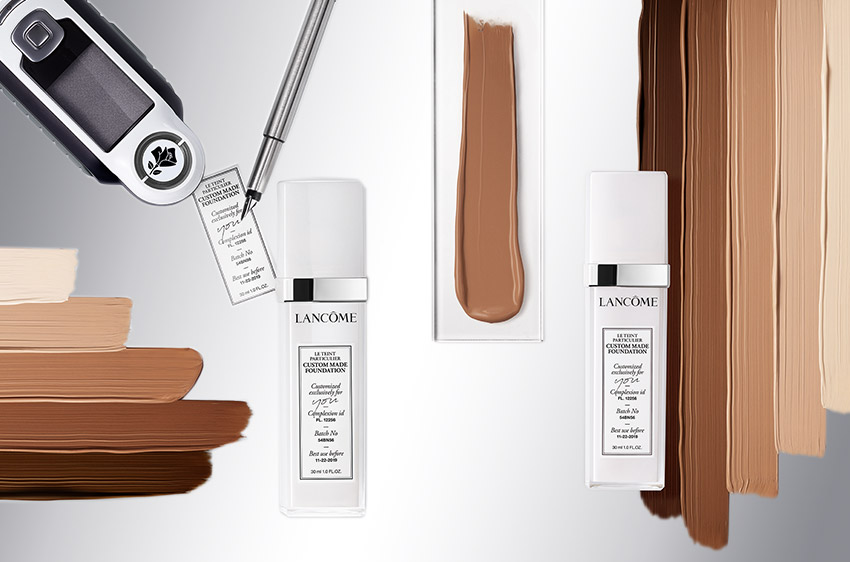 Source: Lancome
According to BeautyNury [4], some South Korean enterprises have conducted pilot operations to assess the feasibility of more significant investment in the custom cosmetics sector, and sold brands such as Laneige, Innisfree, CNP ReMede, etc. For now, the main types of custom cosmetics in South Korea include:
on-site compounding
factory manufacturing and distribution
equipment
For example, "Apothecary" of Kiehl's is a product prepared on site. First, the user's skin condition is detected, then after a consultation with a professional skin consultant, pre-essence, and concentrated essence are added to make a unique product formula.
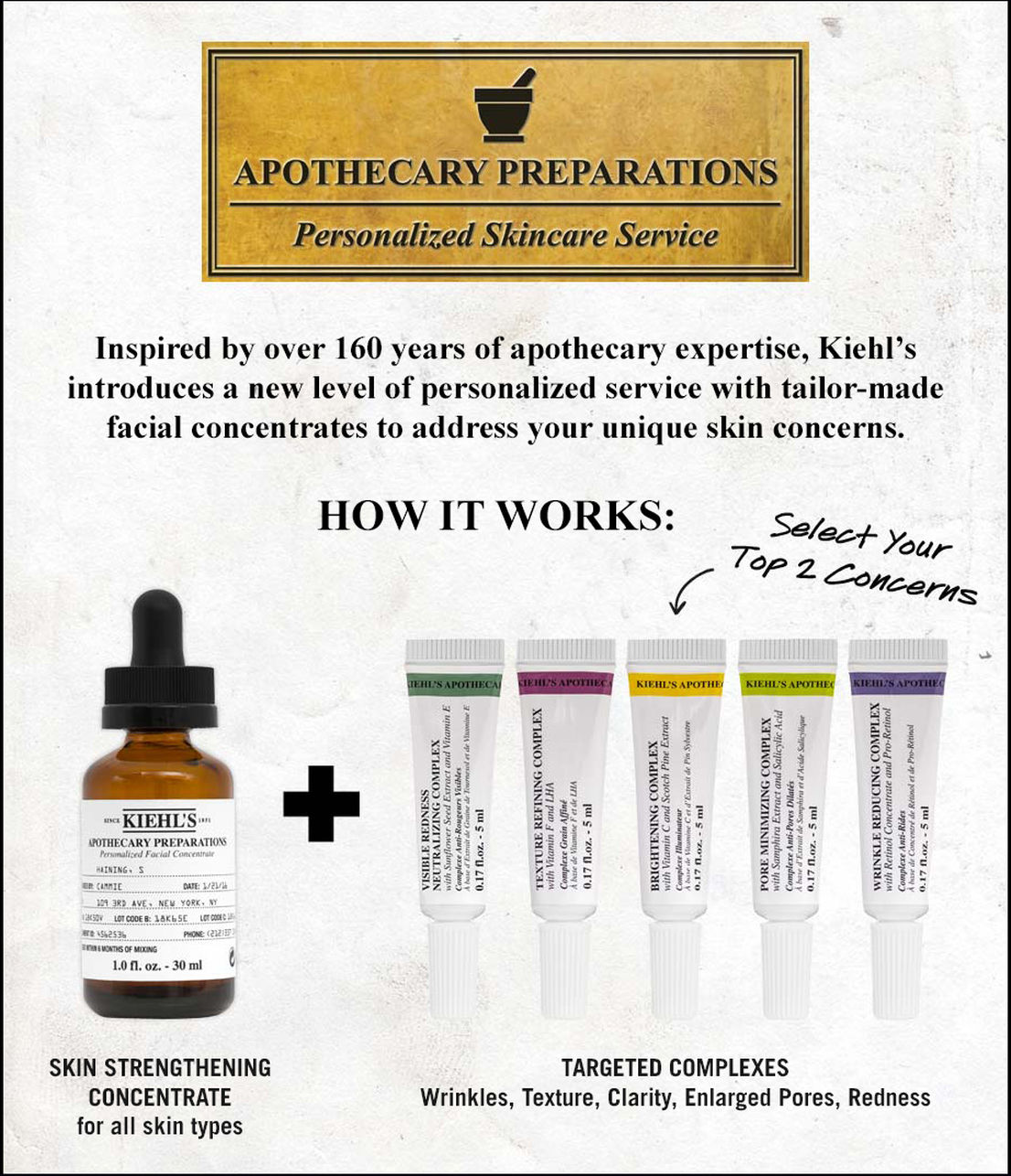 Source: Kiehl's
Amore Pacific, as a pioneer in personalized and custom cosmetics, established a specialized skin diagnostic center in 1984 to produce products by detecting the condition of the skin. In 2017, it launched an APP named Colortailor using AI to assess and recommend lipsticks based on photos provided by the client.
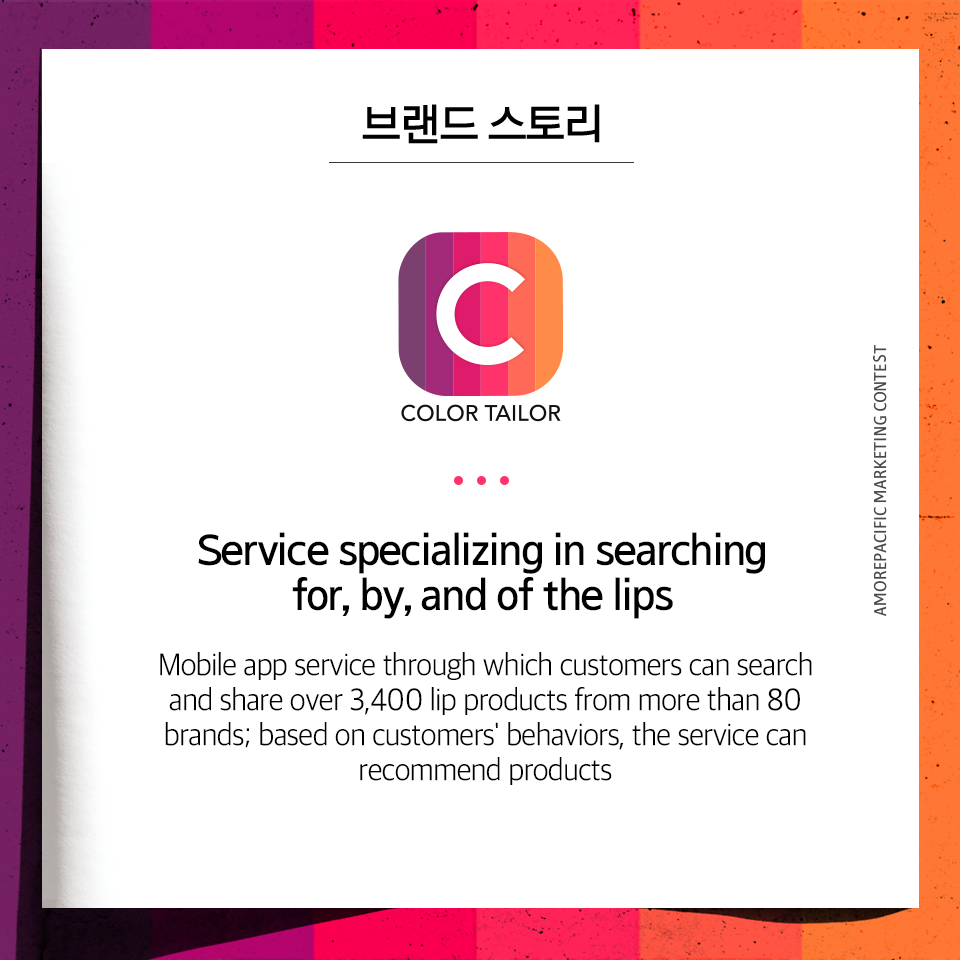 Source: AmorePacific
 We provide full-scale global cosmetic market entry services (including cosmetic registering & filing, regulatory consultation, customized training, market research, branding strategy). Please contact us to discuss how we can help you by