Request a Demo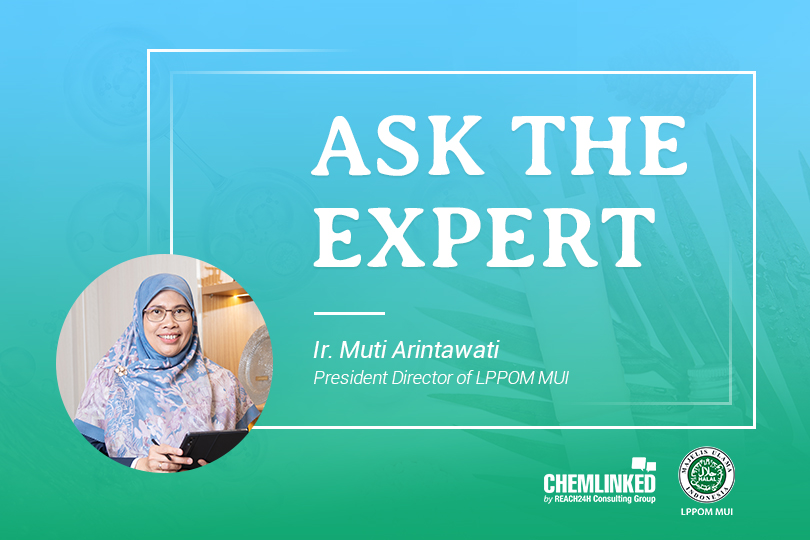
Indonesia, with a population of around 270 million and over 87% Muslim, places immense importance on halal products. Muslim consumers prioritize purchasing products with halal certification labels. To ensure consumer confidence, Indonesia enacted the Halal Product Assurance (HPA) Law in 2014, which came into effect in 2019.
Under the HPA Law, all products imported, distributed, or traded in the country—including cosmetics, food, and pharmaceuticals—are required to obtain halal certification starting from October 2019. For cosmetics, a transition period is in place until October 2026, after which all halal cosmetics circulated in Indonesia must be certified.
To provide a comprehensive understanding of the halal certification requirements for cosmetics, ChemLinked interviewed Ir. Muti Arintawati, President Director of LPPOM MUI, Indonesia’s leading halal certification body. The discussion explores the significance of halal certification, key considerations during the application process, common challenges faced by applicants, and post-certification management of halal-certified cosmetic products in Indonesia.
 | Ir. Muti Arintawati President Director of LPPOM MUI Ir. Muti Arintawati, M.Si has been working and involve in halal certification since 1994. She gained a Bachelor degree in Food Technology & Nutrition in 1992 and a Master degree in Food Science in 1999, both in IPB University. She took various roles in the Halal Ecosystem, from Halal Auditor, speaker at various forums, and developer of the Indonesian National Work Competency Standards-SKKNI on halal. |
Section I: Market Context and Strategic Significance
Q1: Indonesia is home to the world’s largest Muslim population. From your perspective, how significant is the halal cosmetics sector in the Indonesian market today?
A1: In Indonesia, the demand for halal-certified cosmetics has been growing rapidly due to several factors:
Religious Awareness: Indonesia’s moslem population is dominant, but other religious followers may consume non-halal product, especially in some provinces such as Bali, North Sulawesi and some parts of Papua. The diverse choice of food and other products such as cosmetics that may contain haram (prohibited) substances has elevated the awareness on halal issues.
Rising Middle Class & Beauty Awareness Among Young Indonesian: Growing economy, increasing awareness about personal care, as well as foreign pop culture, such as the Hallyu (Korean Wave) drive more spending on beauty products and treatments.
Government Support: Indonesia’s government has supported LPPOM halal initiatives by strengthening halal certification regulations, including mandatory halal certification through the HPA Law (UU JPH), effective in stages. Mandatory certification for cosmetics will be implemented by BPJPH, the halal authority, in October 2026. LPPOM offers various webinars, workshop, and booth expo to assist clients in navigating the regulation.
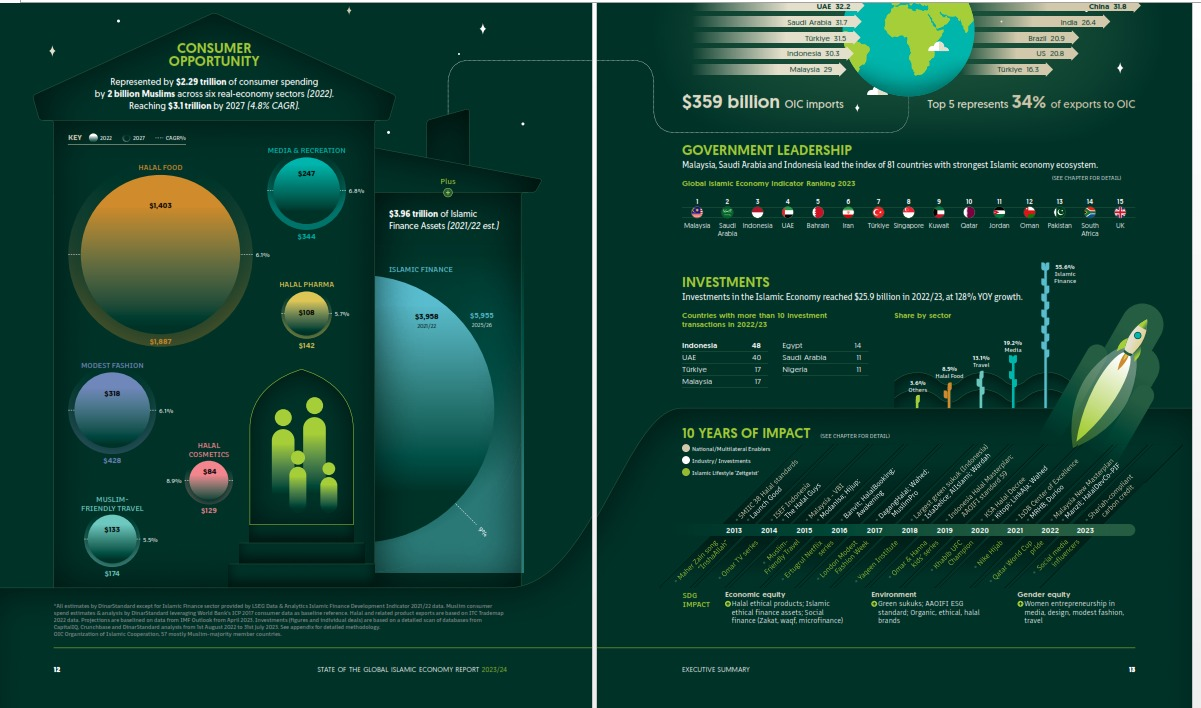
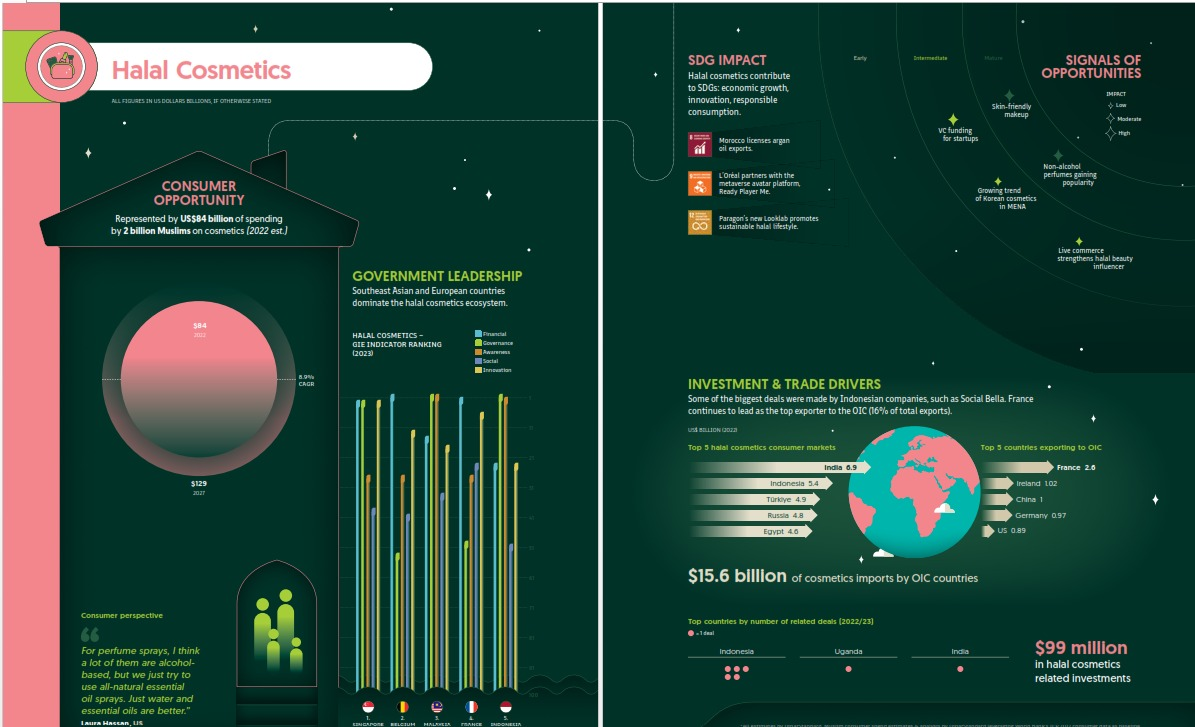
Here is the data that we obtained from GSIE 2023:
 Q2: Do you see Indonesia’s halal certification as having a synergistic effect for brands seeking to enter other Muslim-majority markets, such as Malaysia or the Middle East?
A2: Yes—Indonesia’s halal certification holds significant credibility internationally:
Halal Recognition: Several halal certification bodies in Muslim-majority countries, including Malaysia, recognize Indonesian certification due to its stringent standards.
Positive Branding: Certification from a respected moslem country can enhance brand reputation when entering neighboring markets like Malaysia, Brunei, and even GCC countries.
Cultural Familiarity: Malaysia and Brunei holds culture and language similarity with Indonesia due to the Malay similarity, which can increase consumer acceptance of products with Indonesia’s halal certification.
This strength is evident when seeing the penetration of Wardah, an Indonesian cosmetics brand certified through LPPOM, opening factory in Malaysia and dominating the Malaysian cosmetic market. LPPOM have also send the rise of market dominance for other cosmetics brands, domestically and internationally, after obtaining BPJPH’s halal certification through LPPOM. Thus, obtaining Indonesian BPJPH’s halal certification may serve as a strategic gateway into broader OIC markets.
 Q3: What is your assessment of the growth potential of Western cosmetic brands—particularly those from Europe, North America, Australia, and New Zealand—in Indonesia’s halal cosmetics market?
A3: The growth potential of Western brands is promising in Indonesia, due to:
Consumer Aspiration for Global Brands: Indonesian consumers are highly receptive to international cosmetic brands perceived as high quality.
Market Gaps: Many Western brands are still underrepresented in halal-certified segments, presenting a competitive edge for early movers. Albeit close in geography, Indonesia have not seen the penetration of brand from Australia and New Zealand.
Supportive Trade Policies: Indonesia maintains favorable trade relations with many Western countries, facilitating imports and partnerships.
With appropriate halal certification, Western brands can effectively tap into both religious compliance and consumer trust. However, Western brands need to adapt marketing strategies to meet consumer’s cultural expectations.

Section II: Considerations During the Application Process
Q4: For international cosmetic brands aiming to obtain halal certification in Indonesia, are there any specific requirements they should be aware of? For example, is it necessary to have a local representative or Indonesian entity in place before applying for halal certification?
A4: Company should refer to Government Regulation No. 42 year 2024 on the Legal Framework of Halal Certification. In particular, this Regulation contains some specific requirements that may not be found in other country’s halal certification standards, such as:
Local Representation: A local representative, distributor, or legal entity registered in Indonesia is required to apply for halal certification on behalf of the foreign company. Some menu in Sistem Informasi Halal-Sihalal (the online halal registration system) and registration process is only available in Indonesian language; thus local assistance is required.
Halal Document of Ingredients: In general, Indonesia halal regulation only recognizes type of material. The first is material not requiring halal certificate, listed in the Ministry of Religious Affair (MORA) Regulation No. 1360 Year 2021 Concerning Materials Exempted from the Halal Certification Obligation. Other material should have a halal certificate from halal certification bodies recognized by BPJPH with the appropriate scope (in this case, cosmetics). The scope of the foreign halal certificate is limited to the country which the foreign halal certification body resides. In the transition phase to the mandatory halal certification for cosmetics in 2026, other documents, such as flow production chart, CoA, halal questionnaire, and specification may be accepted in lieu of halal certificate.
Laboratory Testing: The factory must provide ample samples for lab testing. Sample that contains animal-derived ingredients such as collagen and gelatin shall undergo real-time PCR and/or LC-MS/MS testing for detecting porcine DNA contamination. For products, such as, but not limited to, mascara with claims of waterproof, auditors could take sample to test for water permeability. Water permeability allows the cosmetics to be worn during wudhu, also known as ablution, which is necessary before praying.
 Q5: Is there any linkage between halal certification and BPOM cosmetic notification in Indonesia? Do companies need to complete one before the other, or can the two processes proceed in parallel?
A5: The two can be processed in parallel. When a company decides to complete one before the other, there may be risk such as the material accepted in one system may not be accepted in the other system. While forbidden product name in halal is clear, some names may not be accepted in BPOM regulation due to overclaim.

Section III: Technical Review and Common Challenges
Q6: Are there any ingredients commonly used in cosmetics from non-Muslim countries that are frequently identified as haram (non-halal) under Indonesian halal standards? What are the most common challenges or misunderstandings international brands encounter during the halal certification process in Indonesia?
A6: Commonly critical ingredients are:
Derivatives or side-products of alcoholic beverages fermentation, such as grapeseed and yeast extract (from brewer’s yeast), and cognac oil.
Animal-derived ingredients, such as musk absolute, a perfumery ingredient isolated from the glandular secretion of the male musk deer.
Ingredients produced in a sharing facility with porcine, such as the ones produced in a facility that also produced cosmetics using fat derivatives or collagen (both ingredients are predominantly originated from porcine).
Auditor will dissect ingredients until its smallest component to make sure that there is zero possibility of haram contamination. However, unfortunately, many ingredients may not have proper supporting documents to explain all components. Besides, many companies falsely assume that having animal-free statements should be sufficient, while the critical aspect is not only in the animal-derived ingredients. In LPPOM’s 36 years of extensive experience in halal certification, sometimes such statements are false as the entity making the statement does not understand the ingredient’s breakdown. After cautious investigation, may show the use of critical ingredients and/or processing aid (such as enzyme).
Insufficient supporting documents for ingredients is the most common hurdles that prolong the halal certification process. LPPOM provides pre-assessment to assist clients in the certification process to ensure a smooth and quick certification system and also provides multilingual auditor to provide comfort in the process.

Section IV: Post-Certification Management and Compliance
Q7: Once a product is certified, how should companies properly use the halal logo? Is a separate application required to obtain and use the halal logo?
A7: The company should refer to BPJPH Decree concerning the use of halal labels. There is no need to apply as long as the implementation refers to the respective regulation. Inquiry should be sent to BPJPH should there is adjustment to ensure that it still follows the regulation. LPPOM’s customer care is willing to provide explanations should there be confusion in the process.
 Q8: In cases where certified companies fail to comply with halal standards post-certification, what regulatory or corrective actions do LPPOM MUI typically take?
A8: LPPOM will proactively approach the company and coordinate with BPJPH to rule out the best course of action for any failure comply with the halal requirements.
 We provide full-scale global cosmetic market entry services (including cosmetic registering & filing, regulatory consultation, customized training, market research, branding strategy). Please contact us to discuss how we can help you by