Request a Demo
Under the Cosmetic Act B.E. 2558 (2015) (the Act), Thailand’s overarching cosmetic regulation, the Thai Food and Drug Administration (Thai FDA) has been empowered to make public the findings of any inspection or analysis of cosmetics not in compliance (or suspected of non-compliance) with the Act.
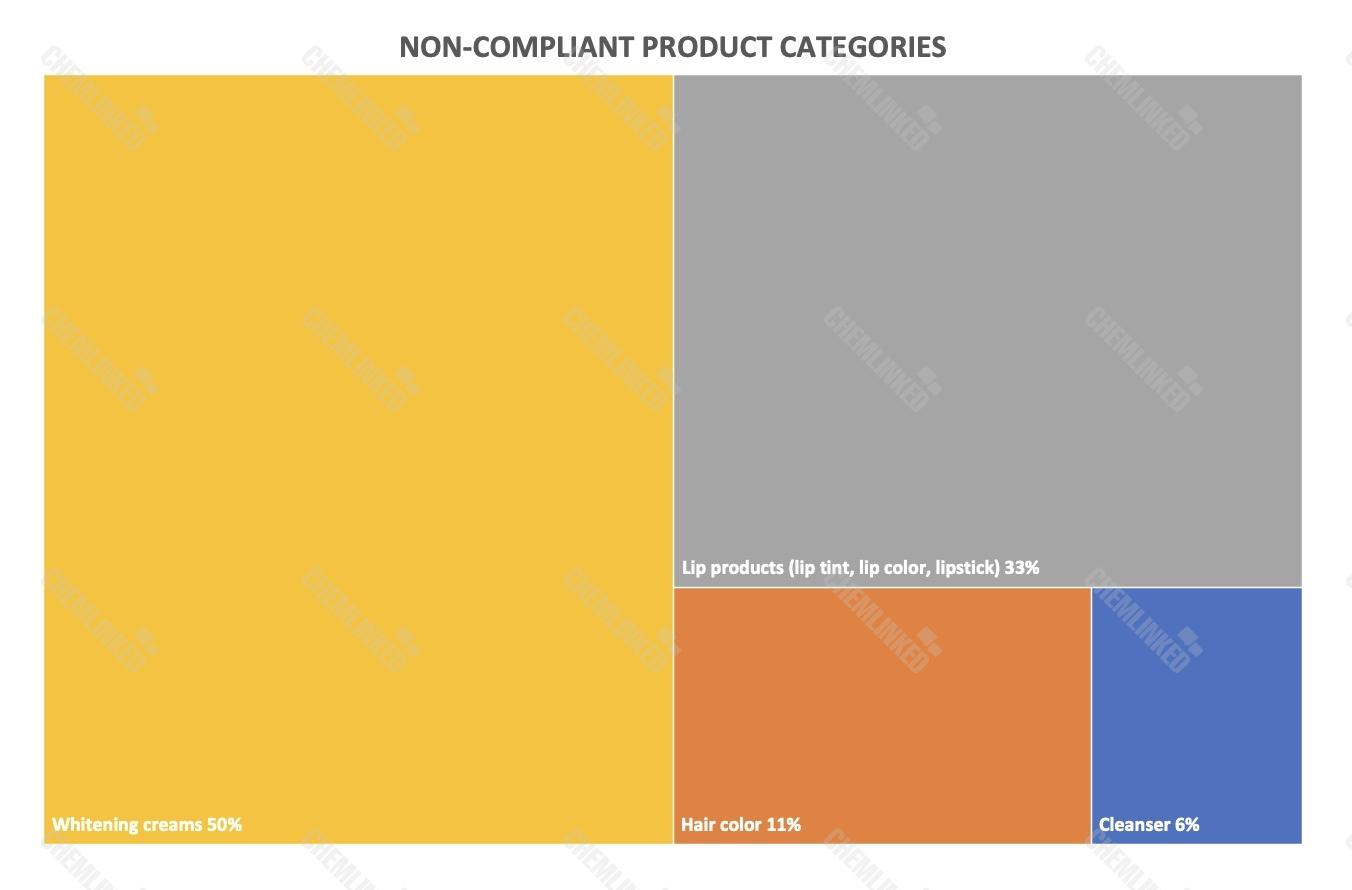
From January to December 2022, the Thai FDA revealed a total of 18 batches of cosmetics that failed cosmetics inspection and analysis due to containing prohibited ingredients. Among them, whitening creams and lip products accounted for the majority of non-compliance.
For the detected prohibited cosmetic ingredients, mercury and its compounds (36%), colouring agent CI 15585 (27%) and steroids (14%) ranked in the top 3.
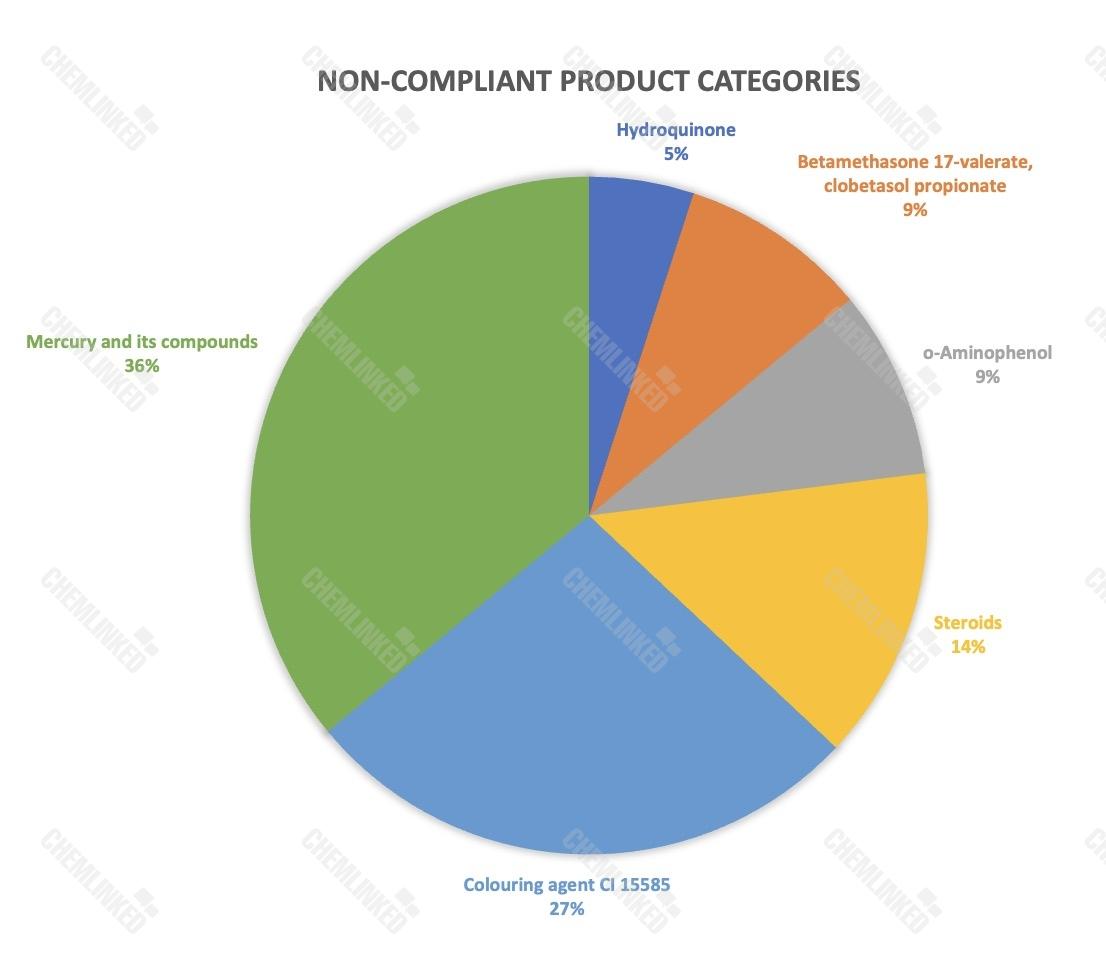
Analysis of Detected Prohibited Ingredients
The table below details the risks of all detected prohibited ingredients:
No. | Detected Prohibited Ingredients | Risks |
1 | Mercury and its compounds | Mercury and its compounds can cause allergies, red rashes, darkening and thinning of the skin, mercury poisoning, and/or even inflammation of the urinary tract and nephritis. |
2 | Colouring agent CI 15585 | CI 15585 is carcinogenic to laboratory animals. The use of cosmetics containing CI 15585 may cause harm to consumers. |
3 | Steroids | Steroids can cause thinning and cracking of the skin, subcutaneous vascular abnormalities, flushing, allergic rashes, acne, and/or skin discoloration. White spots may occur if used for a long time. |
4 | o-Aminophenol | o-Aminophenol is carcinogenic. |
5 | Betamethasone 17-valerate, clobetasol propionate | Betamethasone 17-valerate and clobetasol propionate are corticosteroids that can cause thinning and cracking of the skin at the application site, subcutaneous vascular abnormalities, flushing, allergic rashs, acne, and/or skin discoloration. White spots may occur if used for a long time. |
6 | Hydroquinone | Hydroquinone can cause allergies, irritation, redness, burning sensation, redness, and/or increased pigmentation. |
Noteworthy Compliance Requirements
In addition to import ban, it is illegal for enterprises to use the above-mentioned prohibited ingredients to produce cosmetics in Thailand. According to the Act,
Any individual (enterprise) who manufactures (including self-production and subcontract production) or imports cosmetics containing prohibited ingredients for sale is subject to imprisonment for a period not exceeding five years or a fine not exceeding 500,000 baht, or both;
Any individual (enterprise) who sells cosmetics containing prohibited ingredients is subject to imprisonment for a period not exceeding three years or a fine not exceeding 300,000 baht, or both.
To ensure compliance, enterprises shall pay attention to the cosmetic ingredient lists in Thailand, consisting of the lists of prohibited ingredients, restricted ingredients, permitted preservatives, permitted sunscreens, and permitted colorants. These lists set out rules for the use of ingredients in cosmetics and are essentially the same as the structures under the ASEAN Cosmetic Directive annexes. Cosmetic products available on the Thailand market shall not contain any ingredient listed in the Lists of Prohibited Ingredients for Use in Cosmetics.
 We provide full-scale global cosmetic market entry services (including cosmetic registering & filing, regulatory consultation, customized training, market research, branding strategy). Please contact us to discuss how we can help you by