Request a Demo
1. Characteristics of Rejected Imported Cosmetics
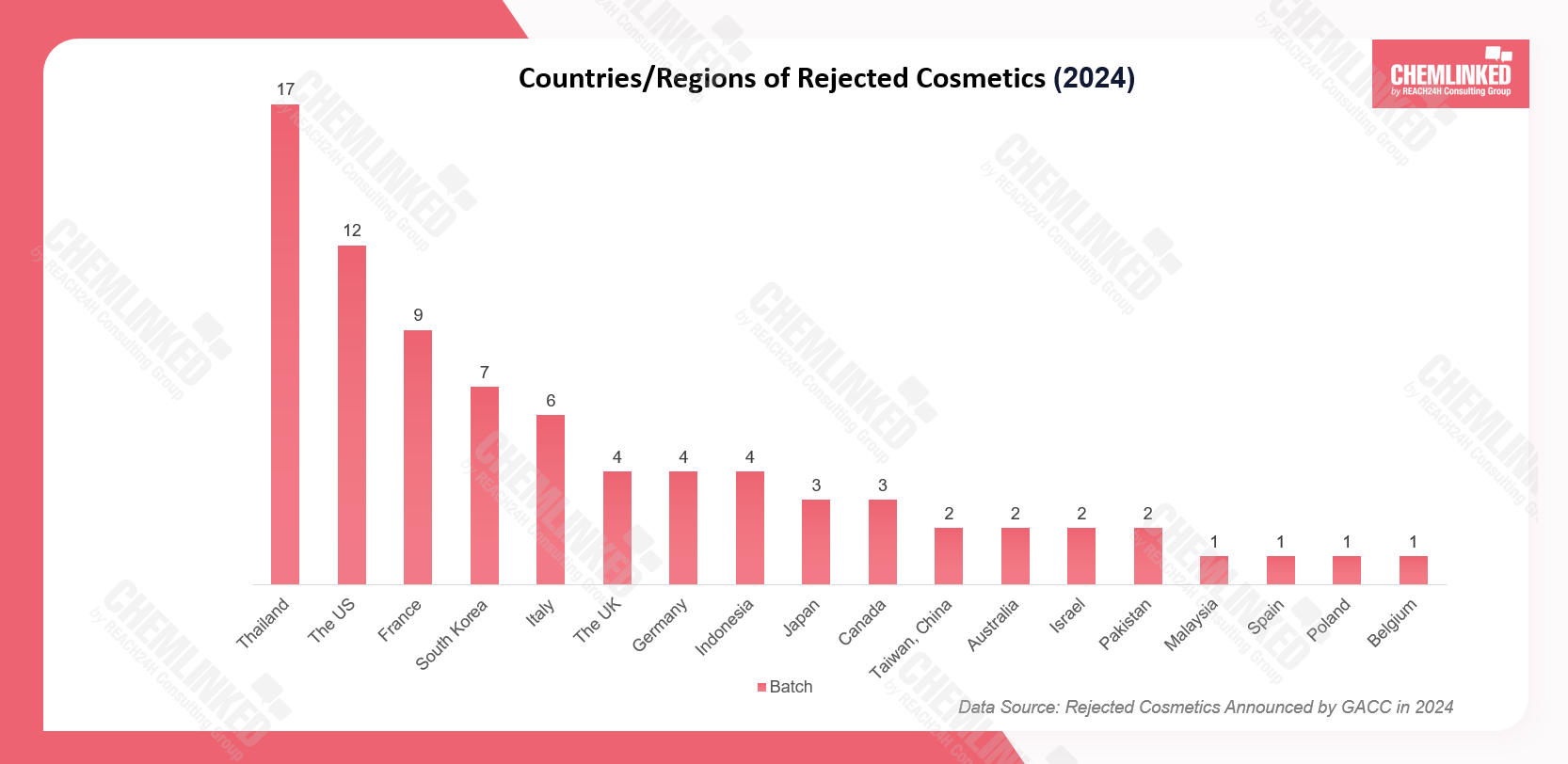
In 2024, a total of 81 batches of imported cosmetics from 18 countries/regions were rejected by China General Administration of Customs (GACC). The majority of non-compliant imported cosmetics originated from Thailand (21.0%) and the US (14.8%), followed by France (11.1%) and South Korea (8.6%). The main categories of rejected cosmetics were shampoo (23.5%), lip balm (12.3%), and perfume (11.1%).
The main reasons for the rejections included lack of required qualified documentation, unqualified labeling, and failing to pass sensory inspection, etc. All non-compliant cosmetics have been either returned or destroyed at the port of entry.
Figure 1: Reasons for Import Rejections
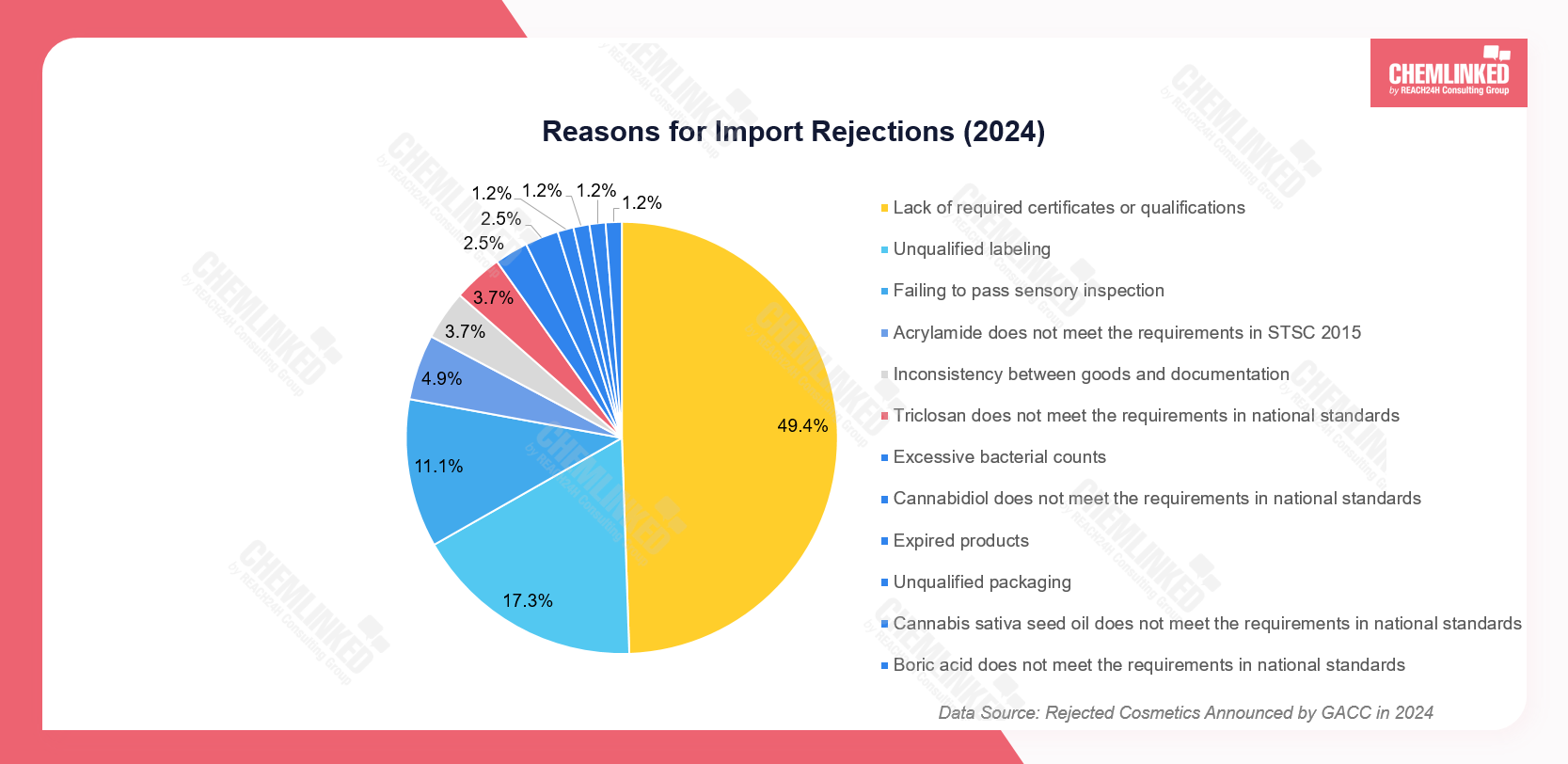
Figure 2: Categories of Rejected Cosmetics
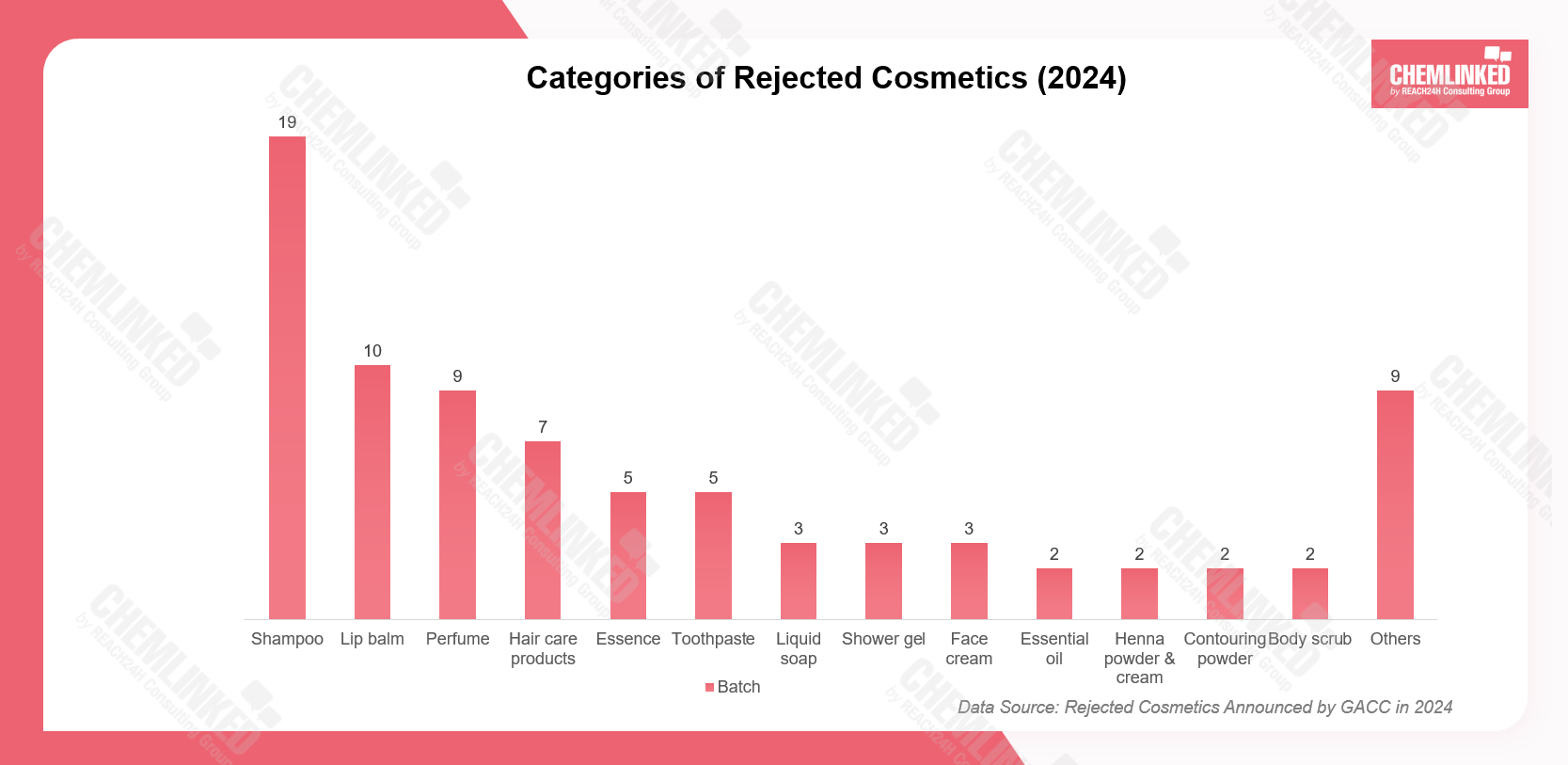 Figure 3: Countries/Regions of Rejected Cosmetics
2. Compliance Suggestions
When exporting cosmetics to China, distributors or importers must apply for customs inspection by submitting the required documents. The inspection process includes on-site inspection, label inspection and retention, as well as laboratory testing. The Certificate of Inspection and Quarantine of Imported Goods, a crucial requirement for customs clearance, is contingent upon the completion of the inspection process.
Table 1: Customs Inspection Contents
Inspection | Inspection Contents |
On-site inspection | Verifying the conformity of goods and their corresponding certificates, examining product packaging and sensory properties, and assessing the sanitary conditions of transportation, containers, and/or storage areas. |
Label inspection | Checking whether the labels comply with relevant laws, administrative regulations, and mandatory requirements in national standards. It encompasses aspects such as layout format, quality and safety-related content. |
Laboratory tests | Determining the testing items and requirements, and then sending samples to qualified testing institutions. The testing items may include microorganisms, contaminants, prohibited ingredients, restricted ingredients, etc. |
The rejection reasons for imported cosmetics are often similar each year. The following part is the detailed analysis of each rejection reason along with compliance suggestions.
2.1 Lack of Required Certificates or Qualifications
The primary reason for import rejections of cosmetics is the lack of required certificates or qualifications. This can be categorized into three situations:
1. Lack of product notification certificate: According to the Administrative Measures on Cosmetics Registration and Notification, imported general cosmetics must obtain a notification certificate prior to importation. GACC verifies the notification certificates electronically through an online system;
2. Non-compliant safety-related documents: In some cases, the product has been notified, but it failed the subsequent review and NMPA issued an opinion to suspend product sales. This typically happens when the product's safety-related documents fail to demonstrate its safety. Such products will also be unable to pass customs;
3. Failure to comply with Administrative Measures on Inspection and Quarantine of Import and Export Cosmetics: There are minor discrepancies in the definition of cosmetics given by GACC and NMPA. For instance, NMPA does not classify mouthwash as a cosmetic and therefore it is not subject to registration or notification. However, GACC considers mouthwash as a cosmetic and subjects it to inspection in accordance with cosmetic regulatory requirements.
When importing such products, enterprises must provide necessary documentation as specified in the Administrative Measures on Inspection and Quarantine of Import and Export Cosmetics. This includes:
safety assessment information from qualified institutions regarding substances that may pose safety risks; and
documentation confirming the legality of production and sales in the country (or region) of origin, or a certificate of origin.
In summary, when importing cosmetics, enterprises must ensure they obtain a notification certificate for the imported general cosmetics and that the safety documents meet the requirements. For products not subject to registration or notification, importers must still ensure they have the necessary documentation that meets the requirements specified in the Administrative Measures on Inspection and Quarantine of Import and Export Cosmetics.
2.2 Unqualified Labeling
During customs inspections, the labels of cosmetics are reviewed for compliance. Importers of finished cosmetics with sales packaging are required to submit the Chinese label sample, the original label, and its Chinese translation to the customs. However, some importers lack sufficient knowledge about the compliance of Chinese labeling, leading to a significant number of products being rejected at Chinese ports due to non-compliant labels.
Packaging labels must adhere to the requirements specified in the Administrative Measures on Cosmetics Labeling. Importers can refer to the following table to self-check their labels.
Table 2: Required Information on the Label
Labeling Items |
1. The product’s Chinese name, and special cosmetic registration license number |
2. Name and address of registrant or notifier (If the registrant or notifier is an overseas enterprise, the name and address of the domestic responsible person shall also be labeled.) |
3. Name and address of the production enterprise |
4. The product’s executive standard number |
5. Full ingredients listing |
6. Net content |
7. Durability |
8. Application method |
9. Safety warnings |
10. Other contents prescribed by laws, administrative regulations and mandatory national standards |
Source: Administrative Measures on Cosmetics Labeling
For the packaging of imported cosmetics, enterprises have two options:
they can design sales packaging specifically for the Chinese market in accordance with Chinese regulations; or
they can use the original package and affix a Chinese sticker with compliant information.
When affixing a Chinese sticker to cosmetics packaging, it is crucial that the safety and efficacy claims on the sticker align with the corresponding information on the original packaging. The Chinese sticker should neither make efficacy claims that are absent on the original packaging, nor remove or add any content related to product safety. Therefore, the relevant content on the original packaging itself must also comply with Chinese laws and regulations.
It is advisable for enterprises to conduct self-inspections or seek professional reviews to ensure that the safety and efficacy claims on the original packaging comply with Chinese regulations. Based on the inspection results, they can make an informed decision about whether to affix a Chinese sticker or design sales packaging specifically for the Chinese market.
Additionally, there are two common pitfalls to avoid. First, the consistency between the ingredient labels on the cosmetic packaging and the information in the notification certificate is essential. Second, explicit or implicit claims about the product having medical effects should be avoided.
For expert assistance in label compliance, contact ChemLinked’s parent company, REACH24H at [email protected]. Our specialists can help review labels to ensure regulatory compliance.
2.3 Failing to Pass Sensory Inspection and Expired Products
Among the rejected cosmetics in 2024, nine batches failed the sensory inspection, and another batch was found to have exceeded its shelf life. Sensory inspection typically involves the assessment of a product's sensory qualities, such as its appearance, color, smell, texture, and any signs of deterioration or aging. This assessment relies on human senses, including vision, hearing, touch, and smell, to determine whether the product meets the standards. Common reasons for cosmetics to "fail the sensory inspection" are often related to concerns regarding their appearance and smell.
According to Article 39 of the Cosmetic Supervision and Administration Regulation, cosmetics producers and operators are obligated to store and transport cosmetics in compliance with relevant laws and regulations. They must also conduct regular inspections and promptly dispose of any deteriorated and expired cosmetics. To prevent unnecessary losses, enterprises should be mindful of the shelf life of their products and ensure that product quality meets the standards.
2.4 Excessive Bacterial Counts
Among the rejected cosmetics in 2024, two batches of cosmetics failed to meet the required standards due to excessive bacterial counts. Cosmetics, with their various ingredients and nourishing additives, provide an environment conducive to microbial growth. As a result, cosmetics are prone to microbial contamination during production and storage. Production companies are responsible for establishing controlled production environments, equipment, and processes that adhere to the microbial limit requirements specified in China's Safety and Technical Standards for Cosmetics 2015 (STSC 2015).
When exporting cosmetics to China, companies can perform self-checks using Table 3 to ensure that the microbial limits in their products comply with the regulations.
Table 3: Microbial Limits for Cosmetics
Microorganism Types | Limits | |
Total bacterial counts | Cosmetics for eyes, lips, and for children | ≤5x10² CFU/g or CFU/ml |
Other cosmetics | ≤103 CFU/g or CFU/ml | |
Mold and yeast counts | ≤100 CFU/g or CFU/ml | |
Thermotolerant coliforms | Shall not be detected | |
Staphylococcus aureus | Shall not be detected | |
Pseudomonas aeruginosa | Shall not be detected | |
Source: Safety and Technical Standards for Cosmetics
2.5 Non-compliance with ingredient usage regulations
In 2024, eleven batches of cosmetics were denied entry into China due to non-compliance with ingredient usage regulations. The ingredients involved are acrylamide, triclosan, cannabidiol, cannabis sativa seed oil, and boric acid.
According to STSC 2015, the regulatory status of these ingredients is as follows:
Prohibited: cannabidiol, cannabis sativa seed oil, boric acid
Restricted: acrylamide, triclosan
Table 4: Limits of Acrylamide in Cosmetics
List of Restricted Ingredients Used in Cosmetics | |
Applicable Scope | (a) Body leave-on products (b) Other products |
Maximum Concentration | / |
Other Requirements | (a) The maximum residual content of acrylamide in a product shall not be more than 0.1 mg/kg; (b) The maximum residual content of acrylamide in a product shall not be more than 0.5 mg/kg |
Instructions on Labels | / |
Note | / |
Source: Safety and Technical Standards for Cosmetics
Table 5: Limits of Triclosan in Cosmetics
List of Permitted Preservatives Used in Cosmetics | |
Applicable Scope | Hand washing soaps, bath soaps, shower gels, deodorants (non-spray), make-up powders, blemish concealers and nail cleaners. (Nail cleaners shouldn’t be used more than once every two weeks) |
Maximum Concentration | 0.3% |
Instructions on Labels | / |
Note | / |
 We provide full-scale global cosmetic market entry services (including cosmetic registering & filing, regulatory consultation, customized training, market research, branding strategy). Please contact us to discuss how we can help you by