Request a Demo
Chinese Mainland
China NMPA Makes the Fourth Adjustments to the Inventory of Existing Cosmetic Ingredients in China
On April 13, 2026, China's National Medical Products Administration (NMPA) issued the fourth dynamic update to the Inventory of Existing Cosmetic Ingredients in China (IECIC). The revision adds Saussurea involucrata callus powder to IECIC II after completion of its three-year safety monitoring period, and standardizes the Chinese and INCI names for 49 ingredients in IECIC I to improve international alignment and ingredient identification.
More regulation highlights in Chinese Mainland:
China Releases Mandatory National Standards for Cleaning Products
China NMPA Releases Five Industry Standards for Cosmetic Ingredients
China NIFDC Releases Draft Testing Methods for Evaluating Skin Whitening and Anti-Hair Loss Efficacy
Shandong MPA Issues Notice on Rectification Requirements for Failure to Submit 2026 Annual Reports for General Cosmetics (Including Toothpaste) Notifications
Shanghai Medical Products Administration Releases 2026 Administrative Inspection Plan for Cosmetics Quality and Safety
Shanghai Releases Three-Year Action Plan for Upgrading the Production Quality Management System of Cosmetic Enterprises
China General Administration of Customs Reports Rejection of 12 Batches of Cosmetics in March 2026
China NIFDC Releases 2025 Annual Cosmetic Review Report
NIFDC and Beijing Municipal MPA Released Four Batches of FAQs in April 2026
China Releases Seven New Cosmetics Standards and Launches Public Consultation on Nine Draft Standards in April 2026

Taiwan, China
Taiwan Releases Recommended Testing Method for Five Fragrance Substances
On April 23, 2026, Taiwan Food and Drug Administration (TFDA) published a recommended testing method for five fragrance substances used in cosmetics: Atranol, Chloroatranol, 3- and 4-(4-Hydroxy-4-methylpentyl)cyclohex-3-ene-1-carbaldehyde (HICC), Versalide, and Lilial. Among them, the first four substances are currently regulated as prohibited cosmetic ingredients in Taiwan. Although Lilial remains permitted in Taiwan, it has already been banned in the EU, whose cosmetic ingredient regulatory framework Taiwan frequently references.
Japan
Japan Clarifies Regulatory Treatment of Cosmetics Containing Triheptanoin
On April 20, 2026, Japan's Ministry of Health, Labour and Welfare (MHLW) issued a notice on the handling of cosmetics containing triheptanoin, after its approval on March 23, 2026 as an active pharmaceutical ingredient, which in principle prohibits its use in cosmetics. The notice sets a transitional measure allowing continued manufacture and marketing of cosmetics containing triheptanoin at concentrations not exceeding existing market levels, with companies bearing responsibility for product safety, until a final decision is made on whether to include triheptanoin in the positive list of cosmetic ingredients and further notifications are issued.
South Korea
South Korea Launches Consulting Program for New Cosmetic Safety Assessment System
On April 1, 2026, South Korea's Ministry of Food and Drug Safety (MFDS) launched the "Cosmetic Safety Assessment Introduction Support Program" to help cosmetic companies, especially SMEs, prepare for a new mandatory Cosmetic Safety Assessment System that will be phased in starting in 2028. Under the program, MFDS will provide one-on-one consulting to 1,500 SMEs and additional sector-wide support, while applications to participate are open until April 30, 2026.
More regulation highlights in South Korea:
South Korea to Amend Cosmetics Precautions and Allergen Labeling Regulations
South Korea Temporarily Allows Sticker Labeling on Alternative Packaging for Cosmetics
South Korea Proposes Stricter Oversight on Cosmetic Production and Import Reporting
South Korea Seeks Opinions on Amending Cosmetics Act for E-labeling
South Korea Amends Cosmetics Act to Remove Bankruptcy from Disqualification Clauses
South Korea Revises Three Guidelines on Alternative Animal Test Methods for Cosmetics
South Korea Warns Against Pharmaceutical-Like Cosmetic Packaging
Korean Government Holds Meeting to Support Cosmetics Industry Amid Middle East Conflict
MFDS to Hold Briefing on Cosmetics Safety Assessment System
South Korea Proposes Amendment to Cosmetics Act to Ban Intellectual Property-Infringing Products
South Korea Solicits Feedback on Revised Analytical Methods for Restricted Cosmetic Ingredients
South Korea Amends Cosmetics Act to Ease Staffing Rules for Customized Cosmetics Sellers
Thailand
Thailand Details Temporary Facilitation Measures for Cosmetics Amid Supply Chain Disruptions
On April 28, 2026, the Thai Food and Drug Administration (Thai FDA) issued two guidance documents together with two application templates to further implement the temporary facilitation measures for cosmetics announced in March 2026. Effective immediately upon publication, the documents clarify the procedures, submission requirements, and regulatory pathways for temporary raw material and packaging adjustments introduced to address supply chain disruptions linked to geopolitical tensions in the Middle East.
More regulation highlights in Thailand:
Thailand to Introduce New Restrictions on Microneedle Cosmetics
Indonesia
Indonesia BPOM Updates Cosmetic GMP Certification Requirements
On April 29, 2026, Indonesia's BPOM promulgated and implemented Regulation No. 8 of 2026 concerning the Technical Requirements for Cosmetic GMP Certification. The key amendments include: 1) Changes to required documents and the verification period for document completeness; 2) Revised requirements for GMP certificate renewal.
More regulation highlights in Indonesia:
India
India Issues New and Revised Standards for Cosmetic Products
On April 15, 2026, India's Bureau of Indian Standards (BIS) announced seven new and revised cosmetic-related Indian Standards in the Gazette of India. The standards, established on March 30, 2026, include five newly issued standards covering face wash, body wash, face and body scrubs, cosmetic oral rinses, and sunscreens, as well as two revised standards for lipsalve and the cosmetic ingredient petroleum jelly. BIS has provided a six-month transition period for the revised standards, allowing the previous versions to remain in force until September 30, 2026.
Australia
Australia Seeks Public Consultation on Changes to AICIS Fees and Charges for 2026–27
On April 10, 2026, the Australian Industrial Chemicals Introduction Scheme (AICIS) launched a public consultation on proposed changes to its fees for the 2026–27 registration year. AICIS plans to apply a one-off 90% discount to the 2026–27 registration levy to reduce surplus funds and bring its cash balance back to the target level. The consultation is open till May 15, 2026.
More regulation highlights in Australia:
Australia Publishes Application Form for Poisons Standard Amendment Proposals
The European Union
EU Updates Four Cosmetic Ingredient Lists Based on SCCS Opinions
On April 27, 2026, the EU adopted Commission Regulation (EU) 2026/909 to update four ingredient lists of Regulation (EC) No 1223/2009 (Cosmetics Regulation), reflecting the latest opinions issued by the Scientific Committee on Consumer Safety (SCCS). The amending regulation will enter into force on May 18, 2026, with transitional provisions for certain revisions.
More regulation highlights in The European Union:
EU SCCS Confirms BHA Safety in Cosmetics Despite Endocrine Disruption Concerns
EU SCCS Assesses Safety of Heliotropin in Fine Fragrances for Adults

The United States
U.S. Virginia to Ban 24 Hazardous Ingredients in Cosmetics
On April 13, 2026, Virginia enacted the Humane and Toxin-Free Cosmetics Act (HB 122), which will take effect on July 1, 2026. The law prohibits the manufacture and sale of cosmetics containing 24 intentionally added substances, including phthalates, parabens, formaldehyde and its releasers, heavy metals, aromatic amines, and several PFAS compounds.
More regulation highlights in The United States:
California CSCP Reports U.S. FDA's Findings of Banned Chemical Methylene Chloride (DCM) in Gel Nail Polish Removers
California DTSC Reminds Nail Product Manufacturers of 2026 Reporting Obligations for MMA-Containing Products
Minnesota Extends PFAS Reporting Deadline to September 15, 2026
California Advances Proposed Priority Product Designation for Shampoos and Dish Detergents Containing Over 1 ppm 1,4-Dioxane
Brazil
Brazil Consults on Proposed Mercosur Rules for Cosmetic Net Quantity Labeling
On April 24, 2026, Brazil's National Institute of Metrology, Quality and Technology (Inmetro) opened a public consultation on a proposed Mercosur technical regulation updating regional requirements for net quantity declarations of cosmetic products. The draft revises the framework established under Mercosur/GMC/Res. No. 50/2000 by expanding the scope to include gel-form products, in addition to the existing rules for solid/semisolid and liquid products. Comments may be submitted until June 23, 2026.
More regulation highlights in Brazil:
Brazil Releases Preliminary Selection Results for Personalized Cosmetics Regulatory Sandbox

Webinar Recommendation
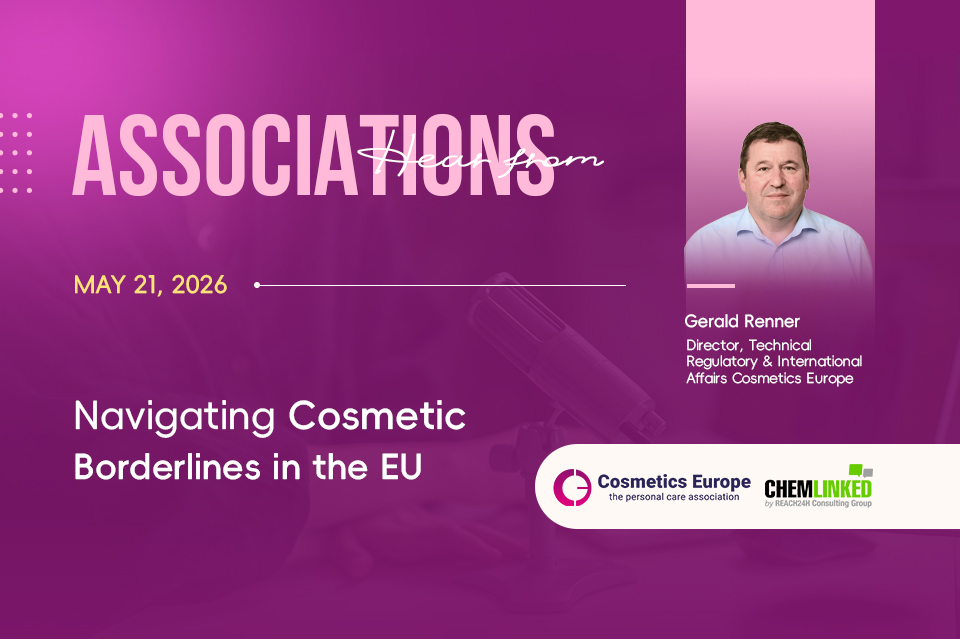
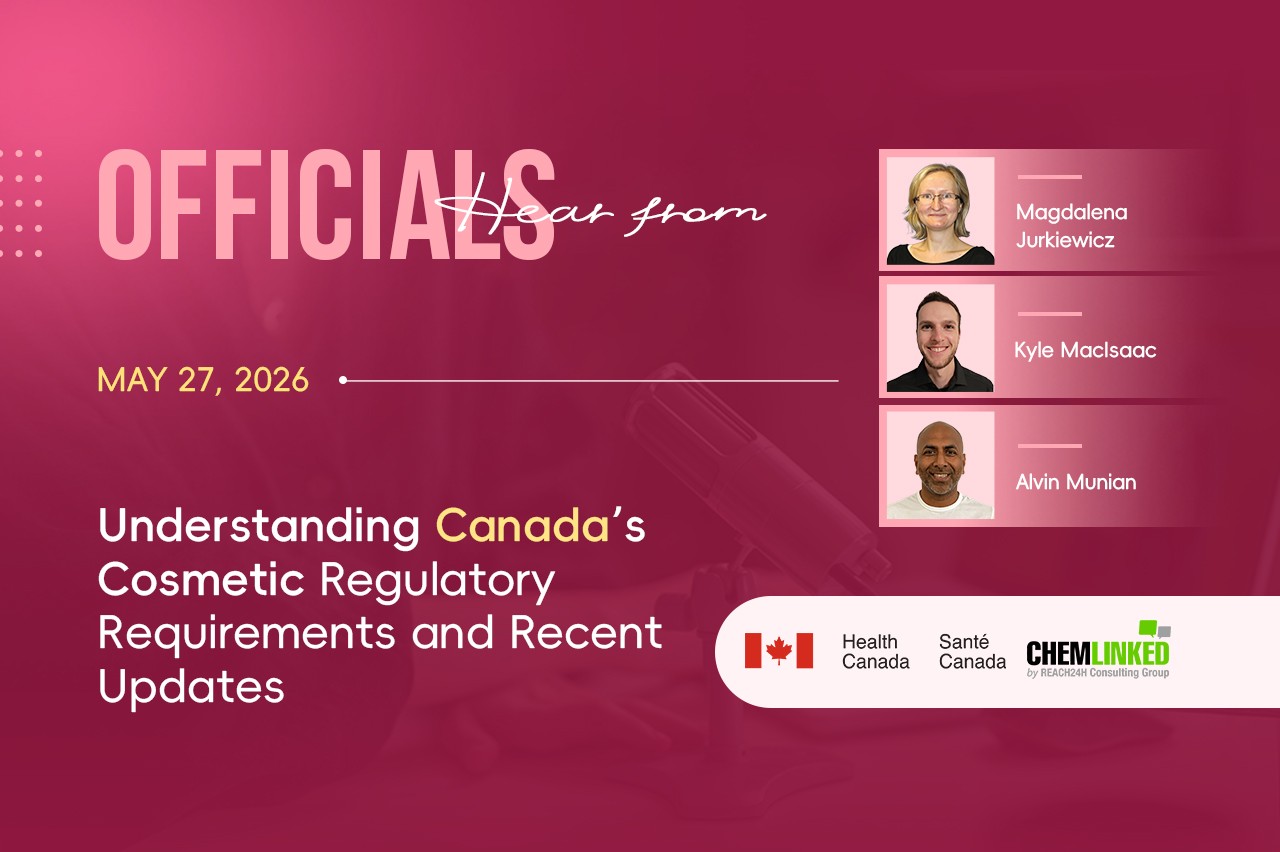
To help businesses better understand cosmetic regulations in the EU and Canada, ChemLinked has invited Cosmetics Europe and Health Canada to provide insights into the EU’s borderline product regulations, as well as Canada’s cosmetic regulatory framework and latest regulatory updates. Join the webinar to engage directly with industry associations and regulatory officials through interactive Q&A sessions.
 We provide full-scale global cosmetic market entry services (including cosmetic registering & filing, regulatory consultation, customized training, market research, branding strategy). Please contact us to discuss how we can help you by